
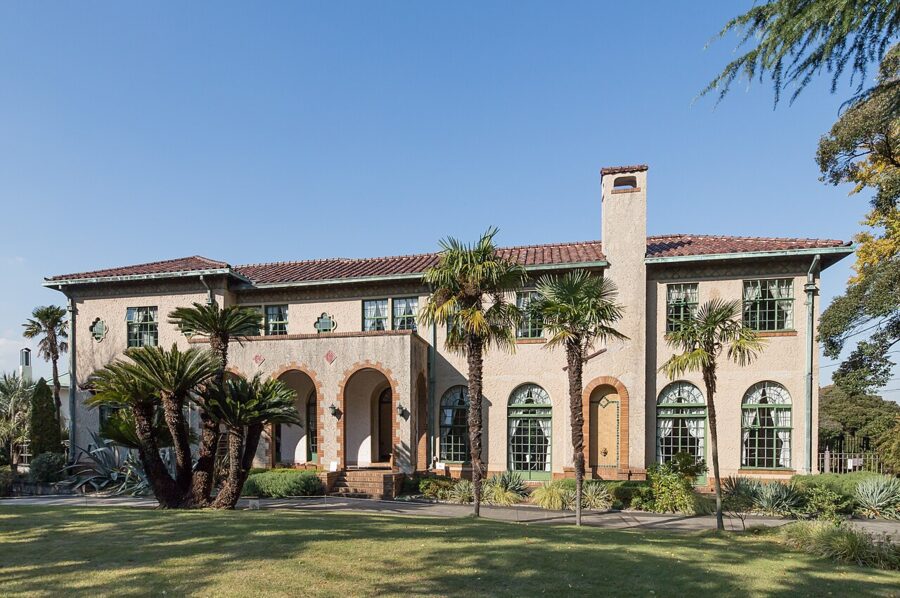

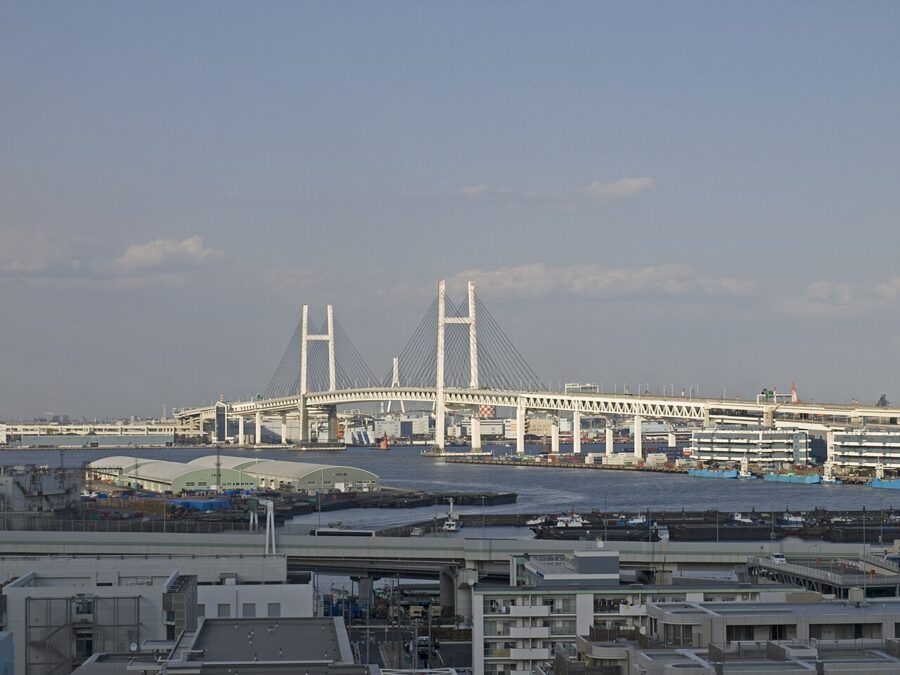
Seven houses on the hill above Yokohama’s Chinatown open their doors at 9:30, and not one of them charges a yen to walk in. You swap your shoes for house slippers, climb a staircase a British trader or a Swiss silk merchant climbed a century ago, and look out of their windows at container cranes and the Bay Bridge.
The hill is Yamate (山手), which the foreigners who lived here called the Bluff. The seven Western-style houses the city looks after, the Yamate seiyōkan (山手西洋館), sit along one ridge road with a cemetery, three gardens and a harbor lookout between them. All seven fit into a two-to-three-hour walk from JR Ishikawacho Station to Motomachi-Chukagai Station, which ends a few minutes from the pork buns of Chinatown.
The short version: go on a weekday that is not the second or fourth Wednesday of the month, start at Ishikawacho around 10:00, walk west to east so the end of the day runs downhill, and keep an hour for lunch or cake. Bring socks if you are wearing sandals, because six of the seven houses ask you to take your shoes off.

Allow half a day if you want the cemetery, the lookouts and a sit-down in one of the house cafes as well as the rooms themselves.

Contents8 sections
How the Bluff became the foreign settlement
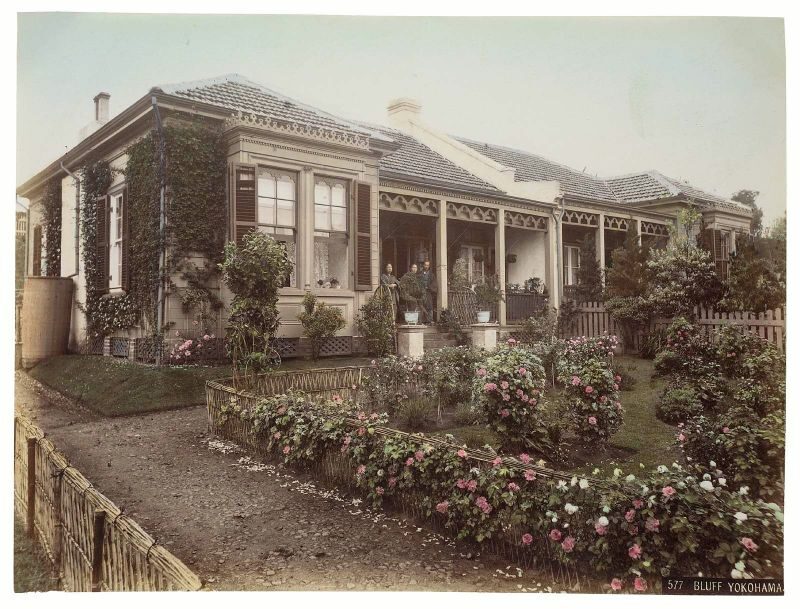
When Yokohama opened as a treaty port in 1859, foreign merchants were given the flat, damp land by the water that is now Yamashita-cho. The higher ground south of the Horikawa River looked healthier, and from 1861 the shogunate leased parts of it for consulates. From 1863 to 1875 British and French troops were stationed on its eastern tip, now French Hill.
An 1866 agreement with the foreign ministers set out a residential settlement on the hill, and it opened in 1867. The residents named it after its cliffs: the Bluff. Plots were known by lot numbers, which is why two of the houses are still called Bluff No.111 and No.234.
Residents opened Yamate Park in 1870 as Japan’s first Western-style public garden, and tennis was first played in Japan there in 1876. Churches and mission schools followed, and several are still on the ridge road.
Treaty revision ended the settlement in 1899, and the hill became the ordinary ward of Yamate-cho. Then the Great Kanto Earthquake of September 1923 flattened almost everything on it, and many foreign families left for good. The houses you see are mostly a second generation from the late 1920s and 1930s, sturdier and plainer.
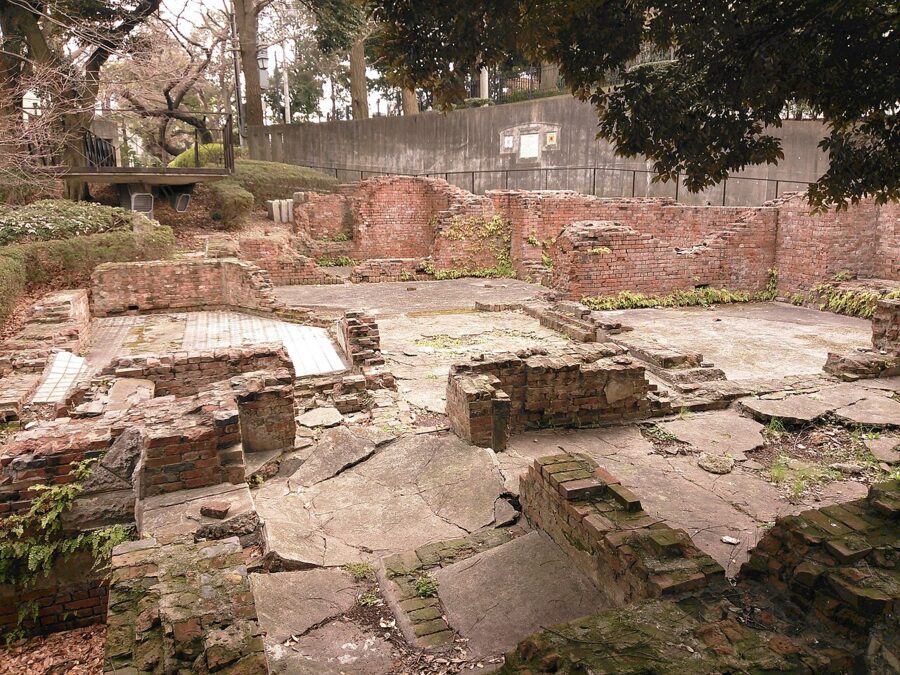

Not all of them started here. The Home of a Diplomat was moved from Shibuya in Tokyo, Bluff No.18 was rebuilt away from its original lot, and the Ehrismann Residence is a 1990 reconstruction of a house demolished in 1982. All are furnished as homes rather than museums, as if the owners had just stepped out.
The seven houses, west to east
The order follows the official walking route from Ishikawacho. All seven open 9:30 to 17:00 and are free. Each closes one Wednesday a month (Thursday when that Wednesday is a public holiday), and all close December 29 to January 3.
| House | Built | Where | Closed |
|---|---|---|---|
| Home of a Diplomat (外交官の家) | 1910 | Yamate Italian Garden | 4th Wednesday |
| Bluff No.18 (ブラフ18番館) | mid-1920s | Yamate Italian Garden | 2nd Wednesday |
| Berrick Hall (ベーリック・ホール) | 1930 | Motomachi Park | 2nd Wednesday |
| Ehrismann Residence (エリスマン邸) | 1926 | Motomachi Park | 2nd Wednesday |
| Bluff No.234 (山手234番館) | about 1929 | opposite Motomachi Park | 4th Wednesday |
| British House Yokohama (横浜市イギリス館) | 1937 | Harbor View Park | 4th Wednesday |
| Bluff No.111 (山手111番館) | 1926 | Harbor View Park | 2nd Wednesday |
Hours and closed days are as of November 2026, from the operator, the Yokohama Greenery Foundation. On a second or fourth Wednesday you still get four of the seven. During the December Christmas event there are no closed days at all.
The Home of a Diplomat
The oldest and fanciest of the group was built in 1910 in Nanpeidai, Shibuya, for Uchida Sadatsuchi, a Meiji diplomat who had been consul general in New York and ambassador to Turkey. The architect, James McDonald Gardiner, was an American who came to Japan to teach at the school that became Rikkyo University and stayed on as an architect.
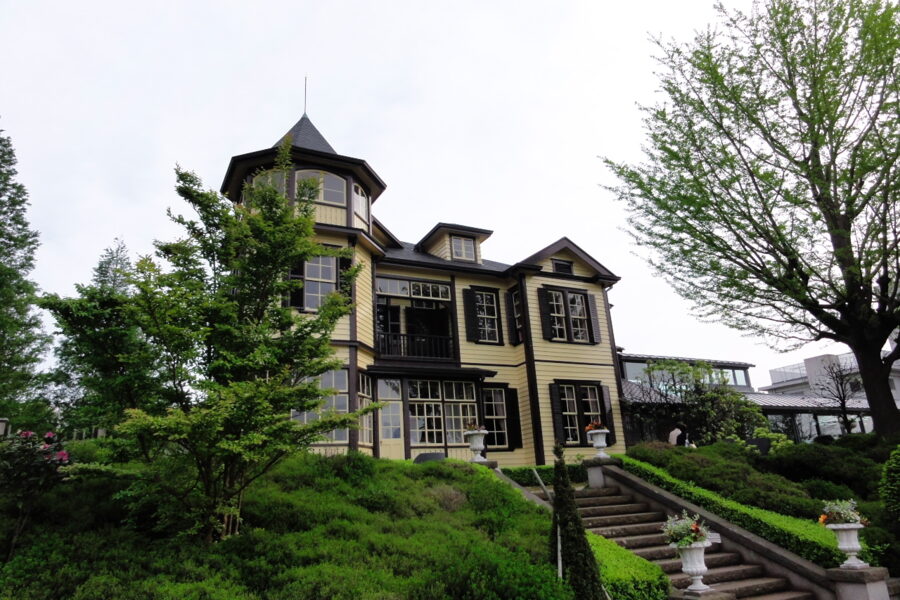

Uchida’s grandson gave the house to the city, which rebuilt it here in 1997, the year it was named an Important Cultural Property. Downstairs are the heavy formal rooms, a dining room and two parlors. Upstairs are the bedrooms and study, with Art Nouveau touches and furniture in the American Arts and Crafts manner.
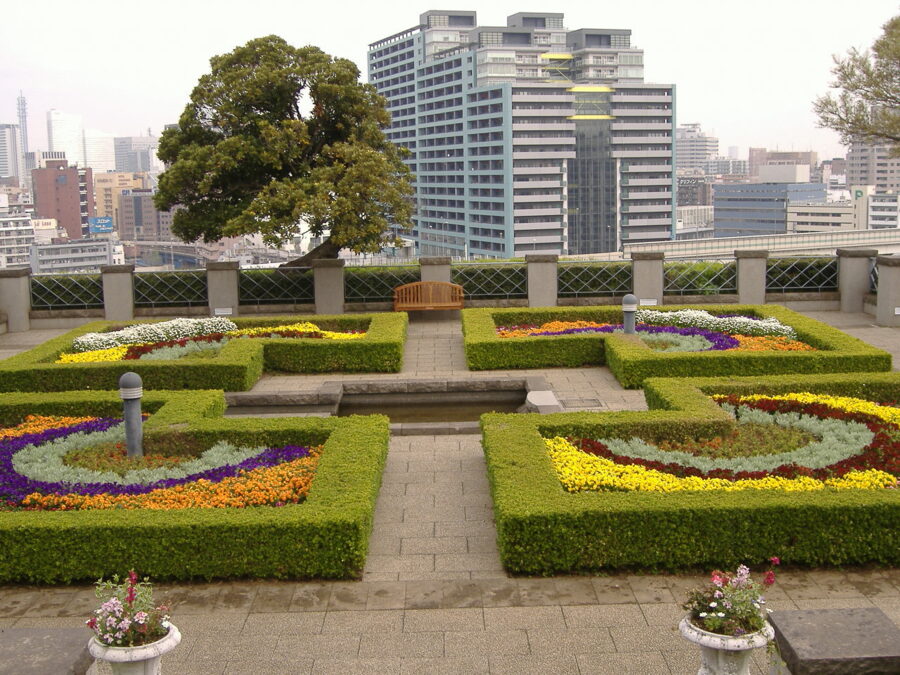
Step out on the garden side before you leave. Below is a formal Italian garden of geometric beds and water channels (the Italian consulate stood here from 1880 to 1886), and beyond it the towers of Minato Mirai. The annex has a cafe.

Bluff No.18
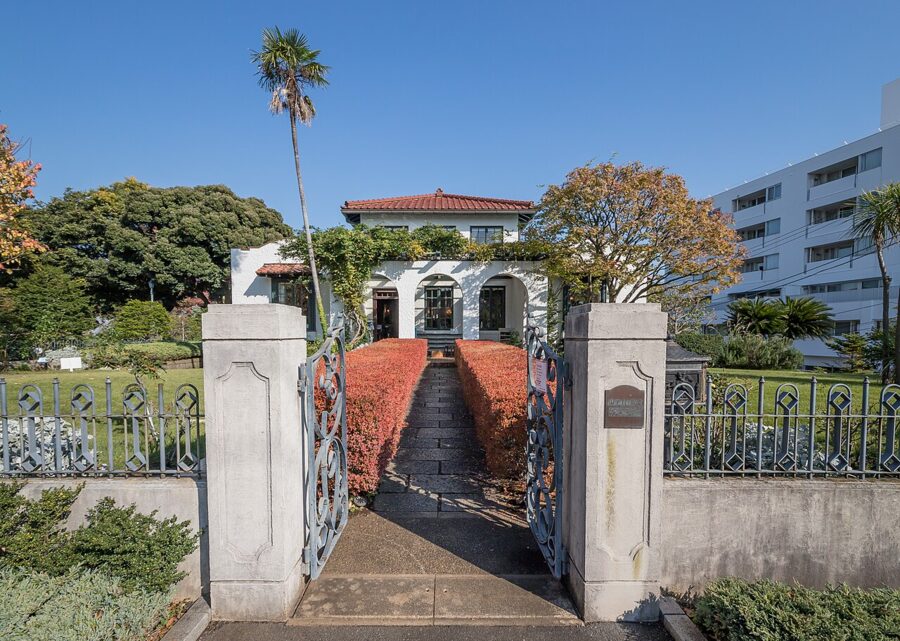
Across the garden is a smaller white house with green shutters and a French tile roof. It was built after the 1923 earthquake on lot 45 for an Australian trader named Bowden and later served as the rectory of the Catholic Yamate Church until 1991, when the church gave its parts to the city. It reopened here in 1993.
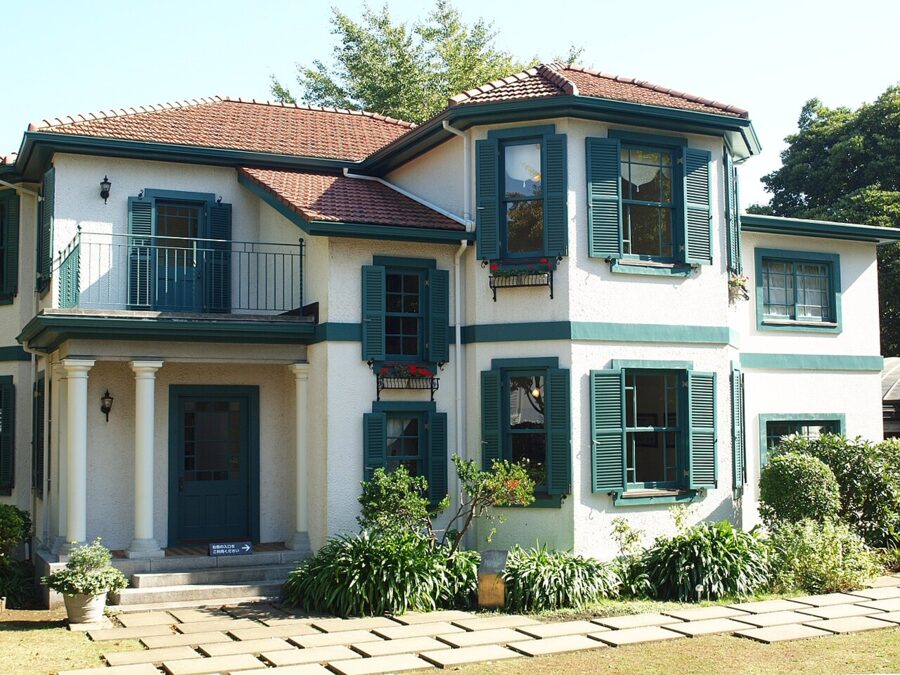

Its single chimney serves four fireplaces, and the outer walls are sprayed mortar, a fire precaution learned from the earthquake. When it was dismantled, surveyors found that some timbers came from an earlier house that had survived the quake and the fires. Inside, the rooms recreate a 1920s foreign household with restored Yokohama furniture, made in the Motomachi workshops below the hill.

Berrick Hall
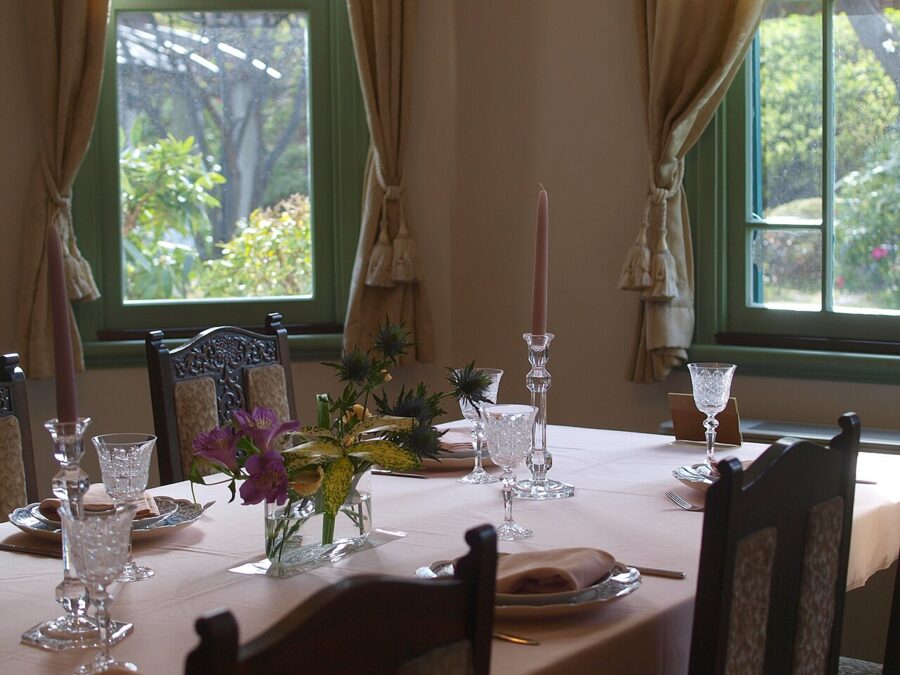
Walk east along Yamate Hondori, the ridge road, for about ten minutes to Motomachi Park and the biggest house of the day. The American architect Jay Hill Morgan designed it in 1930 for the British trader B.R. Berrick, and it is the largest prewar foreign residence still standing on the Bluff, on about 2,000 square meters of land.
The family lived here until the Second World War. In 1956 Berrick’s heirs gave it to the Marianist Society, and until 2000 it was a boarding house for St. Joseph International School. The city bought the land in 2001 and opened the restored house and garden in 2002.
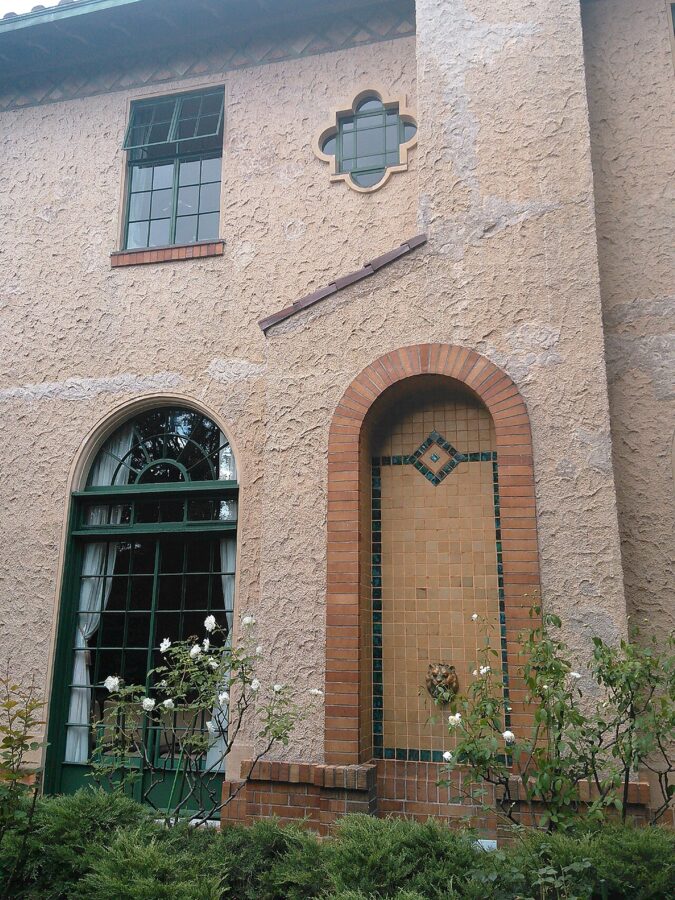

The style is Spanish, which Morgan used often: a triple-arched entrance, small quatrefoil windows and a chimney with its own little tile roof. Inside are a big living room, a palm room, a beamed dining room with an alcove, black-and-white tiled floors and ironwork on the stairs. If you only have time for one house, make it this one.
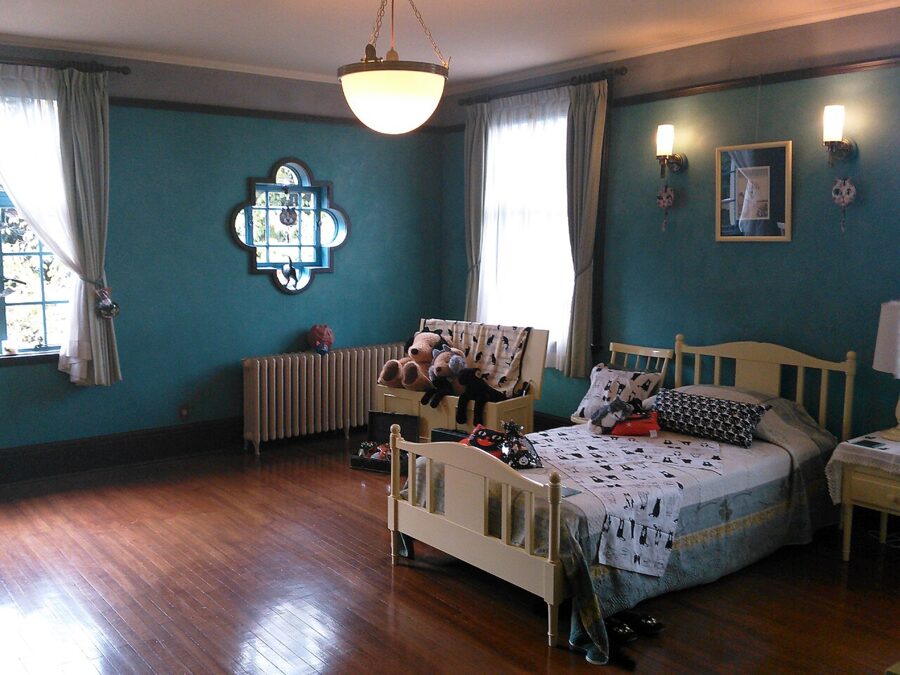
Upstairs, find the son’s bedroom, whose walls were restored with a fresco technique.

The Ehrismann Residence and its cafe
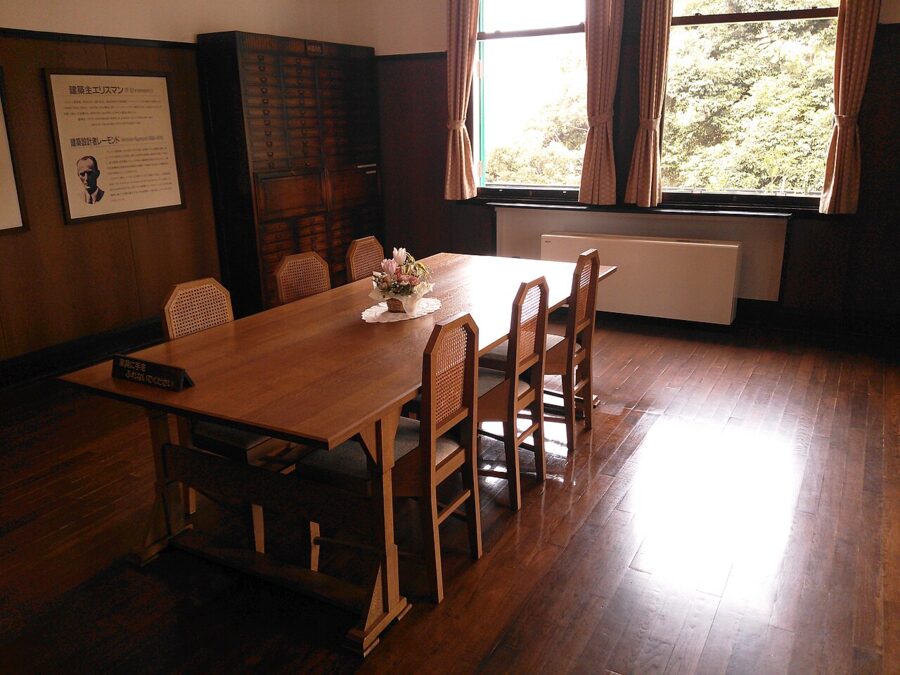
Next door in the same park is the most modern-looking of the seven. Fritz Ehrismann was a Swiss-born silk trader who managed the Yokohama office of the trading house Siber Hegner, and he had this house built in 1925 and 1926 on lot 127. His architect was Antonin Raymond, the Czech-born designer who came to Japan with Frank Lloyd Wright for the Imperial Hotel and stayed to help found modern architecture here.
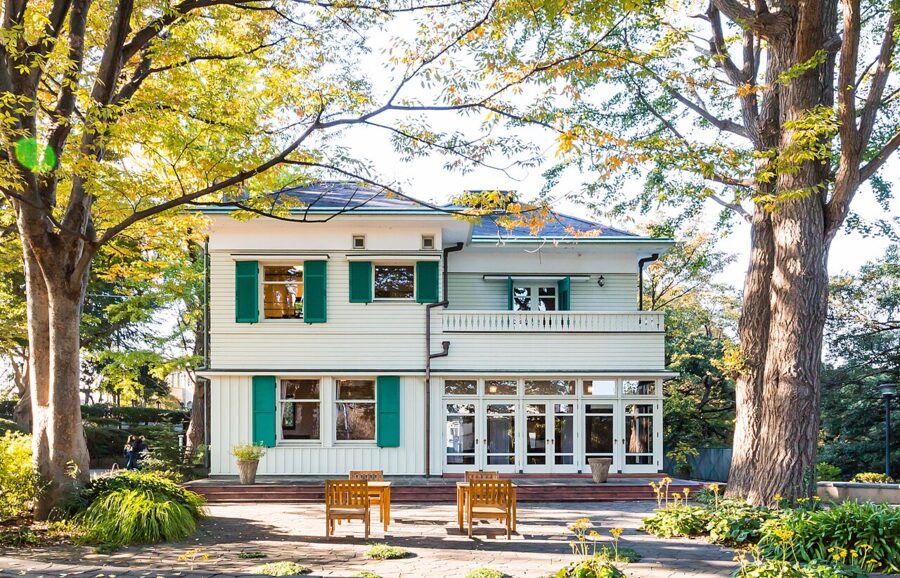

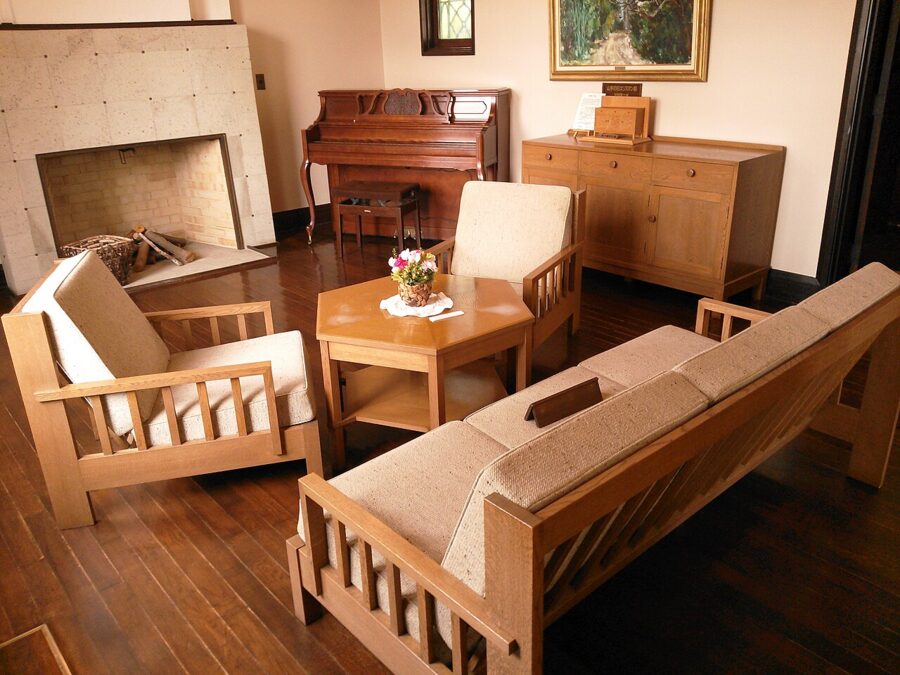
The original was knocked down in 1982 for an apartment block, and in 1990 the city reconstructed it here, on old settlement lot 81. Downstairs are the drawing room with its fireplace, a living and dining room and a garden sunroom, furnished with Raymond’s own chair and table designs. Upstairs, where the bedrooms were, an exhibition of photos and drawings of the Bluff’s houses makes the best short introduction to the hill.

The old kitchen is a cafe. From 2014 it held a small soy sauce-themed cafe, remembered for a custard pudding with a raw egg yolk on top. That cafe is gone. Since July 22, 2022 the room has been Café Ehrismann (カフェ エリスマン): 18 seats, coffee, tea and desserts on fine china, 10:00 to 16:00 (last order 15:30).

It takes no reservations, closes on the second Wednesday with the house, and accepts cards and transit IC cards. Midweek mornings are quiet; on spring weekends expect to wait for a chair.
Bluff No.234
Across Yamate Hondori, Bluff No.234 looks like one large house but was built around 1929 as an apartment block for foreigners, probably to draw back residents who had left after the earthquake. Four identical three-bedroom flats face each other across a central porch, two up and two down. The designer is said to be Asaka Yoshizo, who also designed the house next door that is now the Enokitei tea room.
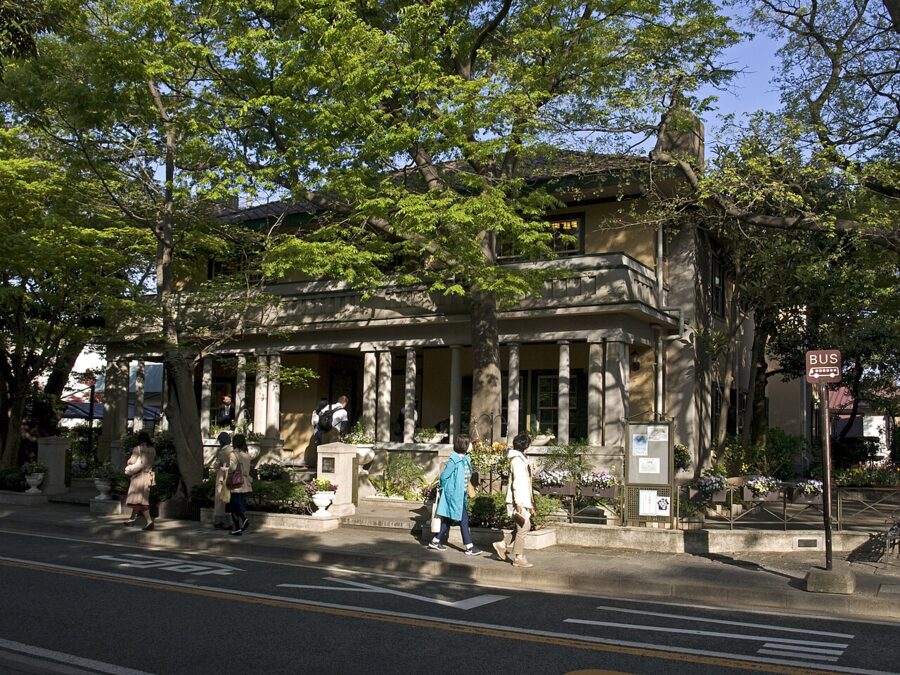

After postwar use by the US military it stayed an apartment building for decades; the city bought it in 1989 and opened it in 1999. Downstairs is a recreated living room with panels on the building’s history; upstairs is rented out for exhibitions. It is the plainest of the seven, which is the point: this is how an ordinary tenant lived. Look in the kitchen corner for an old Russian samovar.
British House Yokohama
Continue east past the cemetery to Harbor View Park. The British House was built in 1937 as the British Consul General’s residence, designed by the Office of Works in Shanghai, in reinforced concrete on a large plot. It ranked among the more important consular residences in East Asia.
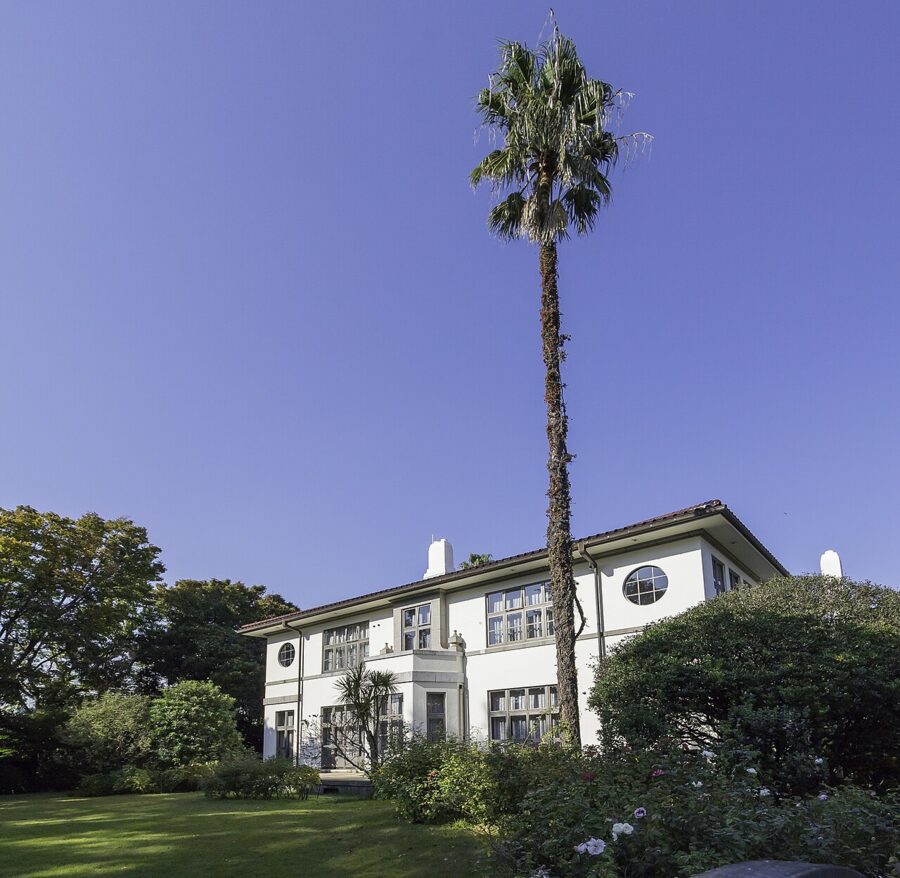

On the ground floor’s south side are a sun porch, drawing room and dining room opening onto a terrace. There is a wine cellar below and a servants’ wing to the east. Look for the bronze plate reading “British Consular Residence” by the front.
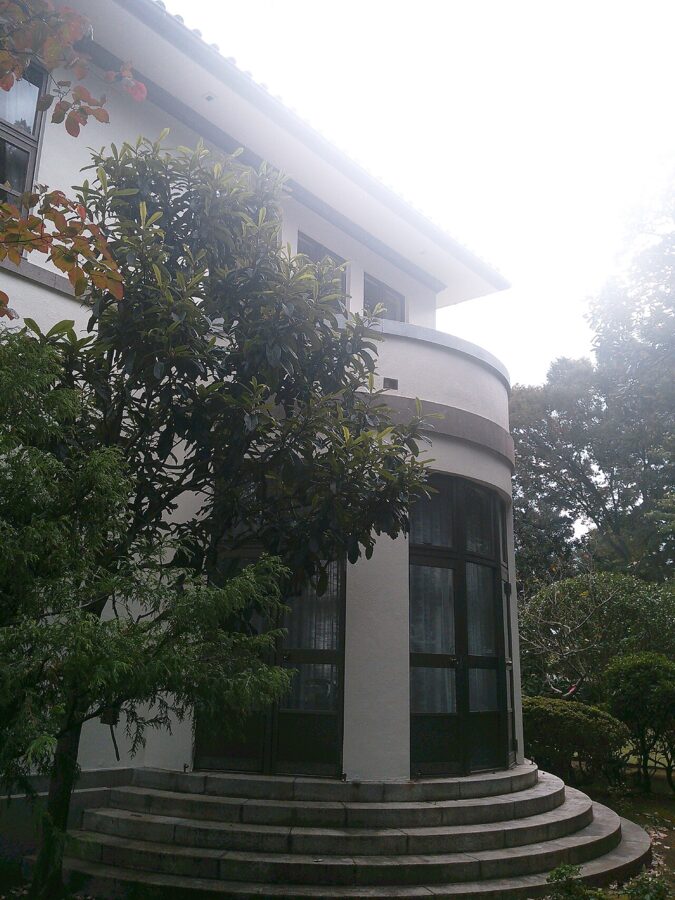

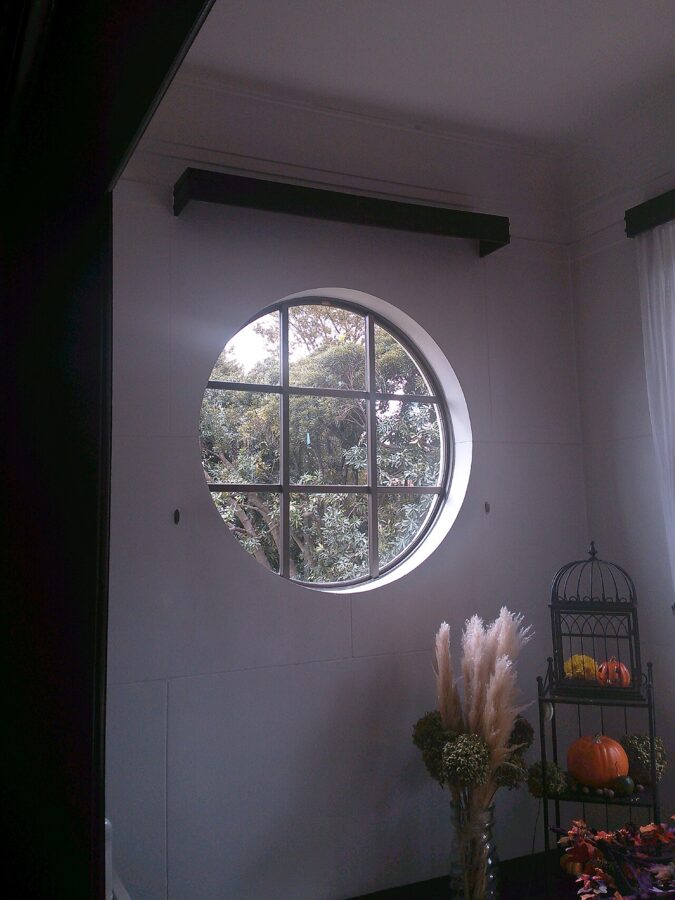
The city bought it in 1969. The hall is used for concerts and the upstairs meeting room for events, so the visitor’s part is the restored bedroom and exhibition room upstairs, opened in 2002. This is the one house where you keep your shoes on.

Bluff No.111
The last house sits just south of the British House, facing Washin-zaka with a wide lawn in front and the rose garden below. Morgan designed it in 1926 for an American named J.E. Laffin, four years before Berrick Hall, and the two share the triple-arched entrance. Here the arches carry an open pergola instead of a roof, which makes it feel lighter.
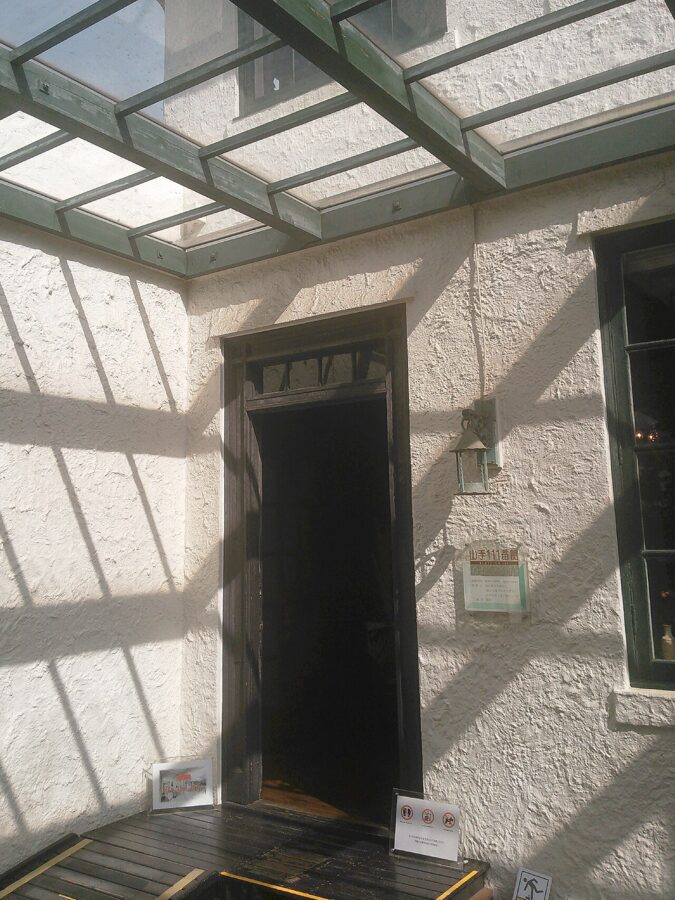

Red tile roof, white walls, two timber stories over a concrete basement. The basement held a garage and servants’ rooms; the ground floor centers on a double-height hall; upstairs were bedrooms facing the sea, a gallery and a sleeping porch.
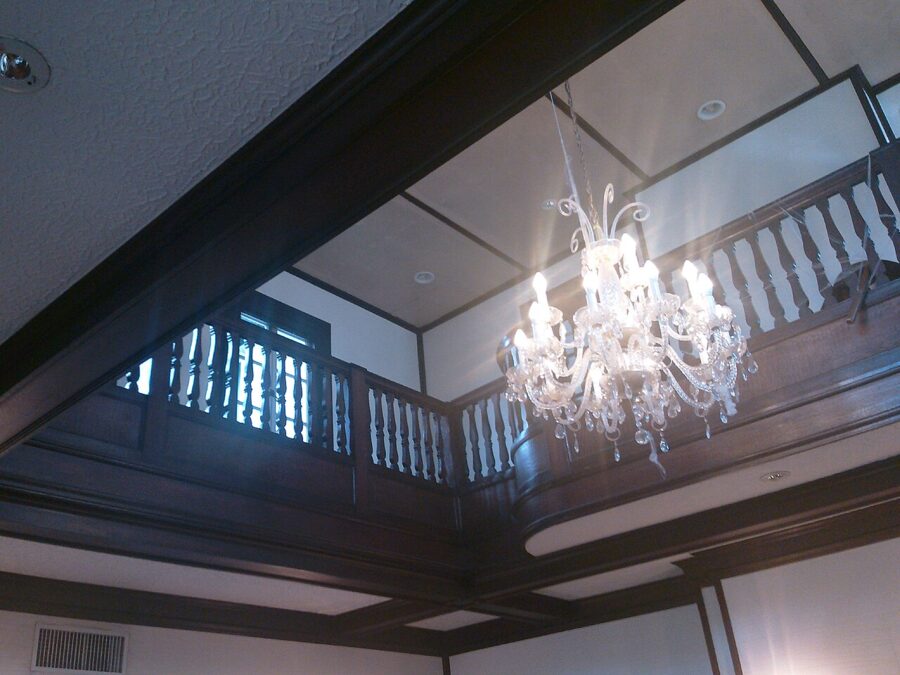

The city opened it in 1999, furnished in early-Showa style with displays on Morgan, who arrived in 1920 and left buildings all over Yokohama. The basement, entered from the rose garden, is now Cafe the Rose.
Rules inside the houses
- Slippers are provided at every house except the British House.
- Souvenir snapshots are fine. No tripods, reflectors, selfie sticks or video, and don’t block a room for long. Commercial and wedding shoots need a city permit.
- No food or drink inside, and the parks are non-smoking.
- Small pets in a carrier are allowed in Bluff No.18, Berrick Hall, Bluff No.234 and the British House, except on catered-event days. Not in the three houses with cafes.
- No parking. Come by train or bus.
- A free map is handed out at each house and at Yokohama’s tourist information centers, and the official site has an English version to download.
Christmas, Halloween and the flower weeks
The houses are dressed for four events a year, and each one changes every room. If you can choose your month, choose one of these.
World Christmas (世界のクリスマス), December 1 to 25. Each house decorates for one country’s Christmas. For 2026 it is Brazil at the Diplomat’s House, Italy at Bluff No.18, the Netherlands at Berrick Hall, Japan at the Ehrismann Residence, Finland at Bluff No.234, Britain at the British House and Argentina at Bluff No.111. The Ehrismann theme tells how Christmas reached Japan through the settlements and churches, with Yokohama leading the way.
There are no closed days during the event, and the cafes stay open too. The Candle Garden in the Italian Garden runs on December 19, 2026 from sunset to 19:00 (canceled in rain), when the Diplomat’s House and Bluff No.18 stay open until 19:00. Ticketed concerts run December 12 and 13; two were full by late November, and the British House concert costs ¥3,000 (about $20).
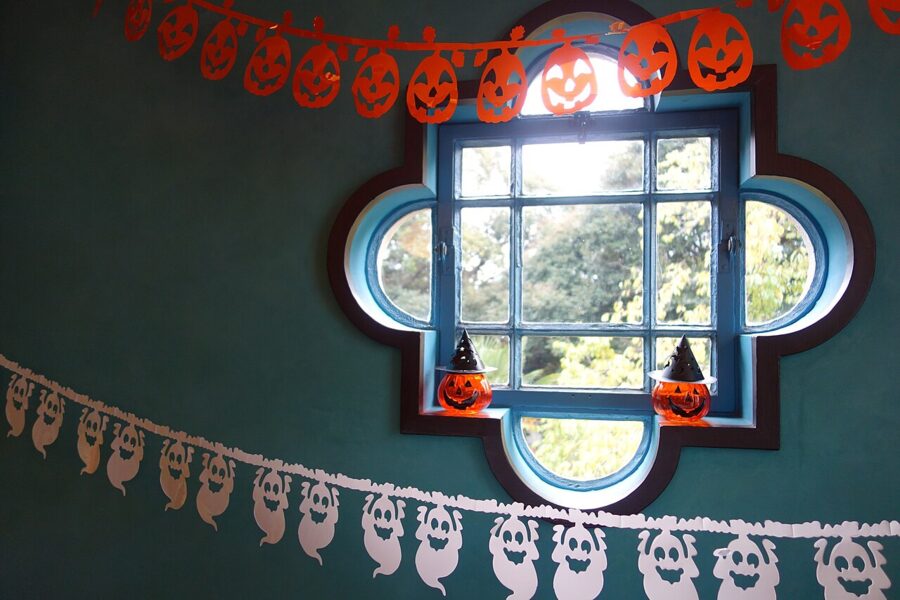

Western House Halloween, mid to late October. In 2026 the houses were decorated October 17 to 31, with a free costume stamp rally around the houses and nearby museums on Sunday, October 25. Expect small children in costume on rally day.
Flowers and Tableware (花と器のハーモニー), June. Florists, ikebana masters and table designers decorate every room. The 2026 edition ran June 6 to 14 with the heads of seven ikebana schools, one per house. The 2027 edition runs longer, June 5 to 30, timed to the GREEN×EXPO 2027 horticultural expo in Yokohama, and is built around the ikebana artist Nakagawa Yukio and eight contemporary artists.
Yokohama Yamate Art Festival, January and February. Exhibitions, readings and concerts by local groups in the quiet months.
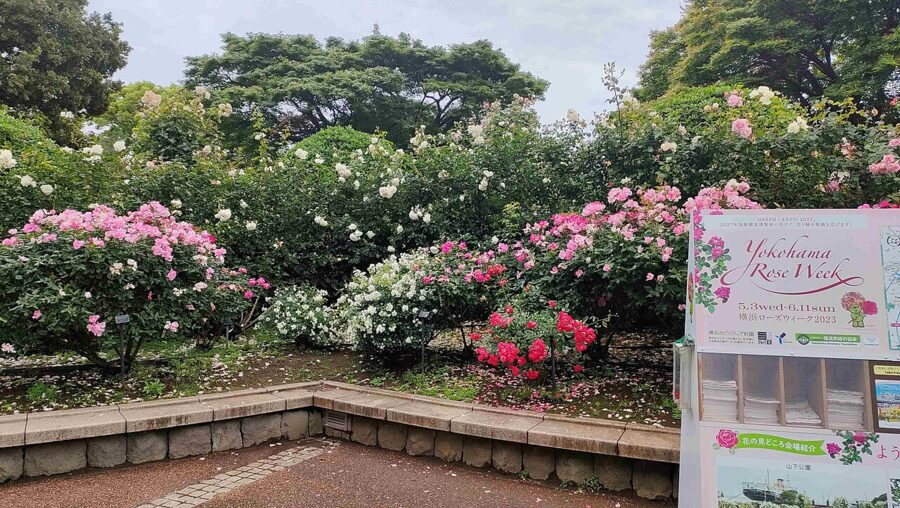
The gardens keep their own calendar. Roses in Harbor View Park and the Italian Garden peak in mid-May and mid-October, and Yokohama Rose Week fills May. Motomachi Park has about 100 cherry trees for late March and early April.

The walk, from Ishikawacho to Motomachi-Chukagai
The route is about 2 kilometers along one ridge road, with a steep start and a gentle finish. Allow two to three hours for all seven houses; two or three houses take 30 minutes to an hour.
Getting there
JR Ishikawacho Station on the Negishi Line is two stops past Sakuragicho; use the Motomachi exit (元町口) on the south side, not the Chinatown exit. Motomachi-Chukagai Station is the end of the Minatomirai Line, about ten minutes from Yokohama Station for ¥230 by ticket or ¥224 by IC card (about $1.50), as of November 2026. Many Tokyu Toyoko Line trains from Shibuya run straight through, so from central Tokyo you need not change at Yokohama.
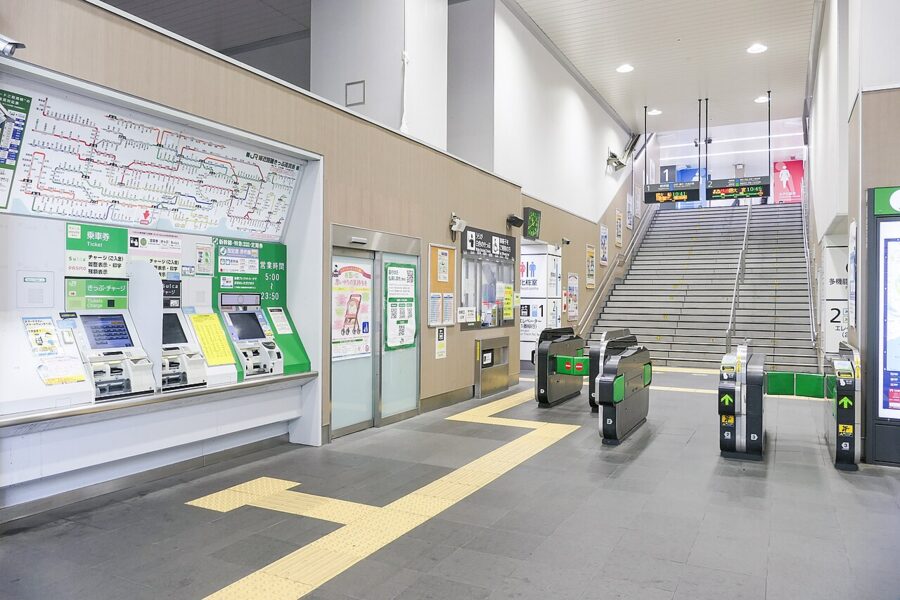
The Minatomirai Line’s one-day pass costs ¥460 (about $3). The JR Pass covers Ishikawacho but not the Minatomirai Line.
To skip the climb, take Kanagawa Chuo bus route 11 from JR Sakuragicho Station to Italia-yama Teien-mae, Motomachi Koen-mae or Minato-no-Mieru-Oka Koen-mae. The city’s Akaikutsu loop bus also stops at Harbor View Park, from Sakuragicho’s stand 3, for ¥220 (about $1.50), about every 20 minutes on weekdays and every 15 on weekends and holidays (as of October 2026).
The route, stop by stop
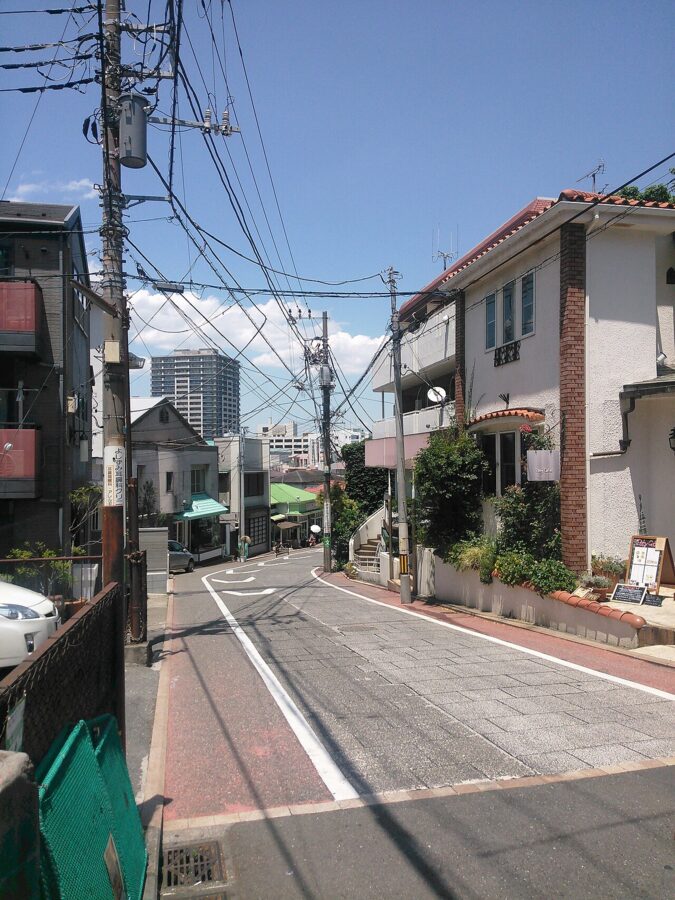
- Ishikawacho Station to the Italian Garden, 5 minutes. Outside the Motomachi exit, the post office is on your left. Climb Daimarudani-zaka, the short, steep lane in front of it.
- Diplomat’s House and Bluff No.18, 30 to 40 minutes.
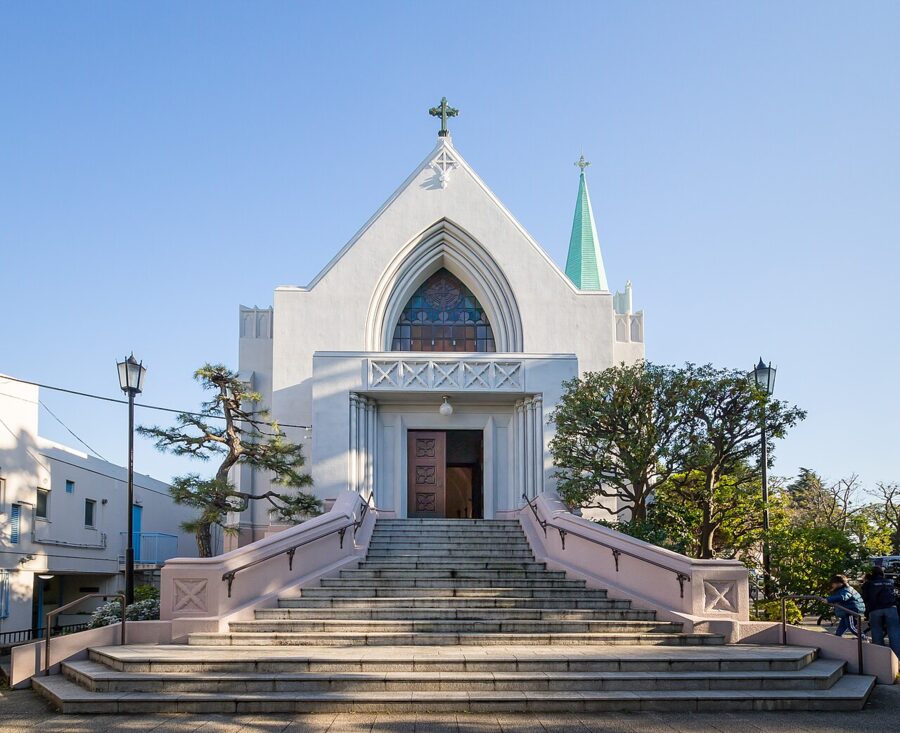
- To Motomachi Park, about 15 minutes. Leave by the Diplomat’s gate, turn left onto Yamate Hondori and walk east past the Catholic Yamate Church and Ferris, a girls’ school founded by American missionaries in the settlement years.
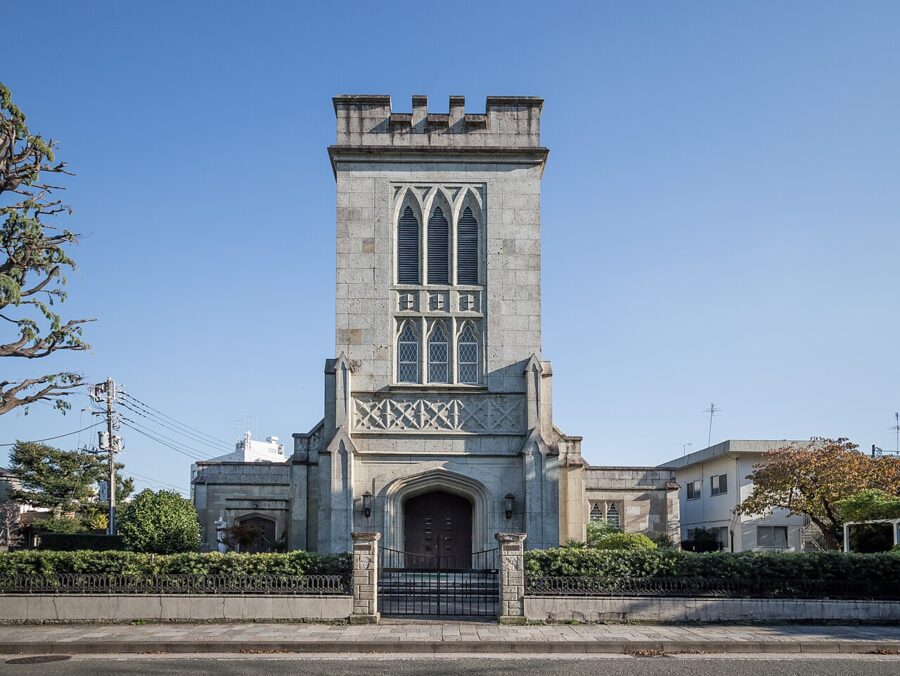
- Berrick Hall, the Ehrismann Residence and Bluff No.234, an hour or so. Christ Church stands next to Bluff No.234.
- To Harbor View Park, about 5 minutes, past the Foreign General Cemetery.
- British House and Bluff No.111, 30 to 40 minutes, then the lookout and French Hill.
- Down to Motomachi-Chukagai Station, about 5 minutes, through America-yama Park to exit 6, where lifts and escalators take you down the slope.

Why west to east? The Ishikawacho climb is the hardest part, so doing it first leaves a downhill finish into Motomachi and Chinatown. Coming from Shibuya on the Tokyu line, the reverse works just as well: up through America-yama Park, out at Ishikawacho.

The official route also suggests three short loops of one to two hours: the Italian Garden pair from Ishikawacho; the Motomachi Park three via Motomachi shopping street and Daikan-zaka; and the Harbor View Park pair via Yato-zaka from Motomachi-Chukagai exit 5.

The houses also run special guided tours in three areas, sometimes into rooms normally closed. For 2026 they cost ¥500 (about $3), with six places, booked by phone or in person from 10:00 on the first of the month. Tours are in Japanese.
On the way: the cemetery, the parks and the views
Yokohama Foreign General Cemetery
The cemetery began in 1854, when Robert Williams, a 24-year-old American sailor, fell from the mast of the USS Mississippi during Commodore Perry’s second visit. Perry asked for a grave in view of the sea, and it went into the grounds of a temple on this slope. The foreigners’ cemetery was formally set aside in 1861.
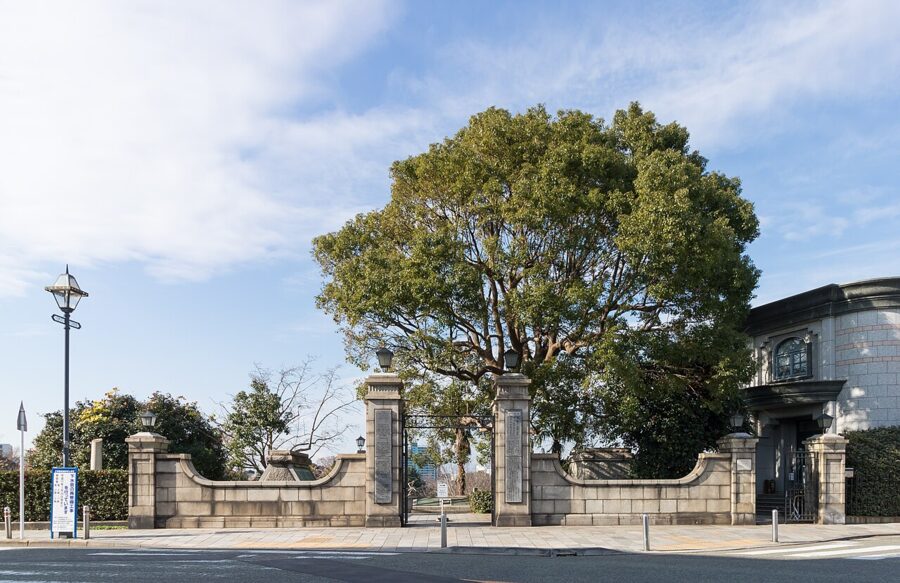

About 4,400 people from more than 40 countries lie here. They include Edmund Morel, the British engineer of Japan’s first railway between Shimbashi and Yokohama; Charles Richardson, killed in the Namamugi Incident of 1862; the brewer William Copeland; and Eliza Scidmore, who campaigned for the cherry trees along the Potomac in Washington. A cherry tree from Washington was planted by her grave in 1991.
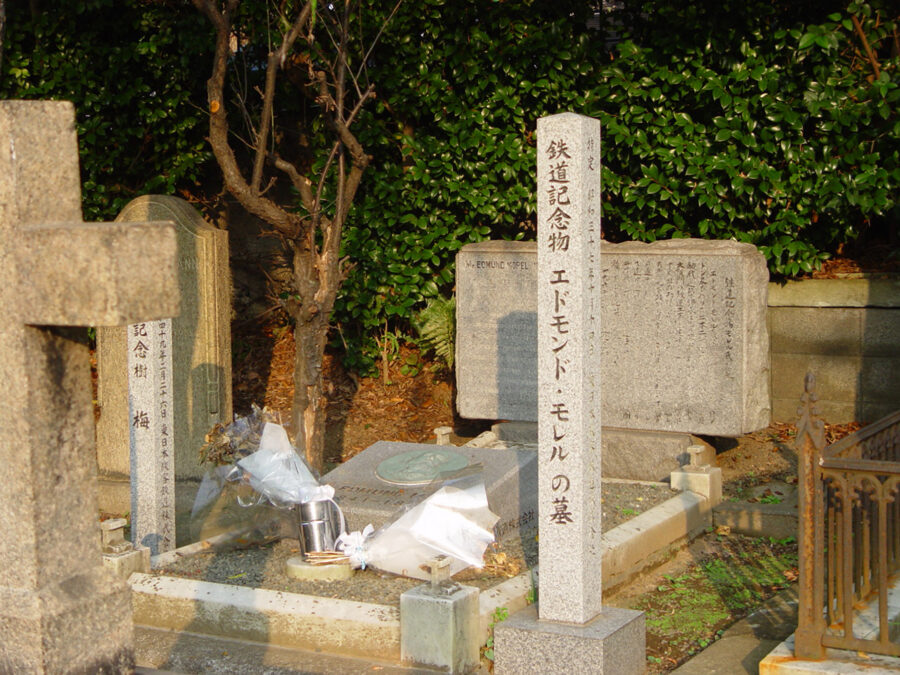

The cemetery is usually closed, but volunteers open it on Saturdays, Sundays and holidays in February to July and September to December, 12:00 to 16:00, except in rain (as of November 2026). A donation of about ¥500 toward upkeep gets you in for a ten-minute loop. The small museum is free, 9:00 to 17:00, closed Mondays and Tuesdays.
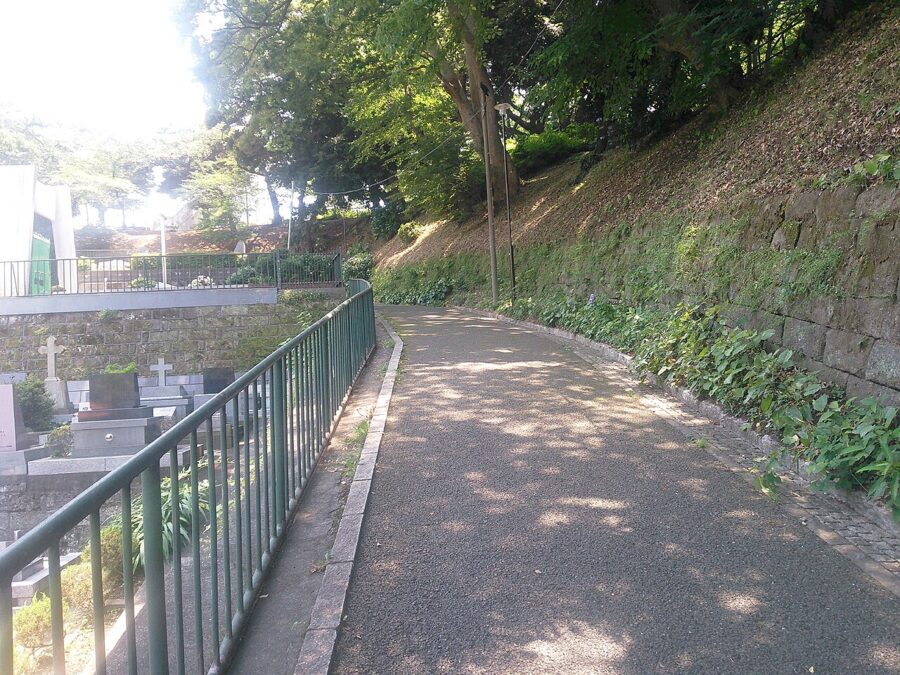

The cemetery is run by a private foundation on land leased to the foreign consulates, and the donations keep it going.
Harbor View Park and French Hill
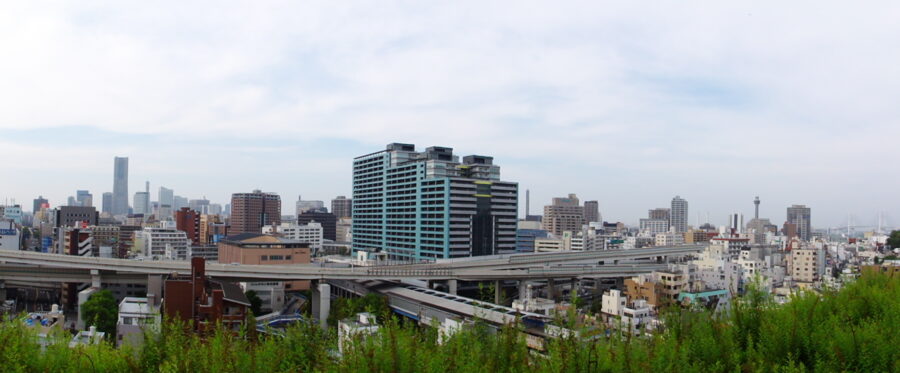
Harbor View Park (港の見える丘公園) opened in 1962 on the old garrison land and took its name from a postwar song. The lookout faces the port and the Bay Bridge, with an expressway in the foreground. The park also holds the English Rose Garden, the Kanagawa Museum of Modern Literature (9:30 to 17:00, closed Mondays except holidays) and the Osaragi Jiro Memorial Museum, for the Yokohama-born novelist.
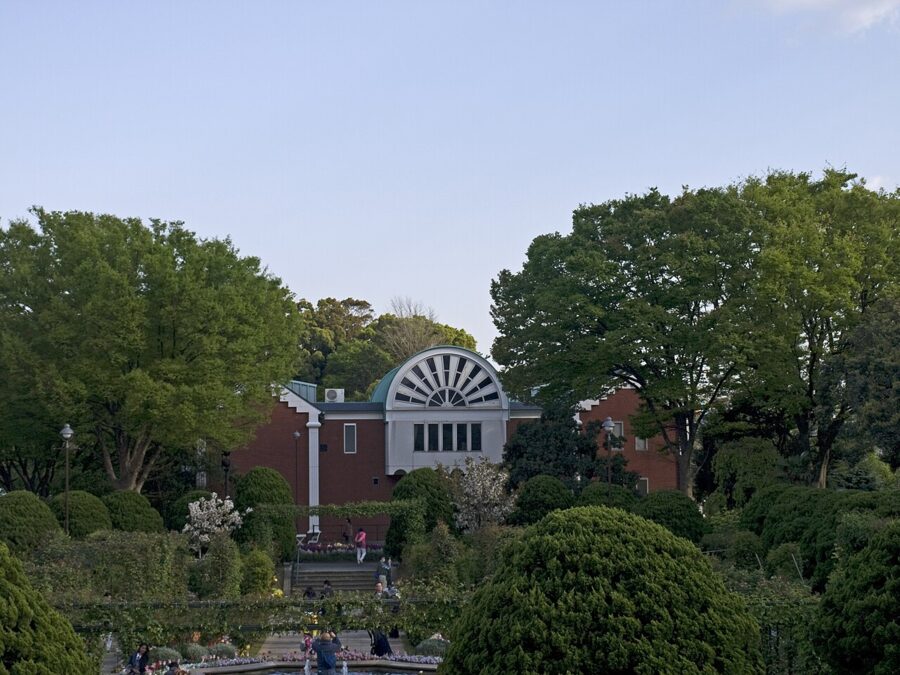

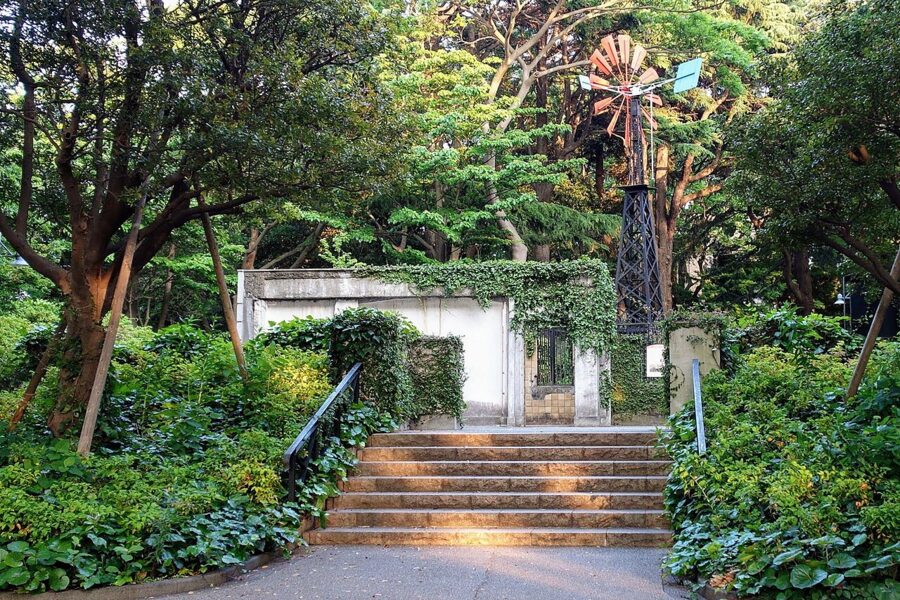

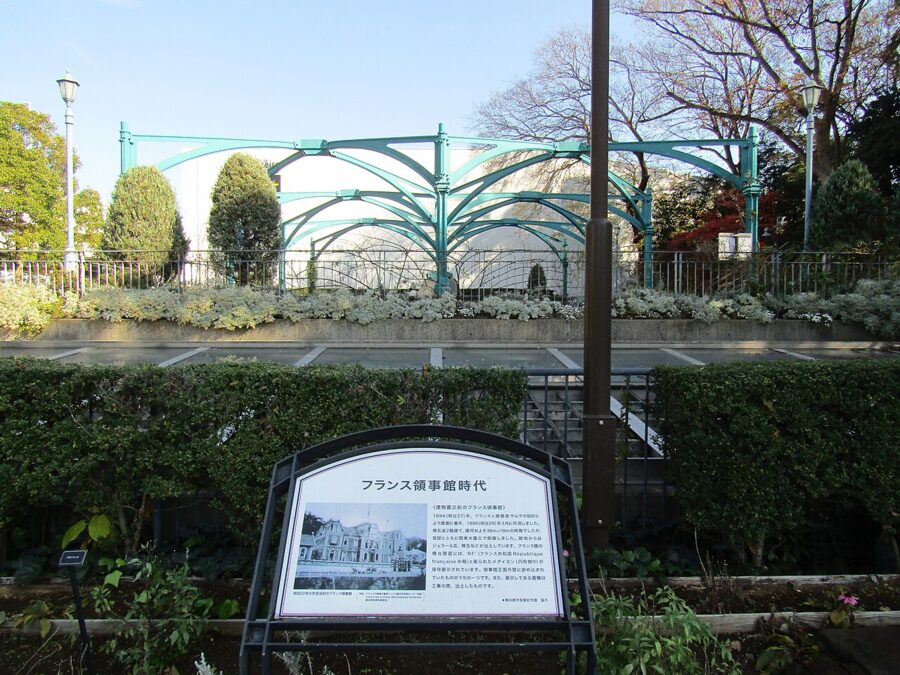
North of the lookout, a wooded path drops down French Hill (フランス山) past the French Consulate ruins, a windmill, a brick well from 1896 and an iron pavilion from Victor Baltard’s Les Halles market in Paris. It comes out toward Yamashita Park, a good exit if you want the waterfront instead of Chinatown.

Yamate Park and Motomachi Park
Yamate Park, about ten minutes’ walk from Ishikawacho and off the main route, is Japan’s first Western-style park and the birthplace of Japanese tennis. The small Tennis Museum is free, 9:30 to 17:00, closed the third Monday. The Former Yamate No.68 House there was closed for repairs through the end of November 2026.
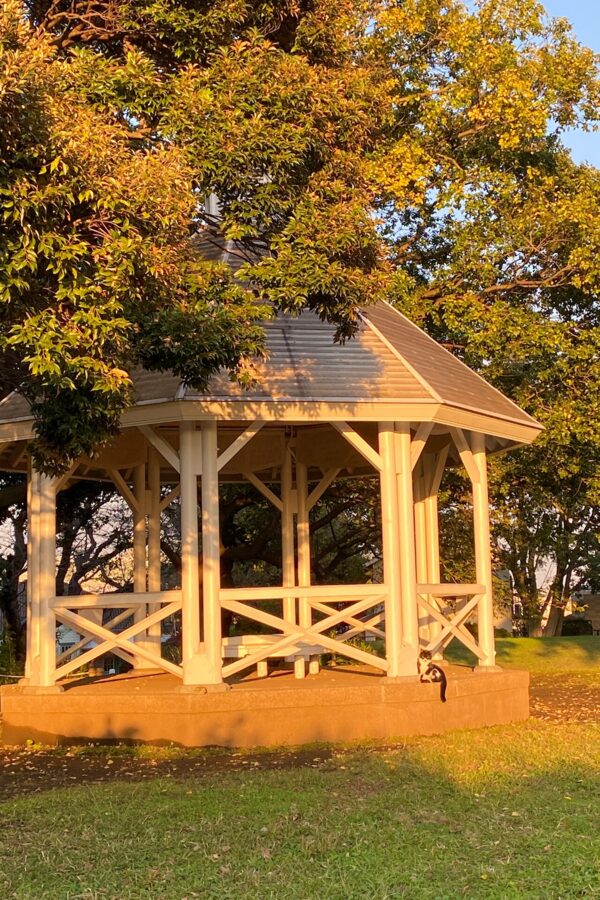

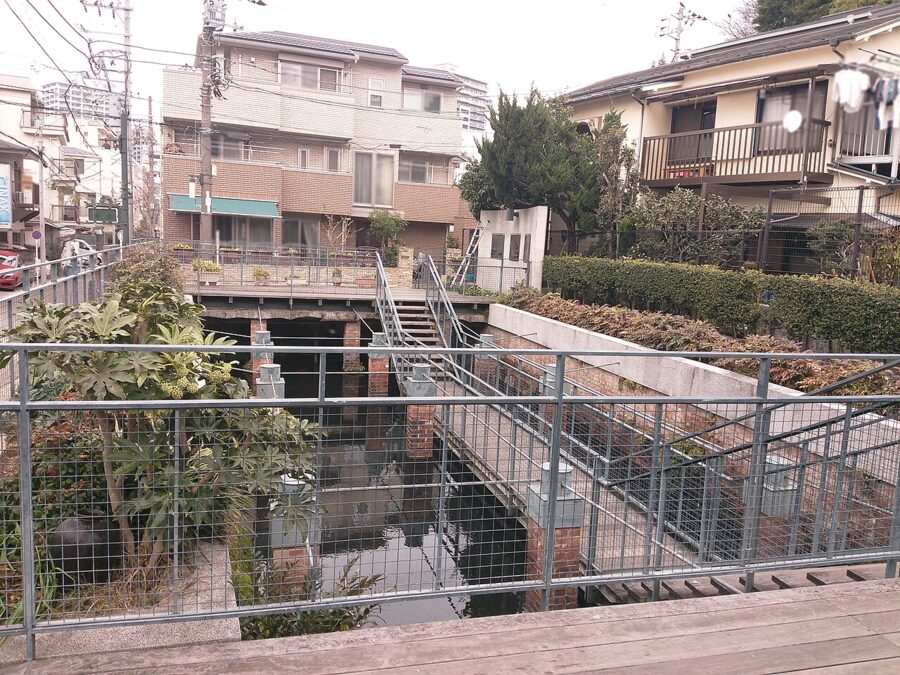
Motomachi Park, around Berrick Hall, was the waterworks of Alfred Gérard, a Frenchman who from about 1868 sold spring water to ships and made Western roof tiles here. His lower water tank survives near the Motomachi entrance, and the pool building is roofed with his tiles.

America-yama Park
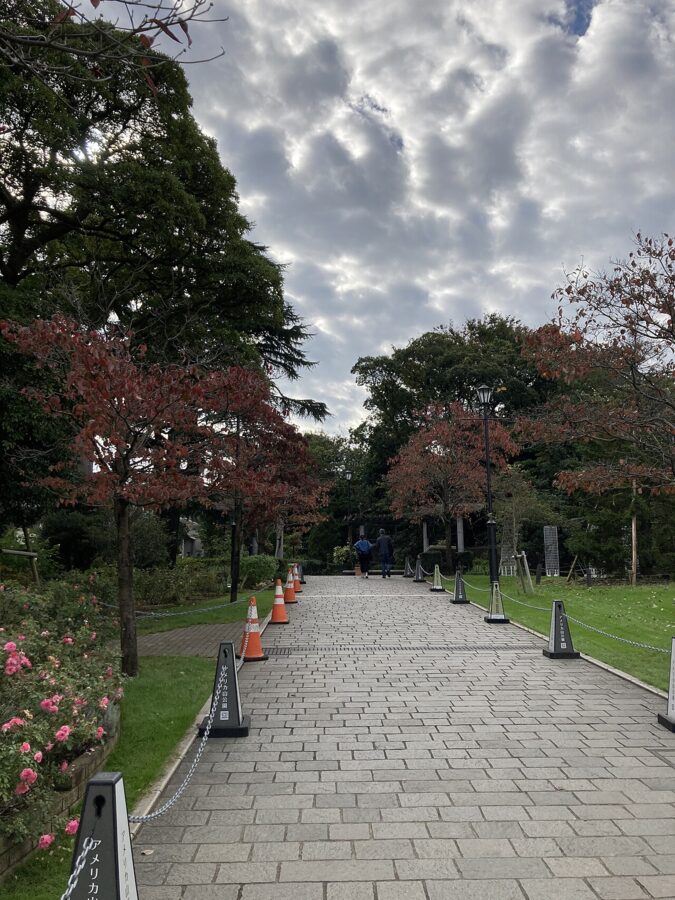
The last stop is a roof garden on top of Motomachi-Chukagai Station, the first park of its kind in Japan. The hill stands about 18 meters above the station, and the park’s lifts and escalators take you down to the exit 6 gates. From the lawn you can see Marine Tower and the Bay Bridge.
Cafes on the hill
Three houses have cafes, and none takes reservations. Details as of November 2026:
- Bluff Garden Café, in the Diplomat’s House annex: light meals and cakes, 18 seats plus a terrace over the Italian Garden. 10:00 to 16:30 (last order 16:15), closed the fourth Wednesday.
- Café Ehrismann, in the Ehrismann Residence: coffee, tea and desserts, 18 seats. 10:00 to 16:00 (last order 15:30), closed the second Wednesday.
- Cafe the Rose, under Bluff No.111: 30 seats plus a terrace on the rose garden. 10:00 to 17:00 (last order 16:30), closed the second Wednesday. The rose-flavored tea is the thing to take home.
All three close December 29 to January 3 and open every day from December 1 to 25.
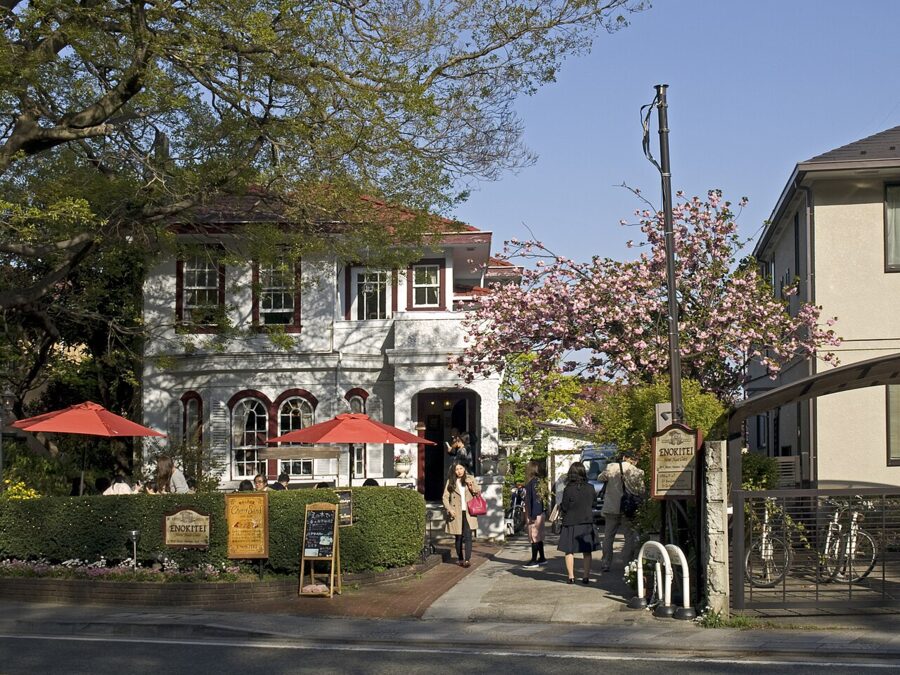

The one with the queue is Enokitei (えの木てい) at Yamate 89-6, next to Bluff No.234, in a 1927 house of its own furnished with antiques. Its rare cheesecake and English scones follow its original recipes, and fruit tarts and mille-feuille are weekend specials. Hours are 12:00 to 17:30 on weekdays and 11:30 to 18:00 on weekends and holidays, as of November 2026.
Its rose-themed afternoon tea is served only in a private room for up to six, by reservation. Weekends bring a line; a weekday at noon is the time to go.
Down the hill: Motomachi and Chinatown
Motomachi (元町) is the shopping street below the Bluff that grew up selling to the settlement; the Yokohama furniture in Bluff No.18 was made in its workshops. It runs between the two stations parallel to the ridge, so you can drop down Daikan-zaka at the halfway point and climb back, or leave it for the end.
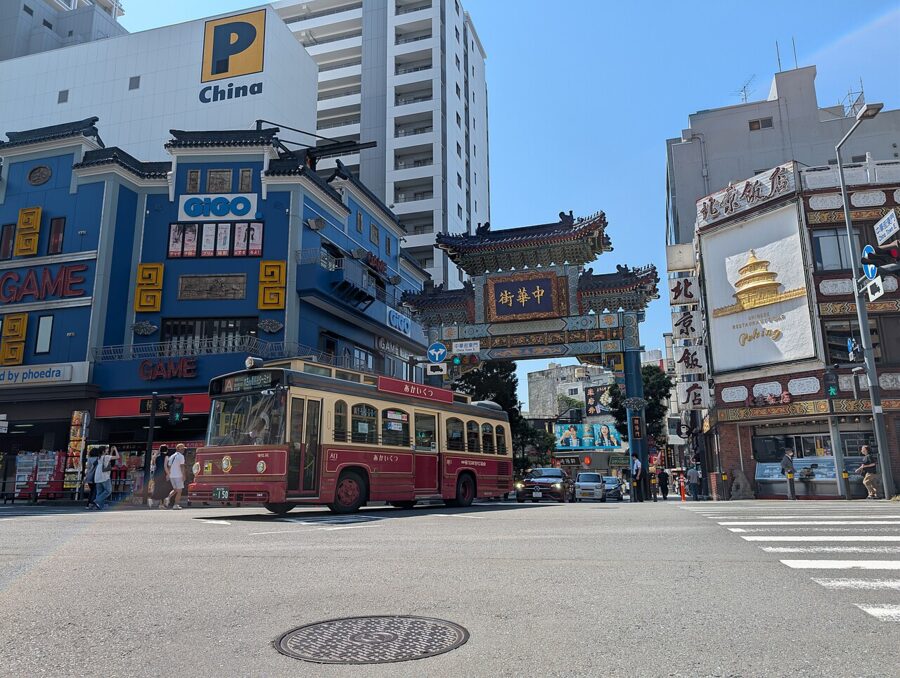
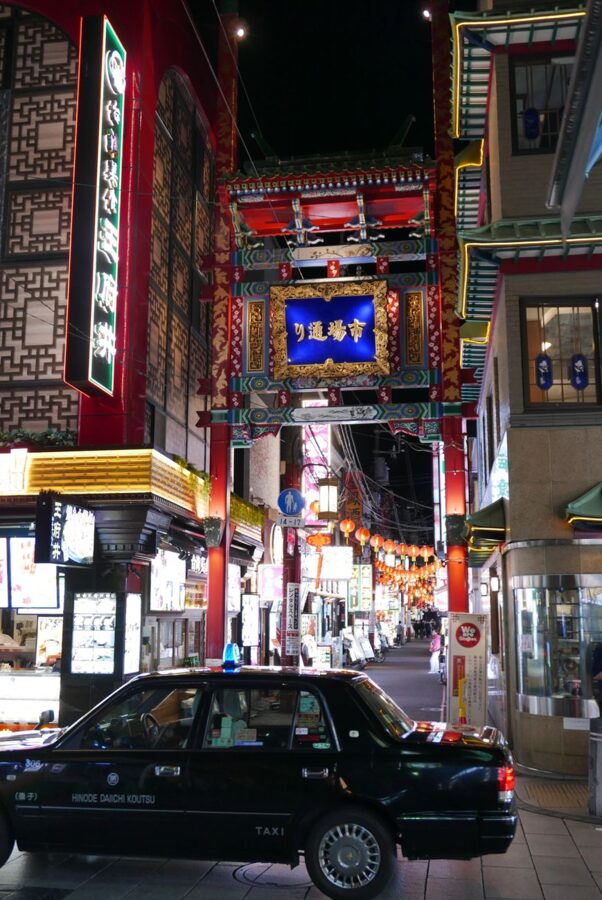
Chinatown is across the Horikawa River, five minutes from either station. It is the largest Chinatown in Japan and the obvious dinner after the walk.
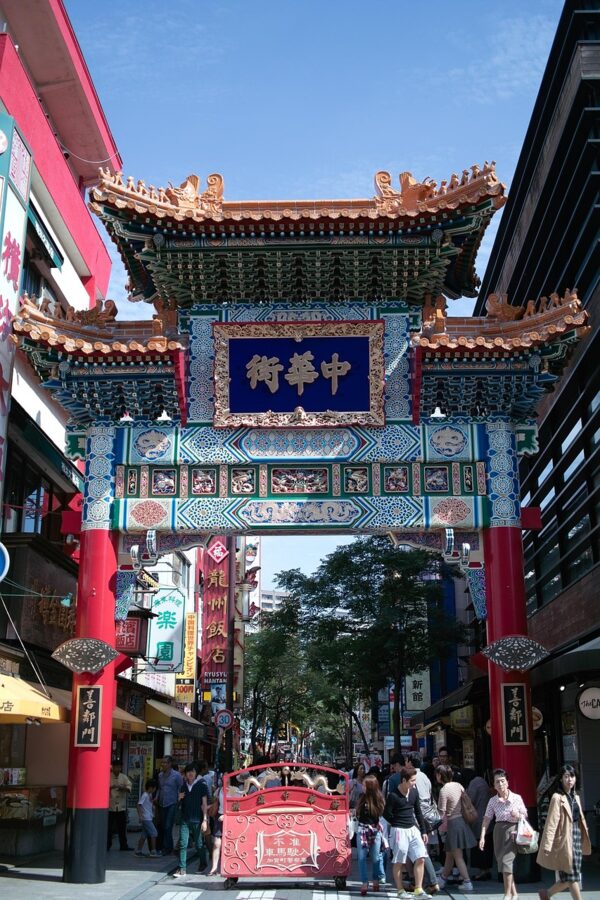
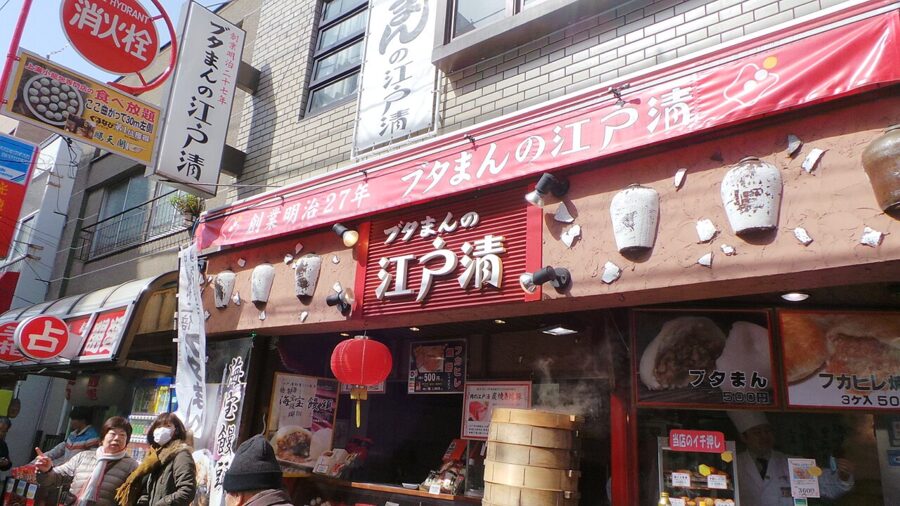
The snack to find is the pork bun. Edosei (江戸清), a meat and dim sum maker founded in Chinatown in 1894, sells its big buta-man (豚まん) from three shops there and was still adding new buns in 2026. One is a meal; eat it on the street.

Most restaurants serve into the evening, so there is no need to rush the last house for dinner.
With a second day south of Tokyo, Kamakura is about half an hour from Yokohama on the JR Yokosuka Line, and the Kamakura Alps pair well with the Bluff: another hill walk between old buildings, this time temples.
Questions people ask
How long does it take? Two to three hours for all seven at a steady pace, by the operator’s estimate. Each house takes 10 to 20 minutes; Berrick Hall deserves more.
Is anything not free? Only the cafes, the guided tours, a few concerts and the cemetery donation.
What if it rains? Most of the time is spent indoors, so the houses work in rain, though the cemetery stays shut and the slopes get slippery.
Worth it without an interest in architecture? Treat the houses as rest stops between views and food. I would still see Berrick Hall and the Diplomat’s House, then spend the time saved in Chinatown.
Start at Ishikawacho at ten, end on Chinatown’s main street at three, and buy the pork bun before you look for a seat.