
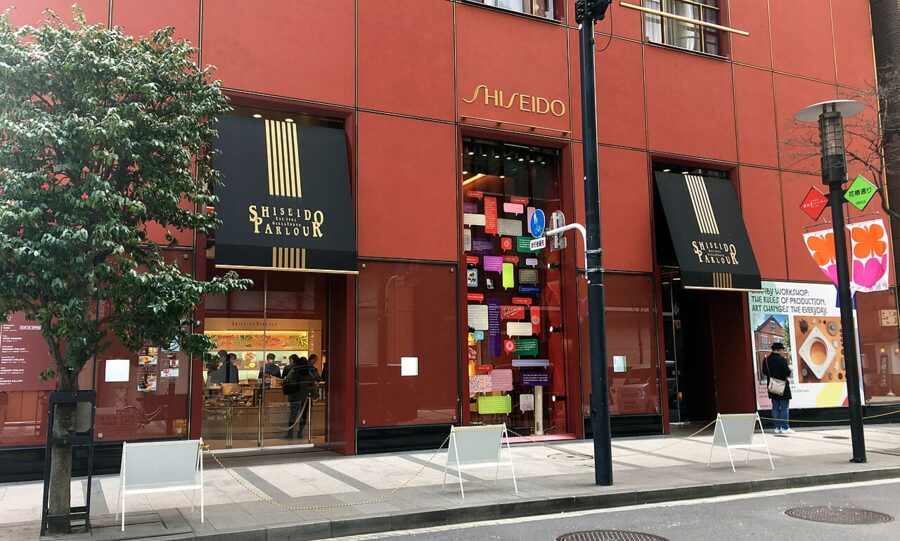
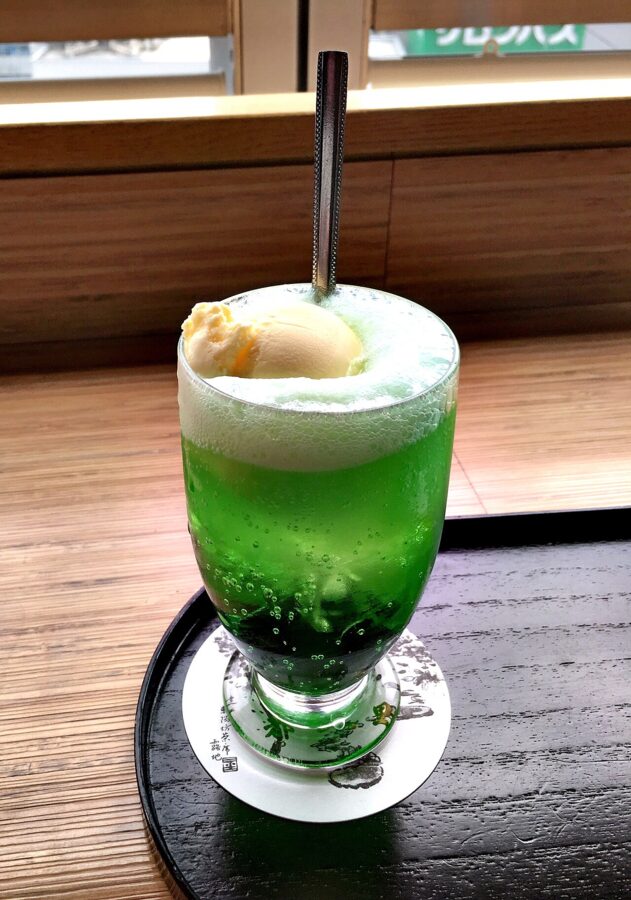
In 1902 a pharmacy on Ginza 8-chome put a soda fountain in one corner and started selling soda water and ice cream. The same address, now the red-brick Tokyo Ginza Shiseido Building, still pours cream soda three floors up, at ¥1,200 (about $8) a glass.
Ginza is better at cafes than its reputation for handbags suggests. In a walk of under two kilometers you can drink nel-drip coffee in a 1948 coffee-only room, eat a ¥2,970 (about $19) strawberry parfait in a fruit shop that dates its brand to 1894, and queue for shaved ice topped with espuma on the third floor of an office block. The trick is knowing which kind of cafe you want before you start walking, because they keep very different hours and very different rules about booking.

Below are the shaved-ice shops and when their season runs, the pancake specialists, the old kissaten (喫茶店, the Japanese coffee house) still open, and the fruit parlors and department-store cafes that make Ginza different from Shibuya or Shimokitazawa. Prices and hours are as of November 2026 unless a line says otherwise.

Contents7 sections
Which kind of Ginza cafe you want
Ginza’s cafes fall into five families, and each answers a different afternoon. The kissaten are about coffee, quiet and the room. The fruit parlors and department-store salons are about the dessert itself, built from fruit that costs more than most lunches. The kakigōri shops are seasonal, crowded and worth it.
The pancake places are casual and mostly on upper floors of narrow buildings. The wagashi tea salons pair Japanese sweets with tea poured with some ceremony.
If you have one slot, pick by time of day. Before 11am only a few places are open, and the kissaten own that hour. Between 2pm and 4pm everything is busiest. After 6pm the fruit parlors start closing, while Shiseido Parlour and Ginza West stay open into the evening.
| Kind | Where to start | What to order | Booking |
|---|---|---|---|
| Classic kissaten | Cafe de L’Ambre, Cafe Paulista, Ginza West | Nel-drip coffee; Paulista’s blend at a 9am table; West’s French toast | Walk in |
| Fruit parlor | Ginza Sembikiya, Shiseido Parlour Salon de Cafe | Seasonal fruit parfait | No reservations at either |
| Kakigōri specialist | Parlor Vinefru Ginza, Ginza no Ginger | Seasonal fruit or ginger-milk ice | Vinefru online; Ginger name list on the day |
| Pancakes | Shiawase no Pancake Ginza | The house pancakes with manuka honey butter | Online only |
| Japanese sweets and tea | HIGASHIYA GINZA, Nakamura Tokichi Ginza | Wagashi with sencha; matcha desserts | Higashiya online; Tokichi walk in |
Kakigōri: Ginza’s shaved ice and when to eat it
Kakigōri (かき氷) is ice shaved into flakes and soaked in syrup, and it is older than almost anything else on a Ginza menu. Sei Shōnagon’s Pillow Book, written around the year 1000, lists shaved ice with amazura, a vine syrup, among the elegant things of court life. The first shop to sell it to the public opened in 1869 on Bashamichi in Yokohama, where Machida Fusazō served it alongside ice cream.
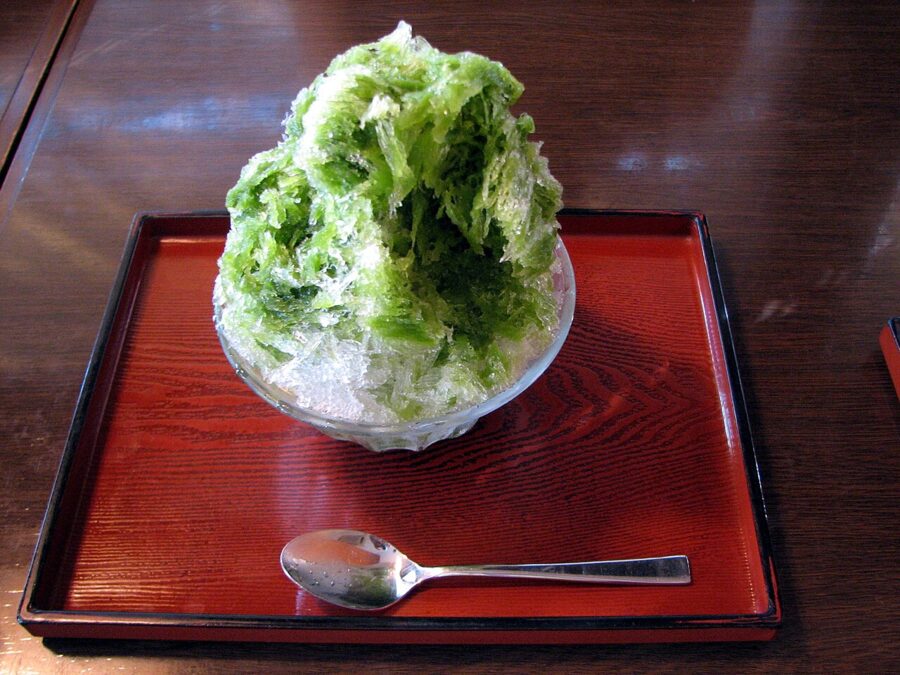

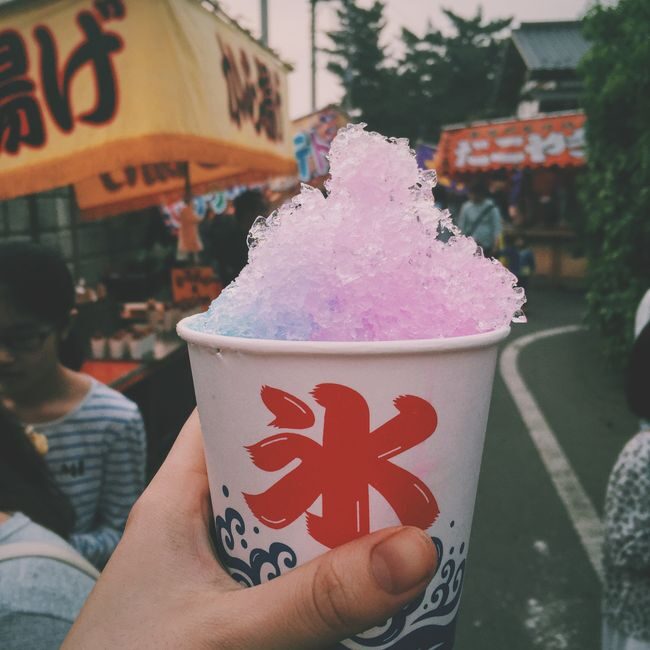
Modern Tokyo kakigōri is a different animal from the paper-cup festival ice. The ice is shaved so fine it collapses on the spoon, and the toppings are made in the shop: fruit purées, espuma foams, condensed-milk sauces, sometimes savory. A bowl costs about what a light lunch does, and the best shops change their menu every few weeks.
The season
The main season is late spring to the end of September. Some Ginza shops serve kakigōri all year, but menus are biggest and queues longest from July to early September, when the ice is the point of the trip rather than the dessert after lunch. I would go on a weekday, either right at opening or after 5pm, and avoid weekend afternoons in August entirely.
Parlor Vinefru Ginza
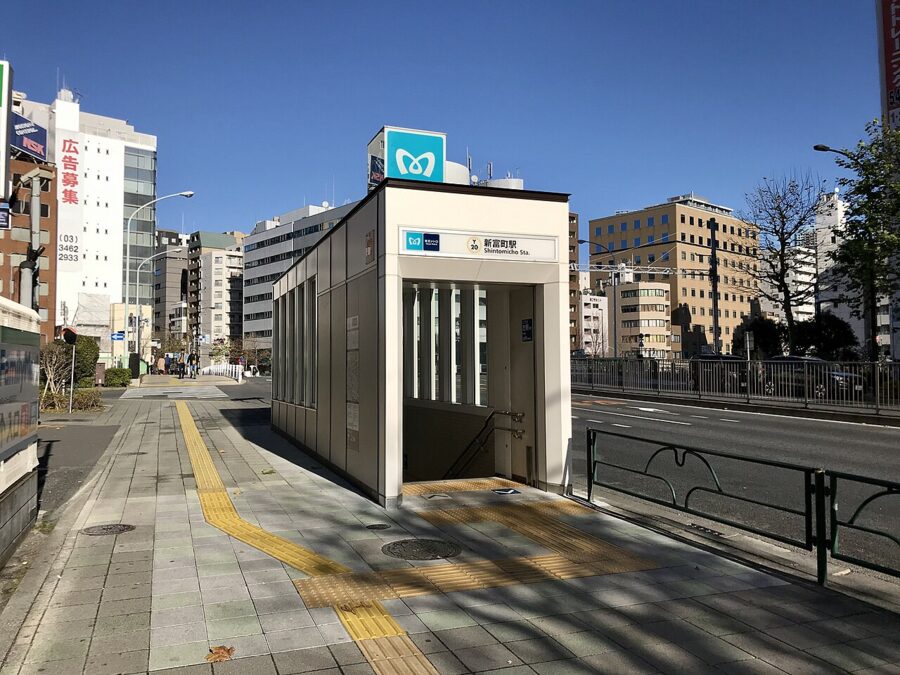
Parlor Vinefru (パーラービネフル銀座) is on the third floor of the Tomato House building at Ginza 1-20-10, east of Showa-dori and closer to Shintomichō Station than to the Ginza crossing. Its kakigōri are built around fresh fruit and vegetable espuma, and the menu changes with the season, including savory bowls. It also serves pancakes, so it works for a mixed group where only half the table wants ice.
Vinefru takes online bookings through TableCheck, and I would use that rather than queue. Opening hours are not published on its booking page, so check the booking slots for the day you want.

Ginza no Ginger
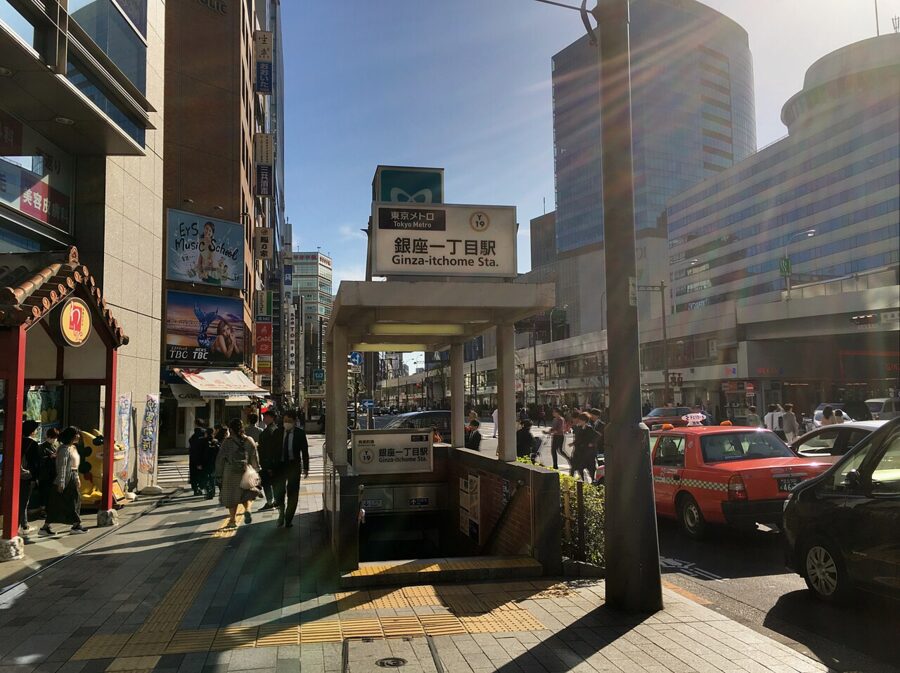
Ginza no Ginger (銀座のジンジャー) has its main store at Ginza 1-4-3, a minute from Ginza-itchōme Station, with ginger syrups and preserves sold downstairs and a cafe upstairs. The kakigōri use a house ginger-milk sauce poured over the whole mound, with fruit flavors on top, and the main store also serves pancakes found only at this branch. The store’s own answer on booking is that you write your name on the list in person on the day, for the time slot you want.
Hours here have changed recently and the cafe has closed for a mid-afternoon break in the past, so check before you set out with a fixed plan.

HIGASHIYA GINZA
HIGASHIYA GINZA is a wagashi shop and tea salon on the second floor of the Pola Ginza Building at Ginza 1-7-7. In summer the salon adds kakigōri to its menu, shaved on old-style machines, but outside the season (now, in November) it is a tea room for seasonal Japanese sweets. A seasonal tea and wagashi set costs ¥2,200 (about $14), and a pot of sencha or bancha starts at ¥1,980 (about $13).
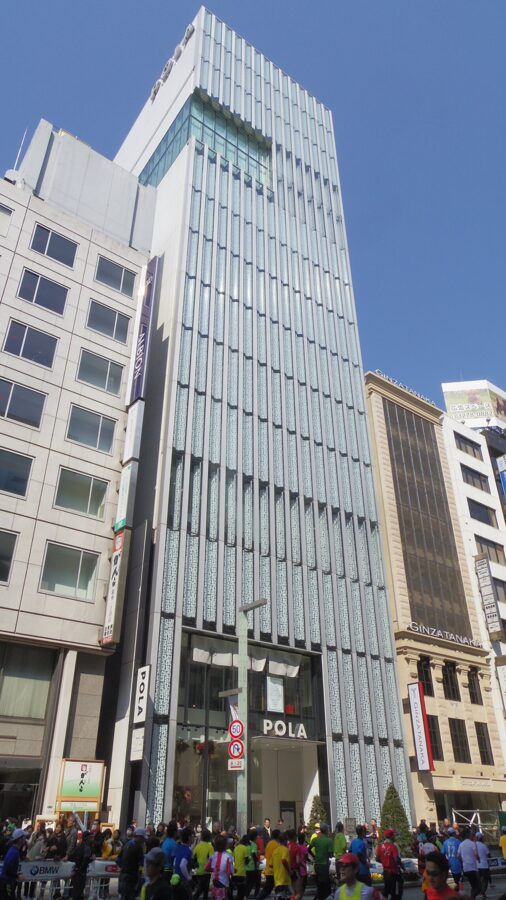

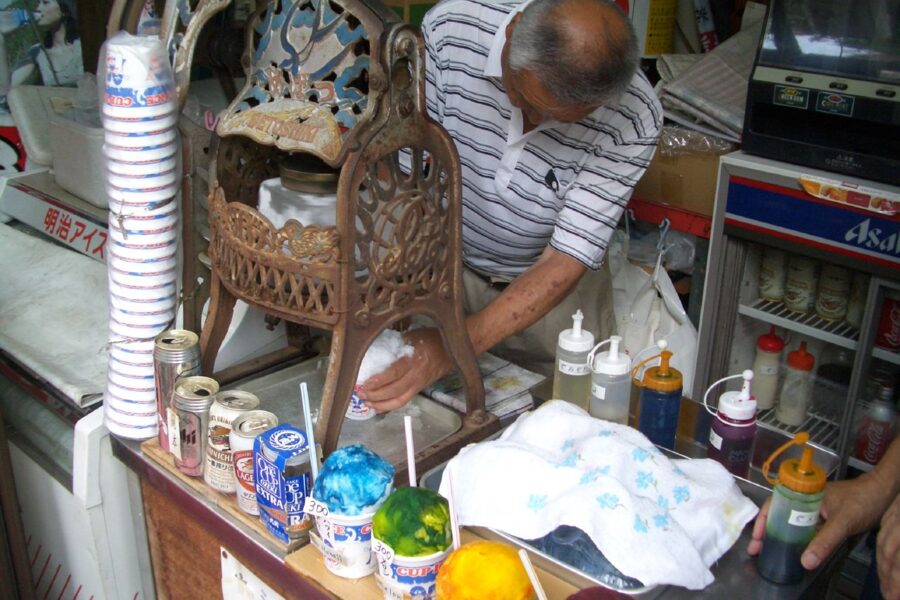

The salon opens 11:00 to 19:00 (last order 18:00) and closes on Mondays, or Tuesday when Monday is a holiday, for the time being. Bookings are online through TableCheck, which is worth doing for the afternoon sweets course. That course runs 11:00 to 17:00 (last order) at ¥7,000 (about $45) with tea.
Matsuya Ginza’s summer kakigōri relay
The department store Matsuya Ginza, at Ginza 3-6-1 on Chuo-dori, ran a summer event called Kakigōri Collection GINZA from July 22 to September 30, 2026. It sat on the eighth floor, Restaurant City GINZA, with about 30 seats, open 11:00 to 19:00 (last order 18:30). Five well-known shops from around the Kanto region and Ehime took turns of about two weeks each.
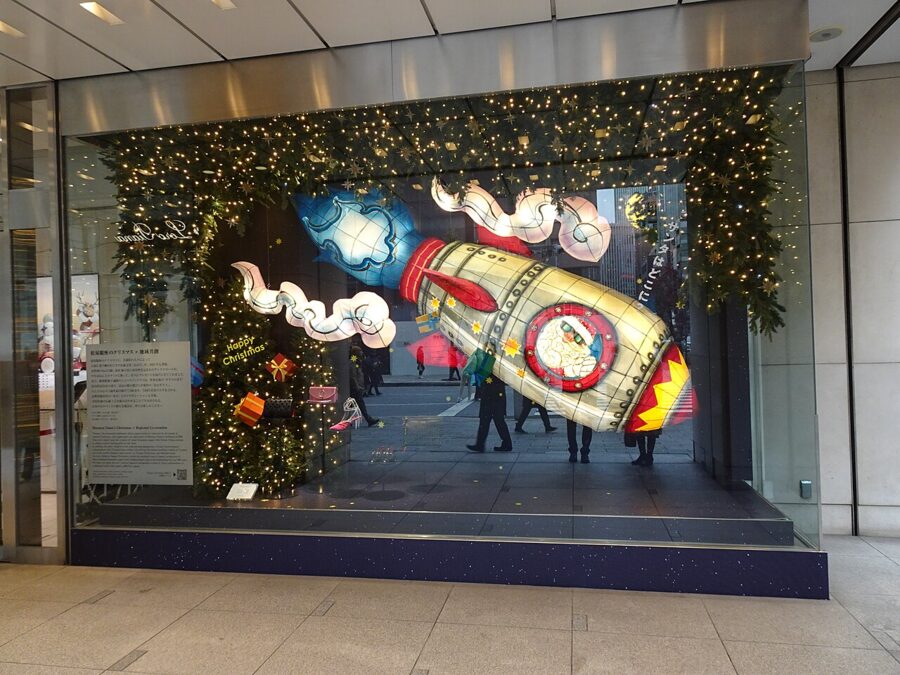

Prices sat between ¥1,650 (about $11) for a fresh strawberry milk ice and ¥2,530 (about $16) for an Amaou strawberry bowl from the Imabari shop Tōsendō. The event is over for this year and Matsuya has not announced 2027, but a relay like this is the cheapest way to try famous out-of-town shops without traveling. Watch the store’s announcements in early summer.
Pancakes and hotcakes
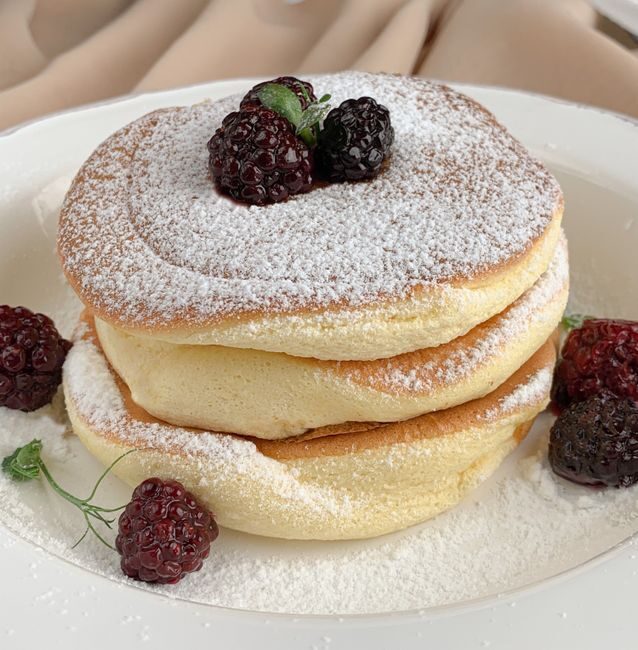
Japan has two pancake traditions. The old one is the hotcake (ホットケーキ), a thick, even, golden disc with butter and syrup, a kissaten staple for generations. The newer one is the tall, wobbly soufflé pancake that took over Tokyo in the 2010s, made with whipped egg white and cooked slowly under a lid.
Shiawase no Pancake Ginza
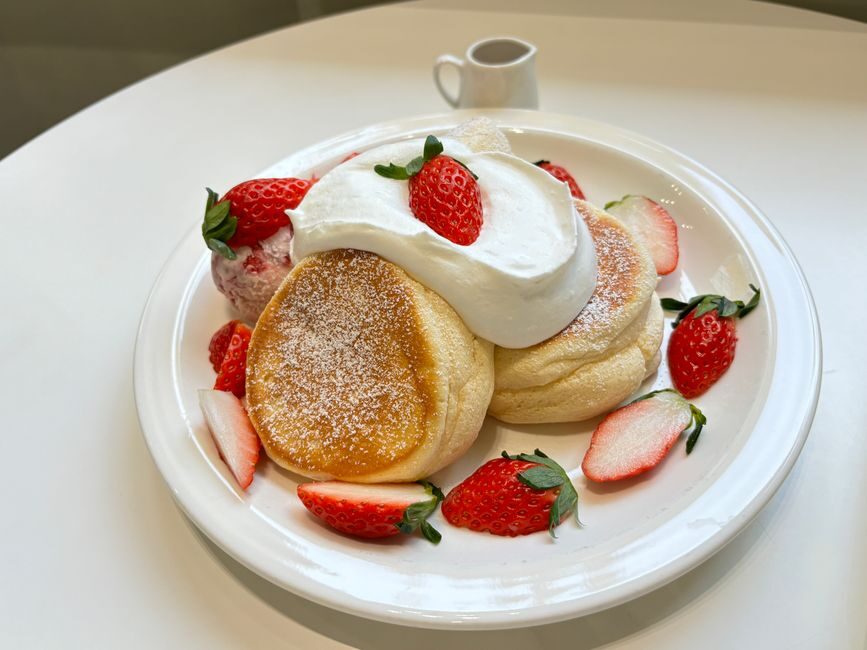
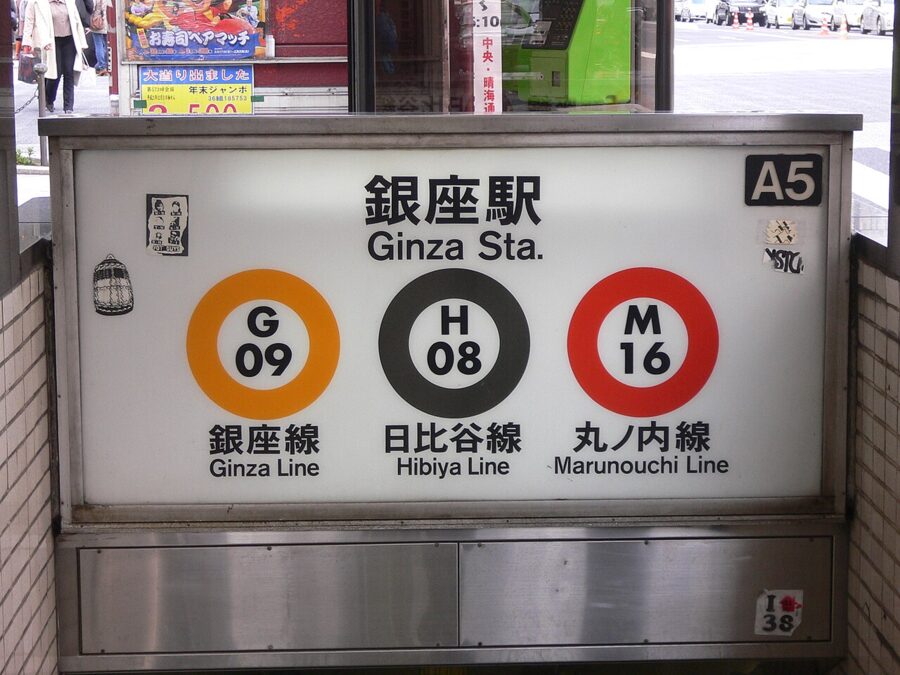
Shiawase no Pancake (幸せのパンケーキ) has its Ginza branch on the seventh floor of New Ginza Building No. 10, at Ginza 5-8-5. Turn right out of Exit A5 of Ginza Station and you are there. The house pancakes cost ¥1,390 (about $9) and come with whipped butter made from fermented Hokkaido butter and New Zealand manuka honey.
The chain limits how many it makes a day, and the Ginza branch takes reservations online only, not by phone. The waiting space on the seventh floor is small, so I would book. Hours are 10:30 to 19:30 on weekdays (last order 18:45) and 10:00 to 20:30 on weekends and holidays (last order 19:40), and the room has 32 seats.
Pancakes alongside the ice
The two kakigōri shops above both serve pancakes too. Ginza no Ginger’s main store has pancakes found only at that branch, flavored with its own ginger, and Parlor Vinefru runs pancakes alongside its seasonal ice. Either makes a good winter visit, when the queue for ice is short and a hot plate makes more sense.
For a sweet breakfast in the old style, Ginza West’s main store serves a French toast that it sells only in Ginza, and its tea room opens at 9:00 on weekdays. That is the closest thing Ginza has to a classic hotcake breakfast at a kissaten table.
Old kissaten still pouring
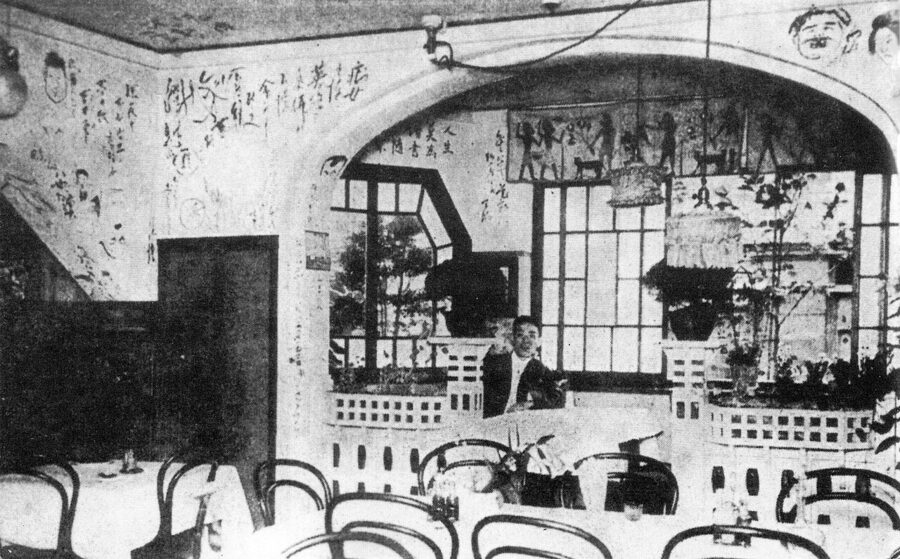
Ginza is where the Japanese cafe began. In 1911 two cafes opened within months of each other: Café Printemps, often called Japan’s first cafe, and Cafe Paulista, which is still serving. Writers and artists treated both as clubs, sitting for hours over one cup.
Cafe de L’Ambre
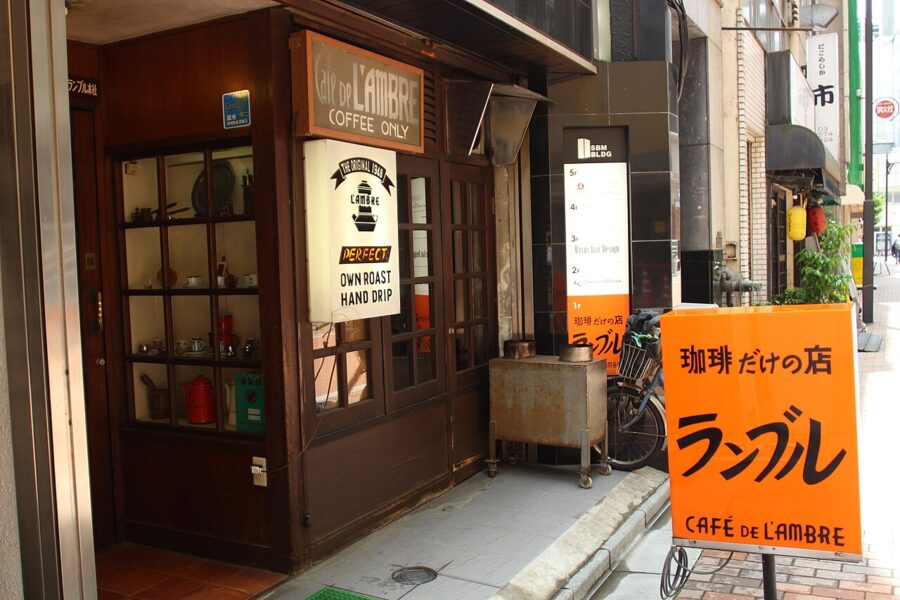
Cafe de L’Ambre (カフェ・ド・ランブル) opened in 1948 and is at Ginza 8-10-15, on a side street at the Shimbashi end of Ginza. The sign outside says 珈琲だけの店, “coffee only”, and it means it: no cake, no toast, no tea. The founder, Sekiguchi Ichirō, named it for the amber color he wanted in the cup, and he was still at the shop past his 100th birthday.

The coffee is brewed through a flannel filter (nel drip) one cup at a time, and the menu runs to dozens of single origins and aged beans. In November 2026 it added a small batch of coffees from the 2016 harvest, aged a decade. All its prices changed on November 10, 2026, so I am not quoting a cup price here.
Hours are 11:00 to 20:00 on weekdays (last order 19:00) and 11:00 to 18:00 on Sundays and holidays (last order 17:00), and it closes on Mondays. Go at opening if you want a counter seat.
Cafe Paulista
Cafe Paulista (カフェーパウリスタ) opened its Ginza cafe on December 12, 1911. Its founder, Mizuno Ryū, had led the first group of Japanese emigrants to Brazil in 1908, and the Brazilian government supplied the company with about 1,000 bags of coffee a year for twelve years to promote coffee in Japan. Akutagawa Ryūnosuke, Yosano Akiko and Tanizaki Jun’ichirō are among the regulars the company names.
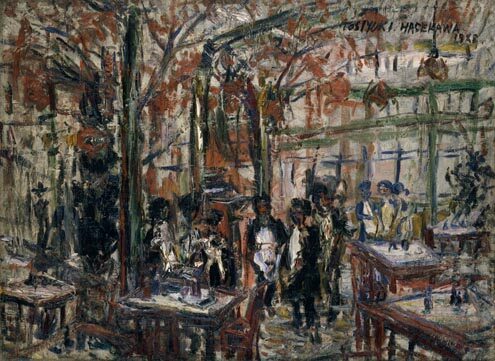
Today it is on the first and second floors of the Nagasaki Center Building at Ginza 8-9, seven minutes on foot from Ginza or Shimbashi. The first floor opens at 9:00 Monday to Saturday (11:30 on Sundays and holidays) and closes at 20:00 on weekdays, 19:30 on Saturdays and 19:00 on Sundays. It is open all year except the New Year break, which makes it the most reliable early coffee in Ginza.
Ginza West
Ginza West (銀座ウエスト) opened on January 4, 1947, as a restaurant called Grill West Ginza. Within months a Tokyo ordinance capped menu prices, so it became a tea room selling its own cakes, and from 1948 it held evenings of classical records with spoken programs. The main store at Ginza 7-3-6 still has the tea room, and photographs from around 1950 show an interior much like today’s.
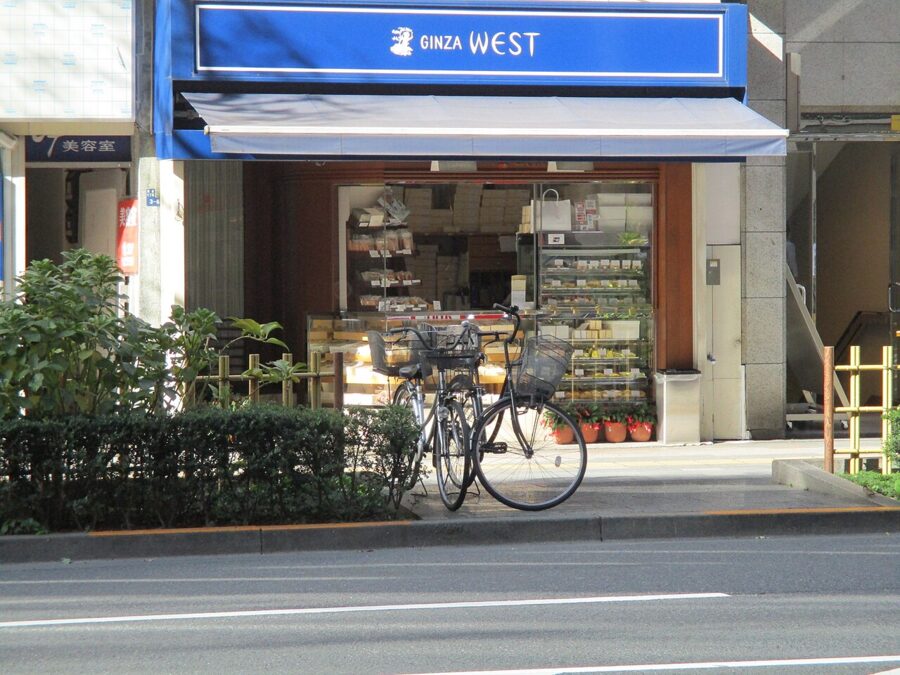

The tea room has 52 non-smoking seats and takes no reservations. It opens 9:00 to 21:00 on weekdays and 11:00 to 20:00 on weekends and holidays. Order a cake with coffee, or the French toast if you came for breakfast, and take a box of dry cake home; the company sells those only in the Tokyo area.
Other kissaten worth a detour
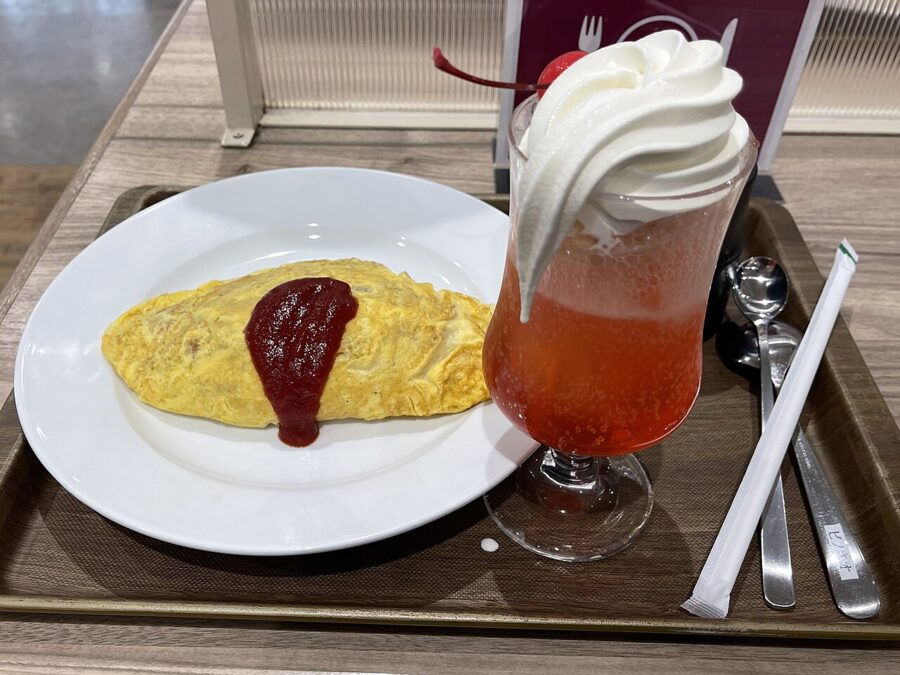
Kissa You (喫茶YOU), a short walk from Higashi-Ginza Station, is known for its omurice, the ketchup rice wrapped in omelet that every kissaten kitchen makes. It keeps daytime hours only, so go before mid-afternoon. On Chuo-dori, the Ginza Kimuraya bakery has its own cafe on the second floor, covered below.

Fruit parlors and department-store cafes
The fruit parlor is a very Japanese idea: a fruit shop with a room upstairs where the stock is turned into parfaits. Ginza has two of the most famous, and they are a reason to come here instead of to the newer cafe districts. The fruit is graded and priced like jewelry, and so are the parfaits, but you are paying for peak-season fruit in a quantity you would not buy at home.
Shiseido Parlour Salon de Cafe
Shiseido began as a Western-style pharmacy in Ginza in 1872, added the soda fountain in 1902 and opened a full restaurant, the Shiseido Ice Cream Parlour, in 1928. The Salon de Cafe is on the third floor of the Tokyo Ginza Shiseido Building at Ginza 8-8-3, about seven minutes from Ginza Station. It takes no reservations and shows its waiting status online instead.
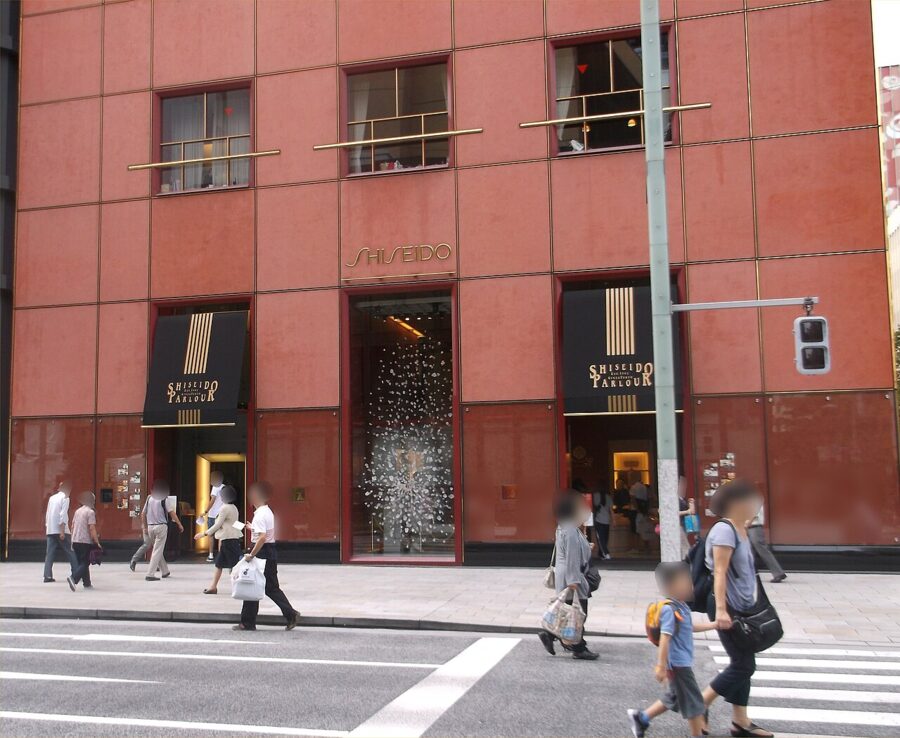

The fixed menu has a strawberry parfait and a chocolate parfait at ¥2,400 (about $15) each, a pudding à la mode at ¥1,700 (about $11) and the lemon or orange cream soda at ¥1,200. In November 2026 the seasonal parfaits are a Yamagata La France pear parfait at ¥3,000 (about $19, November 4 to 29), a Shine Muscat grape parfait at ¥3,200 (about $21) and a Tamba chestnut Mont Blanc parfait at ¥5,500 (about $35, November 17 to 29, limited numbers). The menu turns over every month, following the fruit.
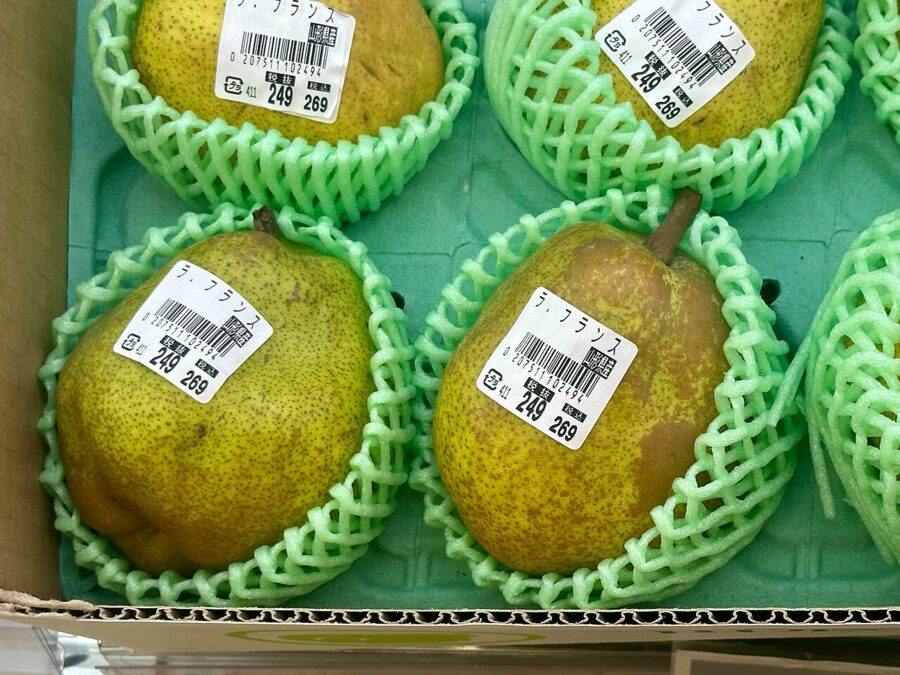

The salon is open Tuesday to Saturday 11:00 to 21:00 (cafe last order 20:30) and Sundays and holidays 11:00 to 20:00 (last order 19:30). It closes on Mondays unless Monday is a holiday, and over the New Year break.
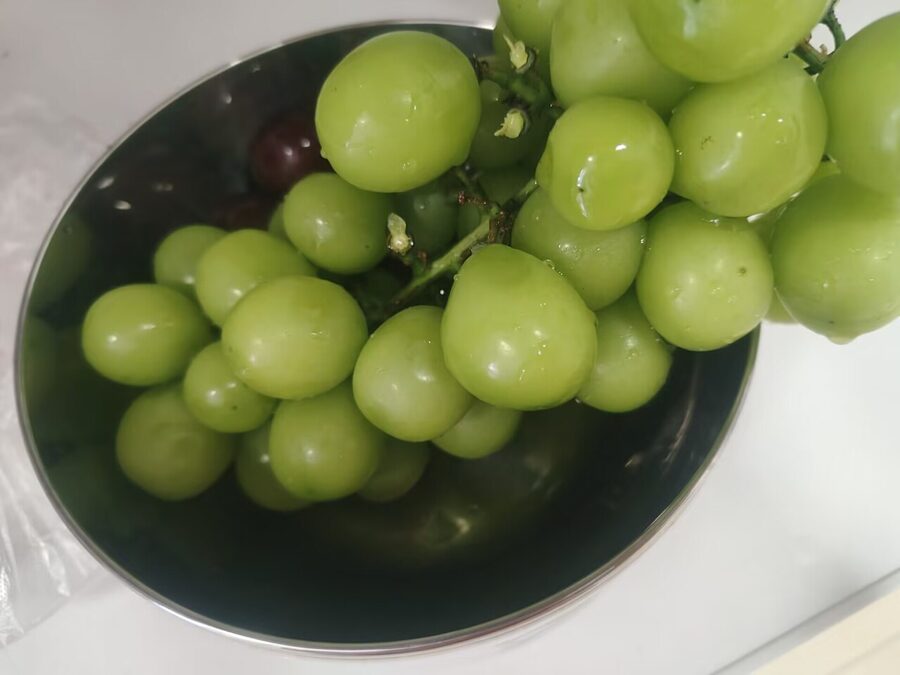
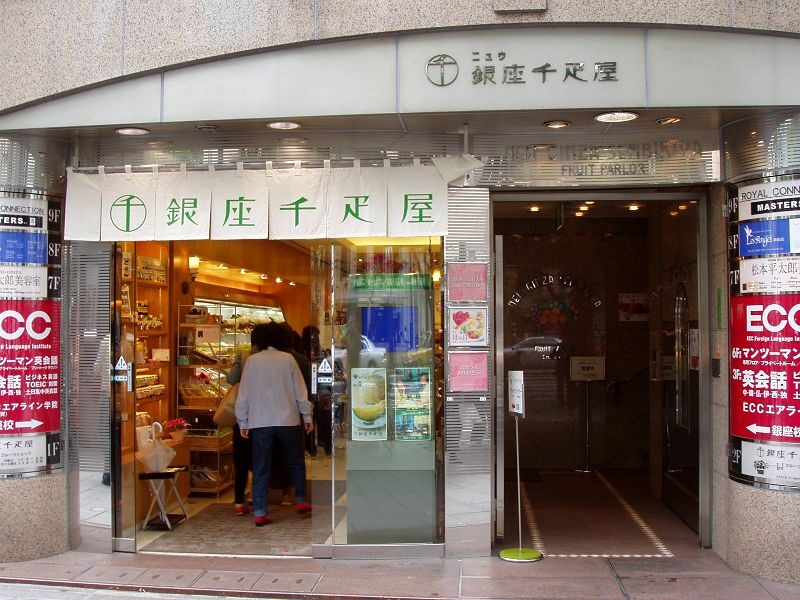
Ginza Sembikiya Fruit Parlor
Ginza Sembikiya (銀座千疋屋) dates its brand to 1894, and its main store is at Ginza 5-5-1, a short walk from the 4-chome crossing. The fruit parlor is on the second floor. The elevator does not stop there, so take the stairs, and the basement room is not in use at present.

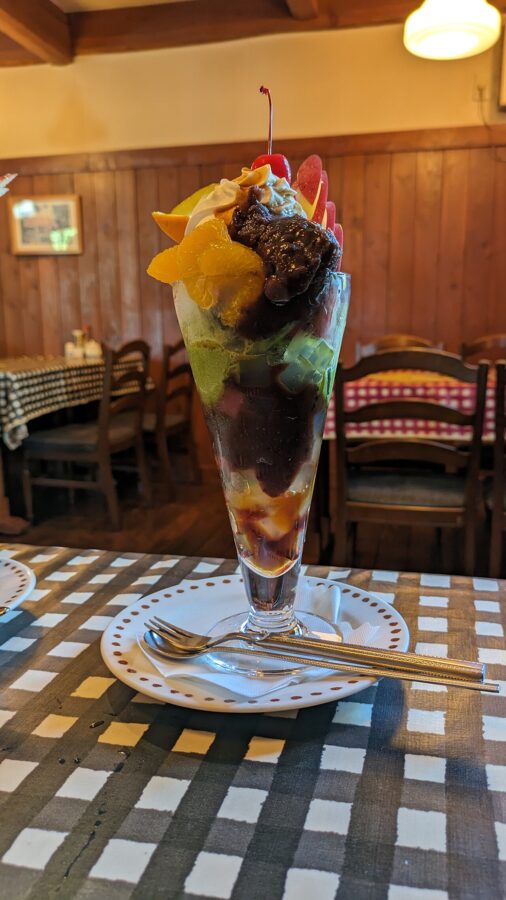
The limited strawberry parfait is ¥2,970 and the strawberry shortcake ¥1,320 (about $9). The regular parfaits change less often than the limited ones, and the current menu is posted on the shop’s own site. The matcha parfait pauses from December 1 to 25 and returns on December 26, and the weekday lunch (11:00 to 13:00) stops from December 21 to January 8.
Hours are 11:00 to 18:00 Sunday to Thursday and holidays, and 11:00 to 19:00 on Fridays and Saturdays, with last orders 30 minutes before closing. There are no reservations and a 90-minute seat limit, and it closes only for the New Year holidays.
Ginza Kimuraya’s second-floor cafe
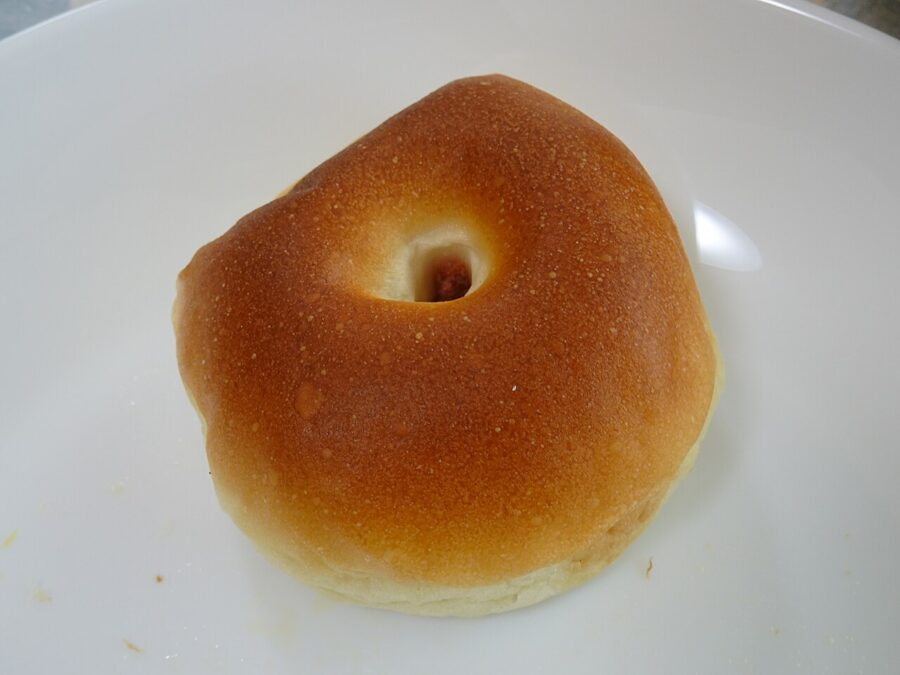
The Kimuraya bakery traces itself to 1869, and the sweet bean bun, anpan (あんぱん), was created by the family in Ginza in the 1870s. Sources give 1874 or 1875 for the famous bun. Its Ginza main store at Ginza 4-5-7 has the bakery at street level, a cafe on the second floor, a Western-style grill on the third and a French bistro on the fourth.
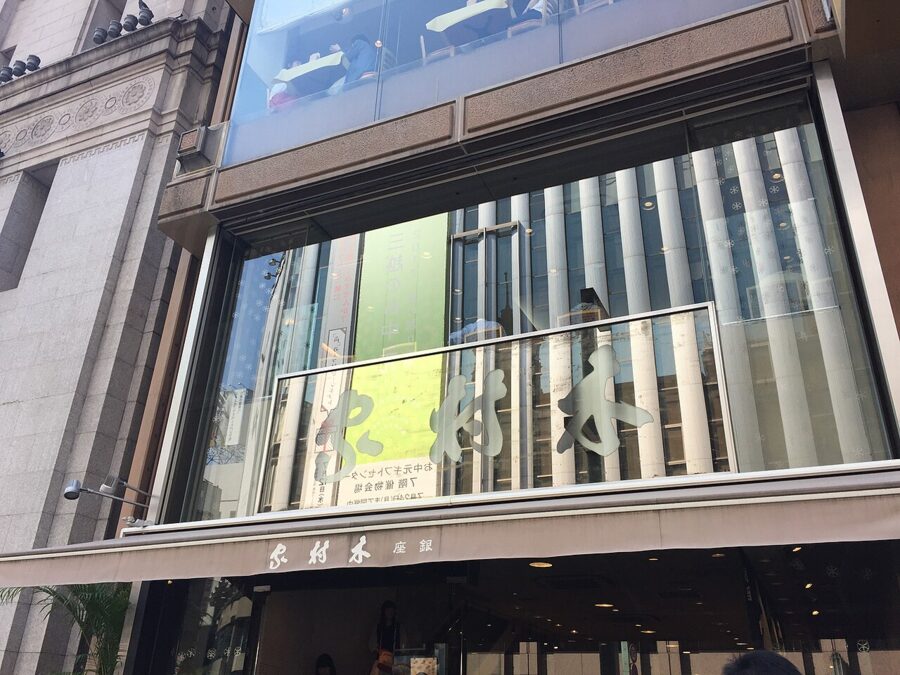

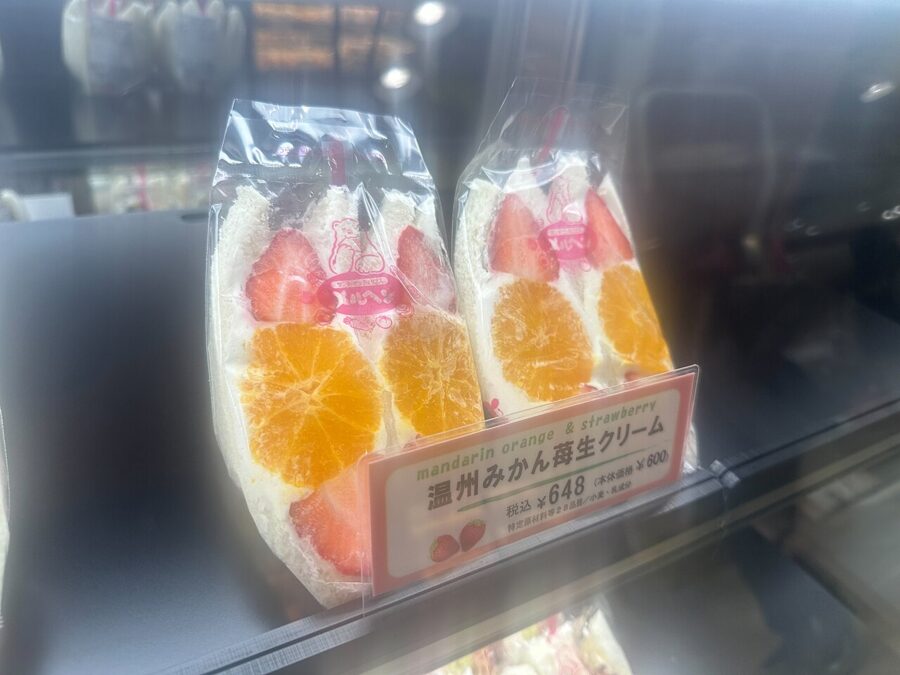
The cafe’s autumn marron parfait went on sale on October 20, 2026, at ¥1,700, or ¥1,900 (about $12) with a drink. The cafe-only fruit sandwich costs ¥1,500 (about $10), or ¥1,700 with a drink. The building opens 10:00 to 20:00 and closes only on December 31 and January 1.


Nakamura Tokichi Ginza
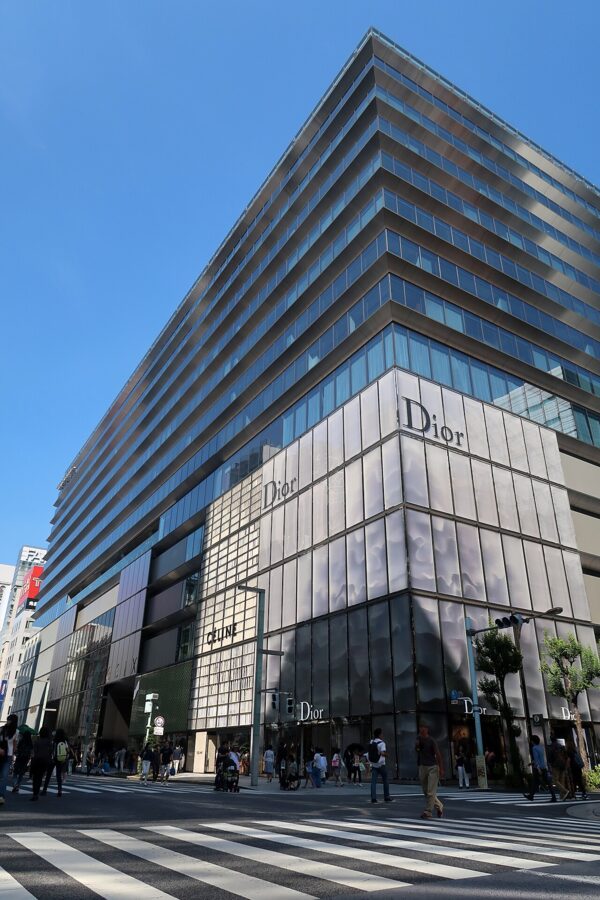
Nakamura Tokichi, the Uji tea merchant, runs a cafe on the fourth floor of Ginza Six at Ginza 6-10-1. Ginza Six is two minutes from Exit A3 of Ginza Station, connected underground. The cafe opens 10:30 to 20:30 (last order 19:30), follows the mall’s closing days and takes no reservations; when it is busy it can stop seating before last order.

This is the place for matcha desserts when the tea salons are full. Over the New Year it closes early on December 31 (18:00) and stays shut January 1 to 3.
Prices, queues and the best times to go
Budget ¥1,200 to ¥1,800 (about $8 to $12) for coffee or a drink at an old kissaten, ¥1,400 to ¥2,500 (about $9 to $16) for pancakes or kakigōri, and ¥2,400 to ¥5,500 (about $15 to $35) for a fruit parfait. Tea-salon courses go higher. Most places add no service charge, and cards are widely accepted, though a few older kissaten still prefer cash.
Most of these cafes take no reservations. The exceptions are Shiawase no Pancake (online only), Parlor Vinefru and HIGASHIYA GINZA (both through TableCheck), and Ginza no Ginger (name list in person on the day). Everywhere else, the line is the system.
The quietest times are weekday mornings and the first hour after opening. Weekend afternoons are the worst, partly because Chuo-dori closes to traffic and fills with walkers. The street becomes a pedestrian zone, the hokoten (歩行者天国), on Saturdays, Sundays and holidays, from noon to 18:00 between April and September and noon to 17:00 between October and March. It covers about 1,100 meters from the Ginza-dōri-guchi crossing to the 8-chome crossing.
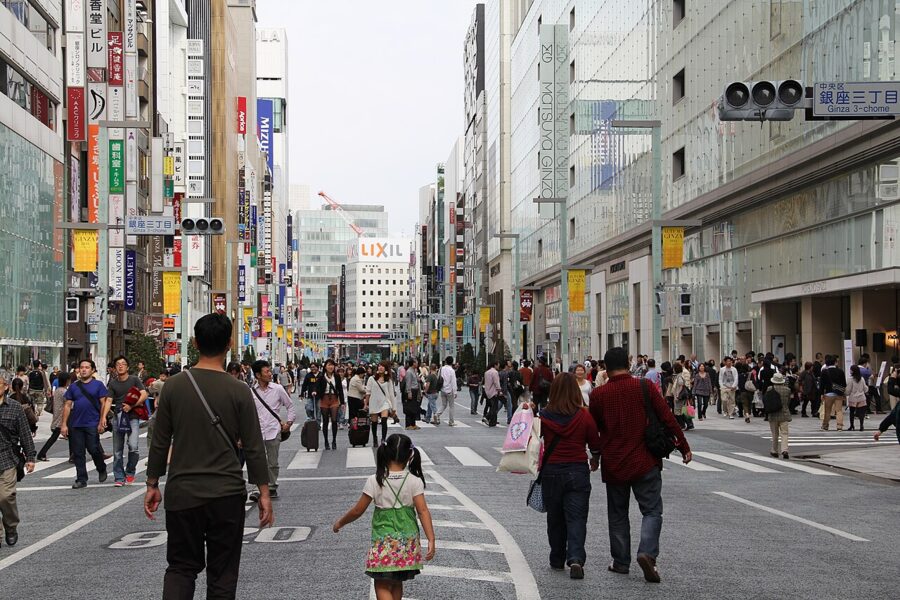

On a hokoten Saturday I would do the cafes in the morning, walk the closed street in the afternoon, and finish at a kissaten off the main road once the barriers come down.
A short route by area
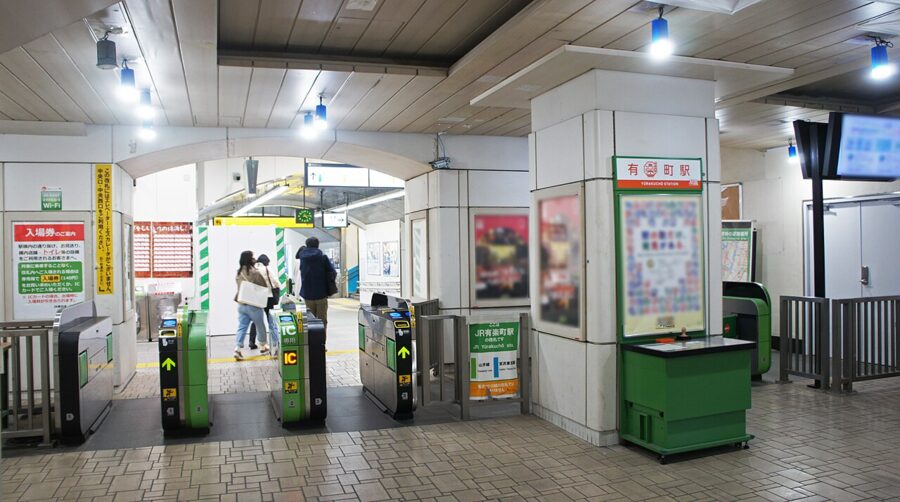
Ginza is small enough to walk end to end in 20 minutes, and its cafes fall into three zones. From Tokyo Station, Ginza is one stop on the Marunouchi Line; Ginza Station is also on the Ginza and Hibiya lines. JR Yurakuchō Station, on the Yamanote Line and covered by the JR Pass, is a five-minute walk from the 4-chome crossing.

Chuo-dori: the department stores and parlors
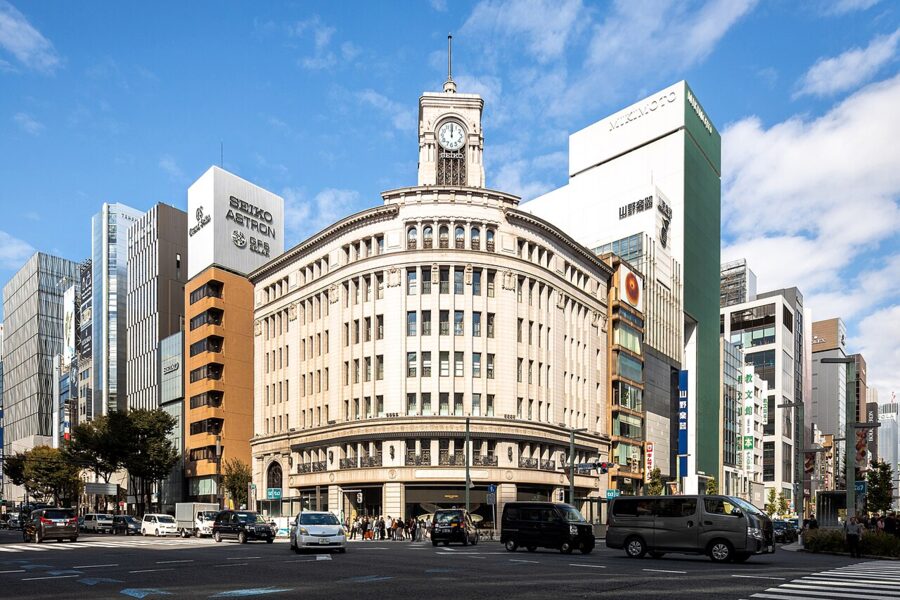
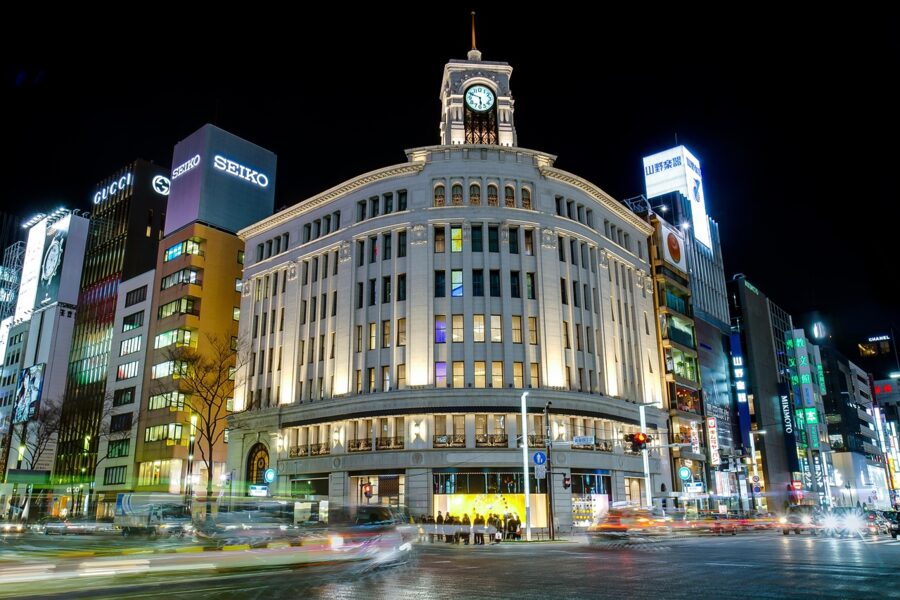
Start at the 4-chome crossing under the Wako clock. Ginza Kimuraya is a few doors from Wako at Ginza 4-5-7, Ginza Sembikiya a short walk away at 5-5-1, and Ginza Six further south at 6-10-1. Matsuya Ginza is back north at 3-6-1, and Shiseido Parlour closes the walk at the south end, on 8-chome.
The back streets: 7 and 8-chome
The south end of Ginza, 7 and 8-chome, holds the older cafes, mostly in the narrow streets off Chuo-dori. Ginza West is at 7-3-6, Cafe Paulista at 8-9, and Cafe de L’Ambre at 8-10-15, all within a few minutes of each other, with Shimbashi Station close by. I would put them at the end of a day, as L’Ambre stays open to 20:00 on weekdays.
Ginza 1-chome and Higashi-Ginza
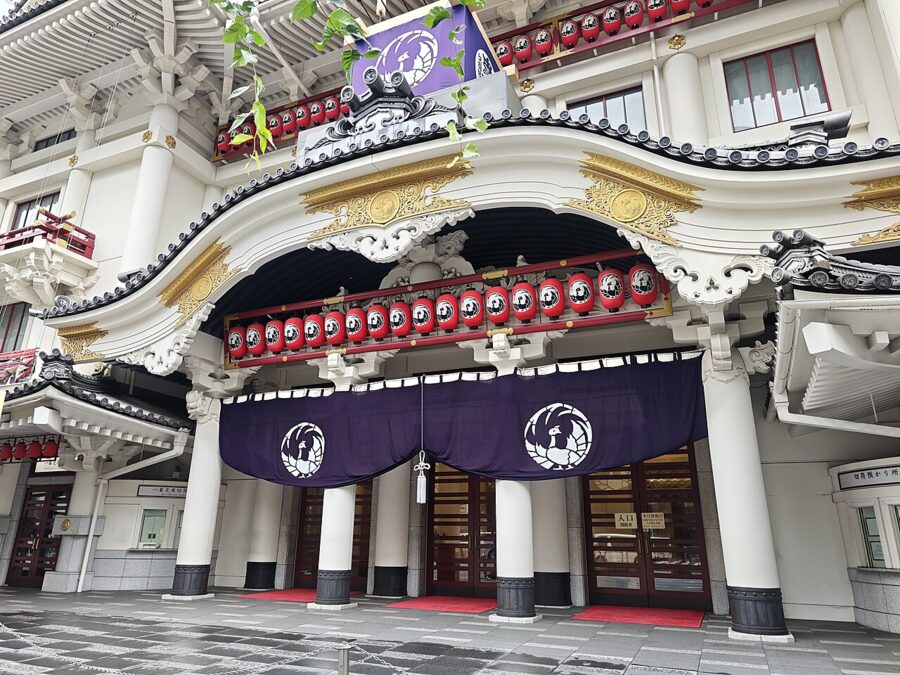
The north end and the east side are where the shaved-ice shops are. HIGASHIYA GINZA and Ginza no Ginger are both in 1-chome, near Ginza-itchōme Station on the Yūrakuchō Line, and Parlor Vinefru is east of Showa-dori toward Shintomichō. South of there, Higashi-Ginza is the Kabukiza theater’s neighborhood, with Kissa You a short walk from the theater.

A good day runs from a 9am coffee at Paulista to a parfait at Sembikiya before its 18:00 close, with kakigōri or pancakes in 1-chome in between. In winter, swap the ice for Shiseido’s monthly parfait and finish with a cream soda in the room where the soda fountain started.
Order the cream soda. It still costs less than any parfait in the room.