
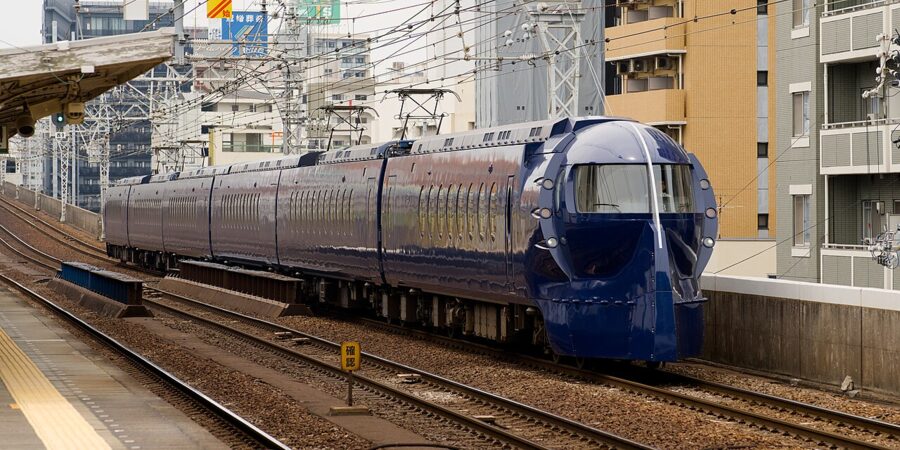

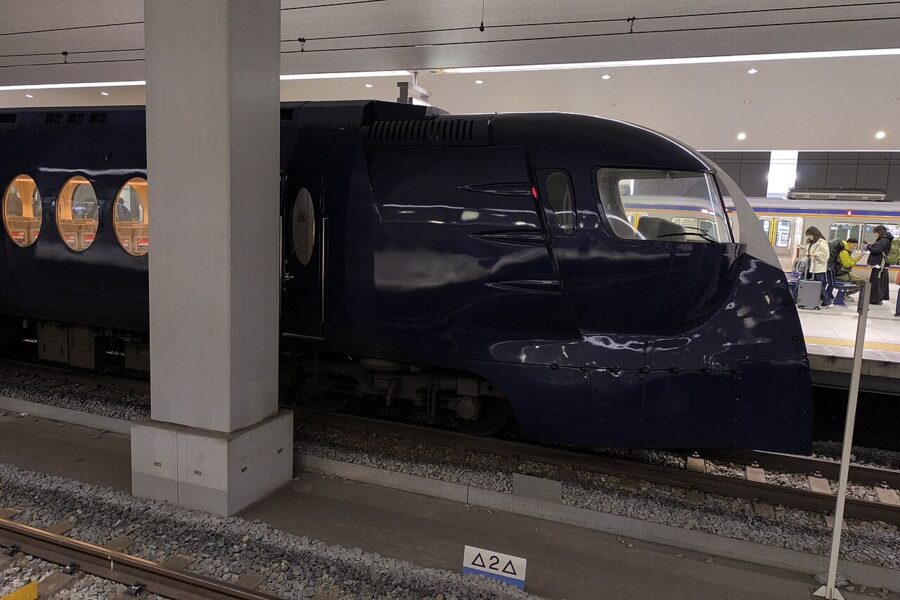
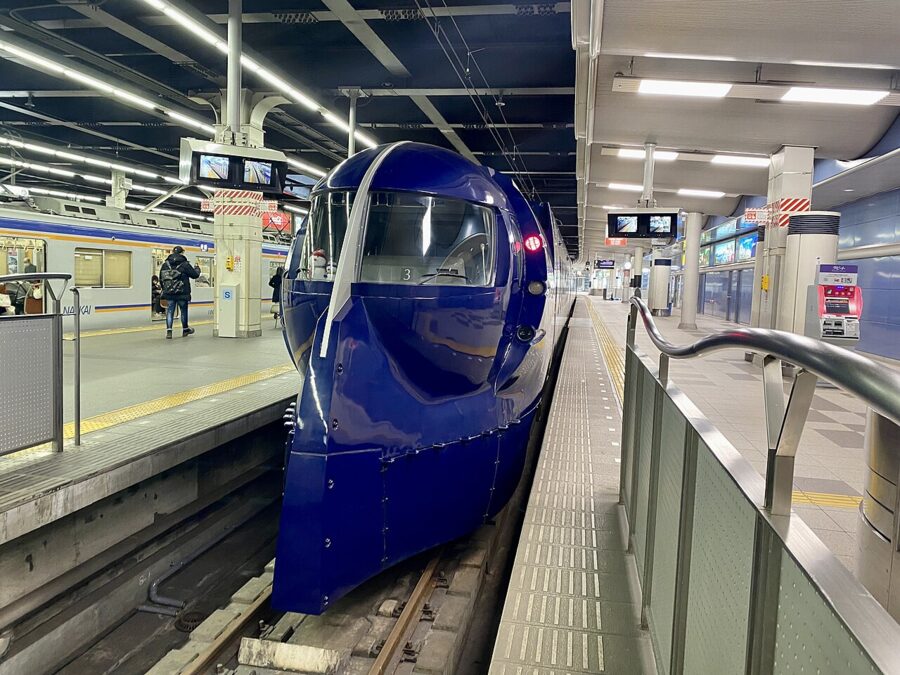
The Rapi:t leaves Nankai Namba every half hour with a nose like a diving helmet and a row of oval portholes down each side, and 35 minutes later it is standing on an island in Osaka Bay. It is the fastest train between Kansai International Airport and the south side of central Osaka. Since April 2026 it also costs more than it used to, unless you buy the right ticket.
Most people landing at KIX end up choosing between this train, JR’s Haruka and two slower trains that cost less. The right answer depends mostly on where your hotel is, a little on the ticket or pass you hold, and not at all on which train looks better in photos. The Rapi:t wins that one anyway.
Every price below is as of November 2026. Nankai rebuilt its express charges on April 1, 2026, and JR West raised its Haruka ticket for visitors on November 1, so older advice on either train is probably wrong on money.
Contents9 sections
- A 1994 train that still looks like the future
- Inside: Regular Seats, Super Seats and the suitcase shelves
- Rapi:t α and β: stops and times
- What the Rapi:t costs in 2026
- How to buy a Rapi:t ticket
- Rapi:t, Haruka or the cheaper trains: pick by hotel
- At Kansai Airport
- Arriving at Nankai Namba
- Refunds and the small print
A 1994 train that still looks like the future
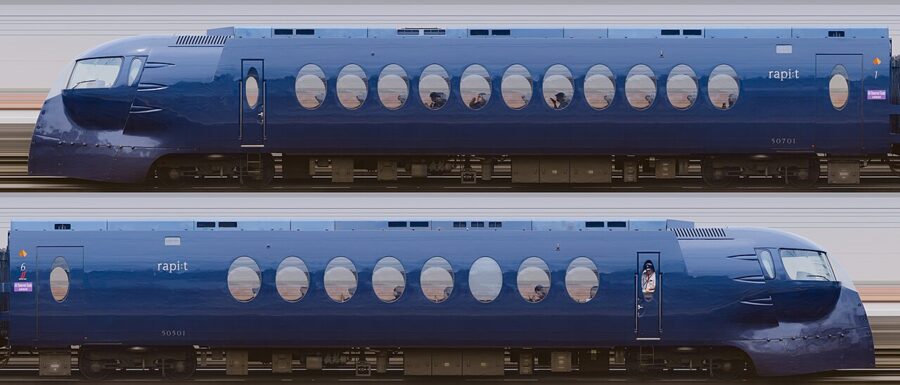
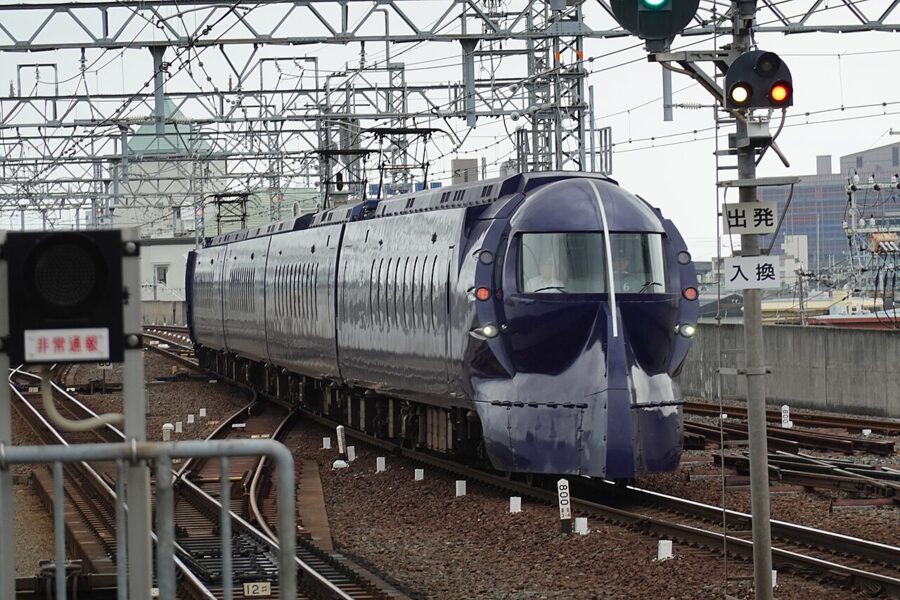
The Rapi:t entered service on September 4, 1994, the day Kansai International Airport opened. Nankai had Tokyu Car build six six-car sets of its 50000 series for the job and gave the styling to the architect Hiroyuki Wakabayashi (若林広幸). The concept Nankai still quotes is “retro-future”: a heavy, rounded front for power and speed, soft curves along the body, and oval windows borrowed from aircraft.
The paint is a deep navy with mica in it, which Nankai calls Rapi:t Blue. In 1995 the train won the Blue Ribbon Award, the yearly prize chosen by Japanese railway enthusiasts, the first Nankai train to take it. The name came out of a public contest with 32,000 entries, and Nankai explains it as a German word for “fast”.
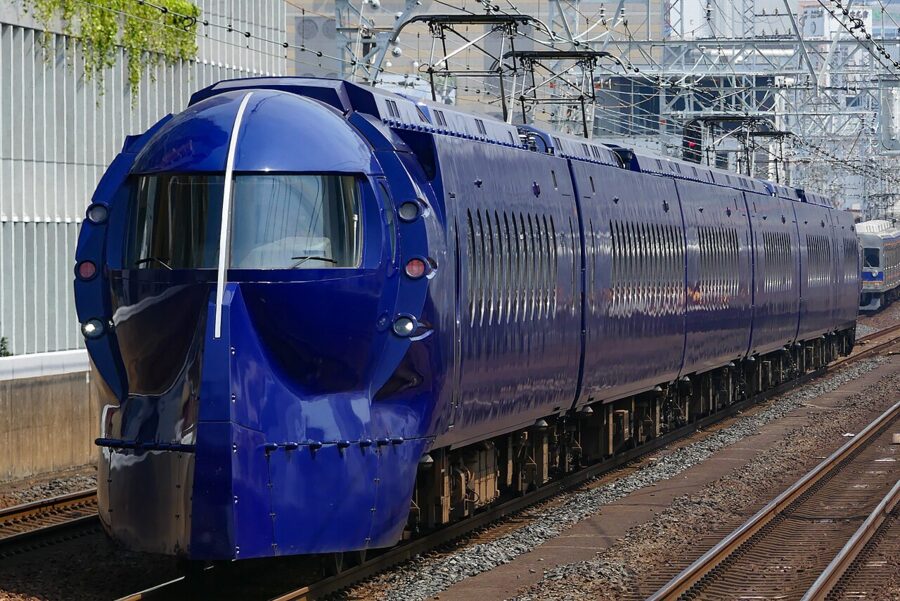

Under the paint it is less of a museum piece than it looks. Between 2015 and 2018 every set was refurbished with new control equipment, LED lighting, new seat fabric, seat-back tables and screens that run in four languages. After a crack was found in a bogie in August 2019, new motor bogies were built in 2021 and fitted to all six sets.


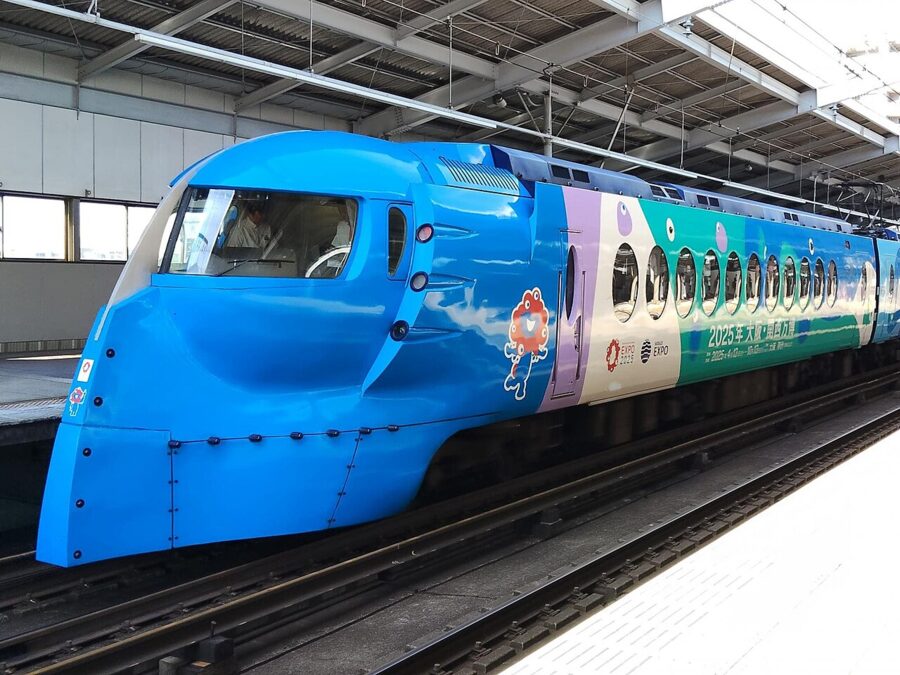
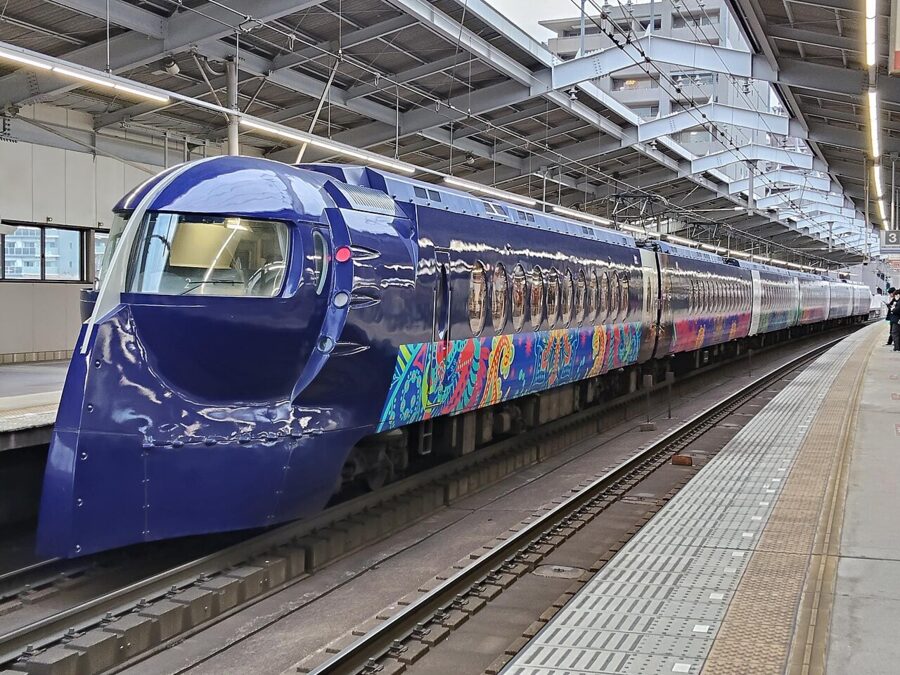
Not every Rapi:t is blue on the day you ride. Nankai wraps whole sets for advertisers and campaigns, and they change every few months: an Osaka-Kansai Expo 2025 set ran from April 2024 to October 2025, a Tourism Malaysia set went on in April 2025, and over the years there have been Star Wars, Gundam and Kinnikuman versions. Your ticket names a car and a seat, not a set, so take whichever one turns up.


Inside: Regular Seats, Super Seats and the suitcase shelves
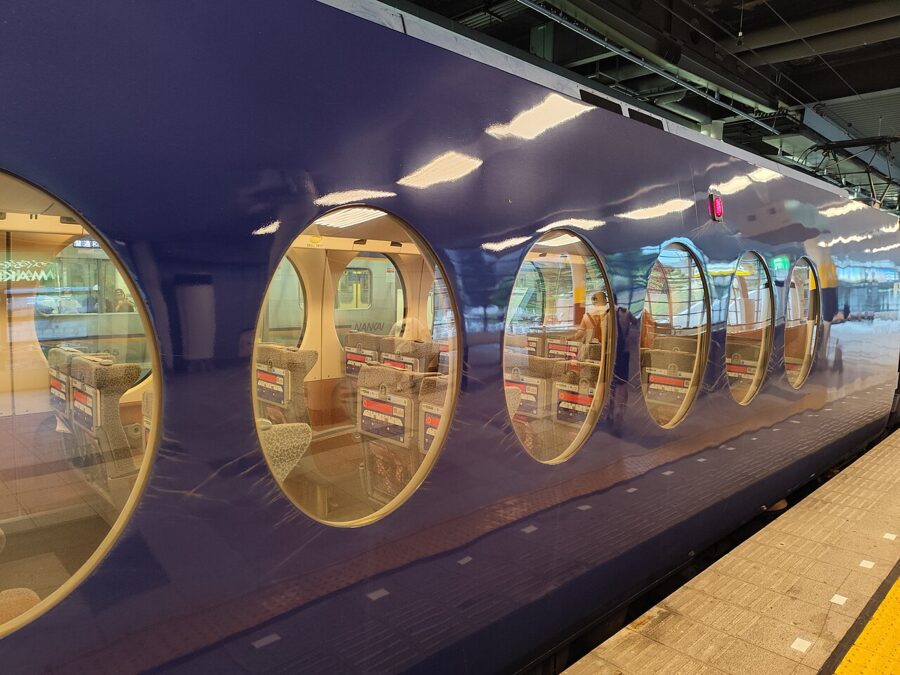
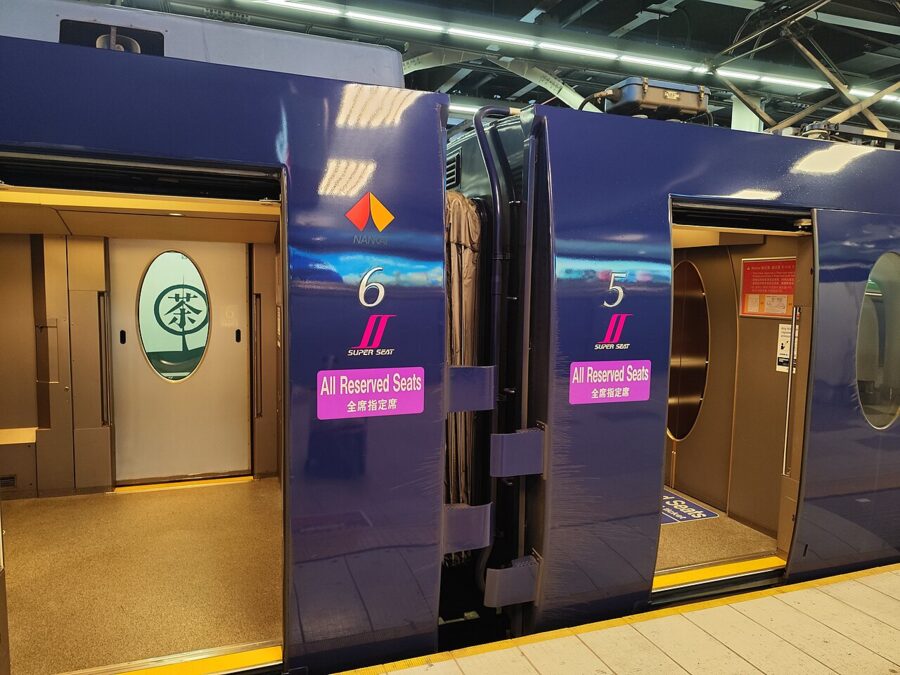
Every seat on the Rapi:t is reserved, 252 of them in six cars. Four cars carry Regular Seats, two and two across the aisle, with 1,030 millimeters between rows and seats 460 millimeters wide. Cars 5 and 6 carry the 54 Super Seats, one and two across, with 1,200 millimeters of pitch and seats 485 millimeters wide.
The Regular Seats are already better than the airport needs: they recline, and the portholes sit at eye level. The Super Seats are wider armchairs with a lot more legroom, and the single seats on one side of the aisle are the best on the train if you are traveling alone. I would not pay full price for one on a 40-minute ride, but there is a way to get them for the Regular price.
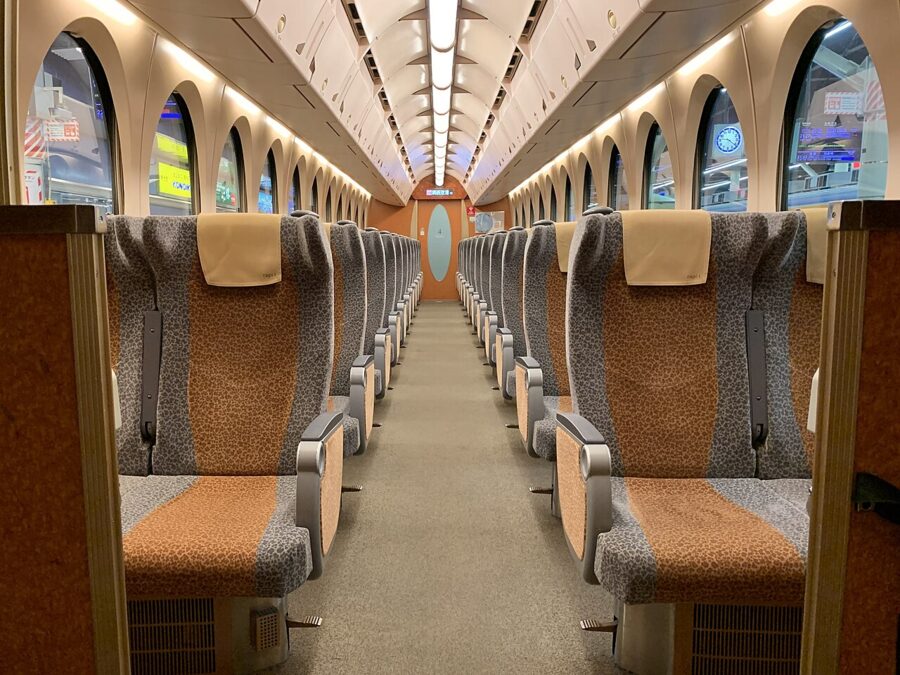

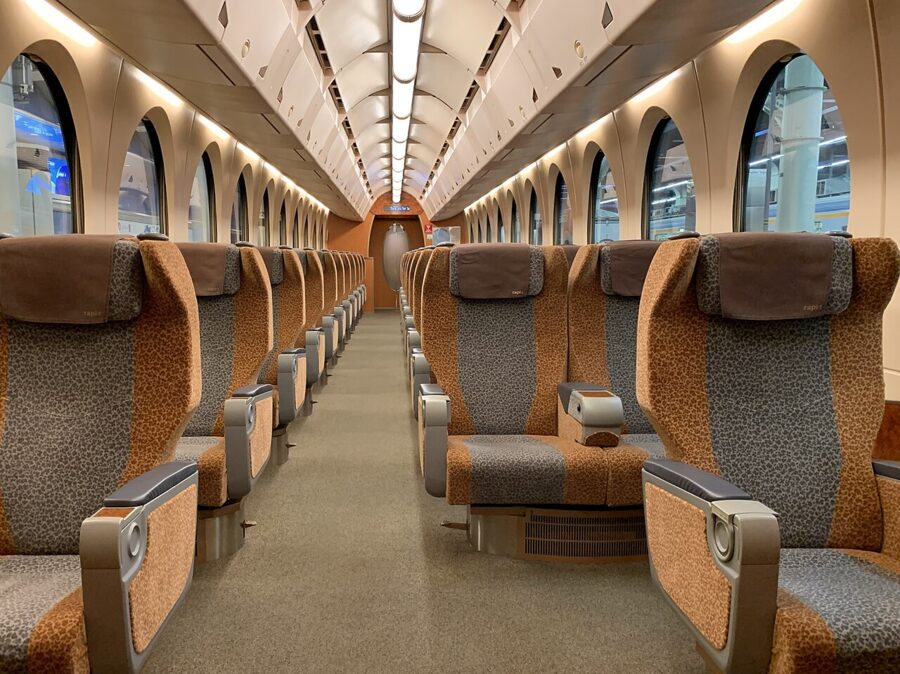

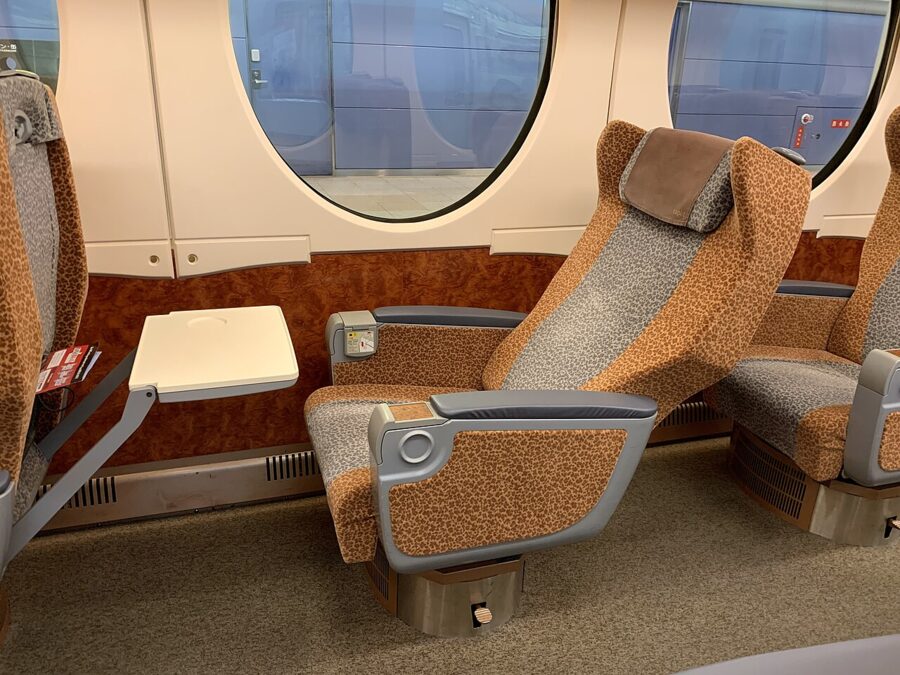

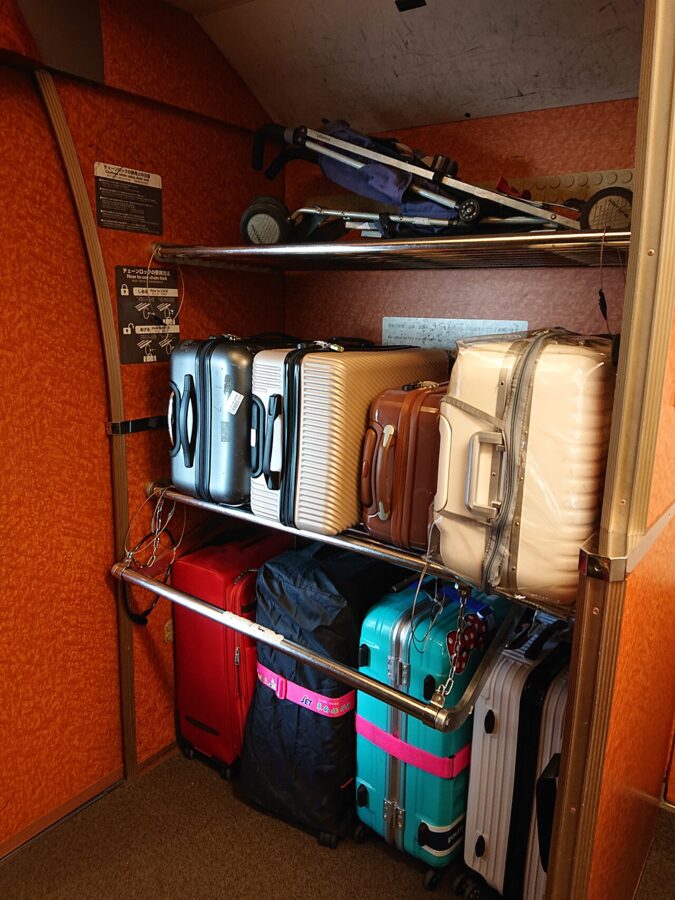
Luggage is the reason the airport crowd likes this train. Each car has suitcase shelves by the doors, with no booking for space, and a hat rack above the seats for smaller bags. Nankai also lists toilets, a wheelchair space and a drinks machine, and smoking is banned in every car.


Rapi:t α and β: stops and times
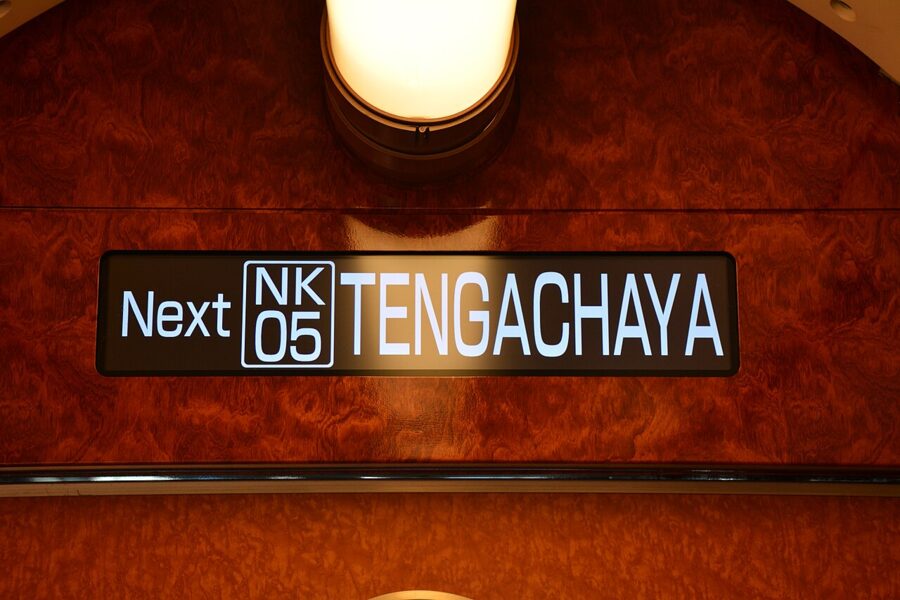
There are two kinds of Rapi:t, and the only difference is where they stop. Rapi:t α (alpha) calls at Shin-Imamiya, Tengachaya, Izumisano and Rinku Town between Namba and the airport. Rapi:t β (beta) adds Sakai and Kishiwada. Both run the full length, Namba to Kansai Airport, and both cost the same.
| Station | α | β | Useful for |
|---|---|---|---|
| Namba (なんば) | Yes | Yes | Dotonbori, Shinsaibashi; Osaka Metro, Kintetsu and Hanshin lines |
| Shin-Imamiya (新今宮) | Yes | Yes | Shinsekai; JR Osaka Loop Line |
| Tengachaya (天下茶屋) | Yes | Yes | Osaka Metro Sakaisuji Line |
| Sakai (堺) | No | Yes | Central Sakai |
| Kishiwada (岸和田) | No | Yes | Kishiwada town |
| Izumisano (泉佐野) | Yes | Yes | Nankai trains toward Wakayama |
| Rinku Town (りんくうタウン) | Yes | Yes | Rinku Premium Outlets; JR trains |
| Kansai Airport (関西空港) | Yes | Yes | Terminal 1; free bus to Terminal 2 |
The current timetable started on December 21, 2024, and it moved the Rapi:t toward the airport crowd. Nankai turned 20 of its 55 weekday β trains and 24 of its 59 weekend ones into α trains that day, to make seats easier to get between Namba and the airport. On weekdays now, every departure from Namba up to 10:05 is an α, and every one from 16:30 on is a β; in between, and on most of the weekend day, they alternate.
From Namba, an α reaches the airport in 35 to 38 minutes and a β in 37 or 38; Nankai’s own best figure is 34. Into town, allow about 40 minutes on either, and a little more on the first weekday trains. Trains leave Namba every 30 minutes from 6:00 to 22:00, and leave the airport from 6:53 on weekdays and 7:06 at weekends until 23:00 on weekdays and 22:55 at weekends.


Sakai and Kishiwada are the reason to pick a β on purpose. If your hotel is in either, or you are going to Kishiwada for its September danjiri cart festival, the β saves a change of train.
What the Rapi:t costs in 2026
A Rapi:t ride is two charges in one. There is the ordinary Nankai fare, ¥970 (about $6) from Namba to Kansai Airport, and there is the limited express charge for the reserved seat. On April 1, 2026 Nankai raised that charge from ¥520 (about $3) to ¥700 (about $5), left the Super Seat supplement at ¥210 (about $1), and added two new rules.
Buy the express ticket on the train and you now pay ¥300 (about $2) more. Buy it through Nankai’s ticketless website and you pay ¥150 (about $1) less. Nankai plans to retire magnetic paper tickets by 2030, and the new prices push everyone toward phones.
| One adult, one way, Namba to Kansai Airport | Regular Seat | Super Seat |
|---|---|---|
| Rapi:t Digital Ticket (online, QR code) | ¥1,410 (about $9) | ¥1,590 (about $10) |
| Ticketless express ticket, member, plus ¥970 fare | ¥1,520 (about $10) | ¥1,520 with the upgrade offer |
| Kanku Toku-wari Rapi:t Kippu (station counter or machine) | ¥1,560 (about $10) | ¥1,740 (about $11) |
| Fare plus express ticket at the station | ¥1,670 (about $11) | ¥1,880 (about $12) |
| Fare plus express ticket bought on board | ¥1,970 (about $13) | ¥2,180 (about $14) |
The cheapest seat on the train is the Rapi:t Digital Ticket, and for most visitors it is the one to buy. The cheapest Super Seat is the ticketless member price, because Nankai’s upgrade offer lets members book a Super Seat for the Regular charge of ¥550 (about $4). The offer has run since April 2018, was adjusted on April 1, 2026, and has no announced end date.
Children aged 6 to 11 pay half the express charge, and the Digital Ticket comes in a child version at ¥710 (about $5) for a Regular Seat and ¥910 (about $6) for a Super Seat. You cannot buy child tickets alone on it, only alongside an adult.
How to buy a Rapi:t ticket
The Rapi:t Digital Ticket
This is the fare and the seat in one QR code, sold on Nankai’s digital ticket site in English. You need a smartphone and a credit card (Visa, Mastercard, JCB, American Express or Diners Club). The ticket is good only on the date you choose, one way between Kansai Airport and Namba, Shin-Imamiya, Tengachaya or Sakai, and it goes on sale a month ahead.
After paying, you pick a train and a seat in the ticket wallet, up to five minutes before departure, then hold the code over a gate with a QR reader. You can change trains twice, up to five minutes before either departure, and cancel for free up to five minutes before your train if you have not used it. Same-day sales stop at 22:05 for trains to the airport and 22:55 for trains to Namba.
One catch: if your phone dies, the ticket goes with it. There is no reissue and no refund, and you pay the fare again at the gate.
Counters and machines: the Kanku Toku-wari Rapi:t Kippu
If you would rather hold paper, the station version is the Kanku Toku-wari Rapi:t Kippu (関空トク割 ラピートきっぷ), a one-way fare and express ticket between Kansai Airport and Namba, Shin-Imamiya, Tengachaya or Sakai. It costs ¥1,560 for a Regular Seat and ¥1,740 for a Super Seat, and children pay ¥780 (about $5) and ¥980 (about $6). It goes on sale a month ahead and stays valid for two days in a row, useful if your flight lands too late for the last train.
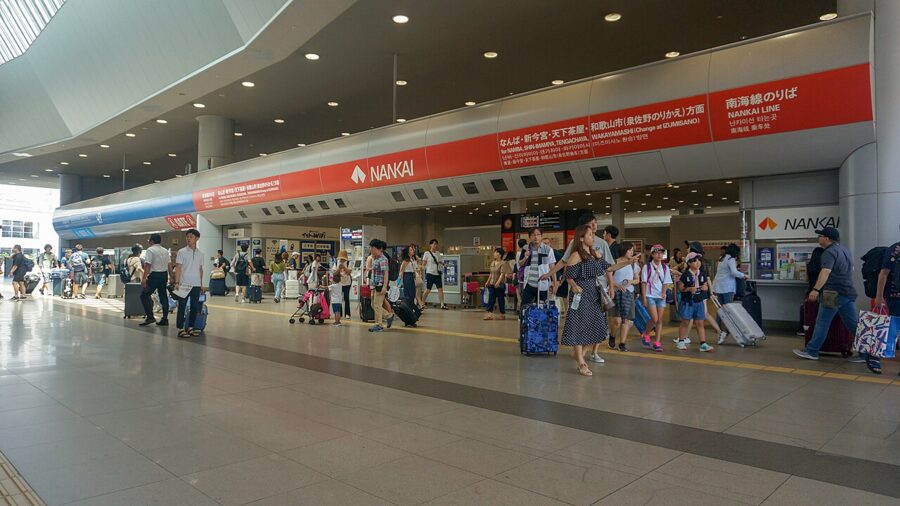
The pink ticket machines sell it from 5:00 to 23:00 at Namba (2F central and 3F), Shin-Imamiya, Tengachaya, Sakai and Kansai Airport, and take cash, most credit cards and prepaid IC cards. Refunds cost ¥520, before your train leaves, where you bought it.

The ticketless service and the Super Seat upgrade
The third way is the Nankai Limited Express Ticketless Service, which sells the express ticket only. Membership is free for anyone 12 or over, and members can buy from 10:00 one month before travel until three minutes before departure, up to eight seats a train. Members pay ¥550 for a Regular Seat and, with the upgrade offer, the same ¥550 for a Super Seat.
You then pay the ¥970 fare at the gate. A prepaid IC card such as ICOCA works, and so does a contactless credit card: by late 2025 Nankai’s gates took card taps at 97 of its 105 stations. For a solo traveler who likes a good chair, this is the best deal on the line, ¥1,520 for a Super Seat.
Ordinary express tickets, and buying on board
Nankai’s express ticket counters, the pink machines and the express ticket machines on the platforms all sell plain Rapi:t express tickets, from a month before travel, at ¥700 for a Regular Seat or ¥910 for a Super Seat on top of the fare. If you board without one, the conductor will sell you a seat with the ¥300 surcharge added. Don’t.

Passes
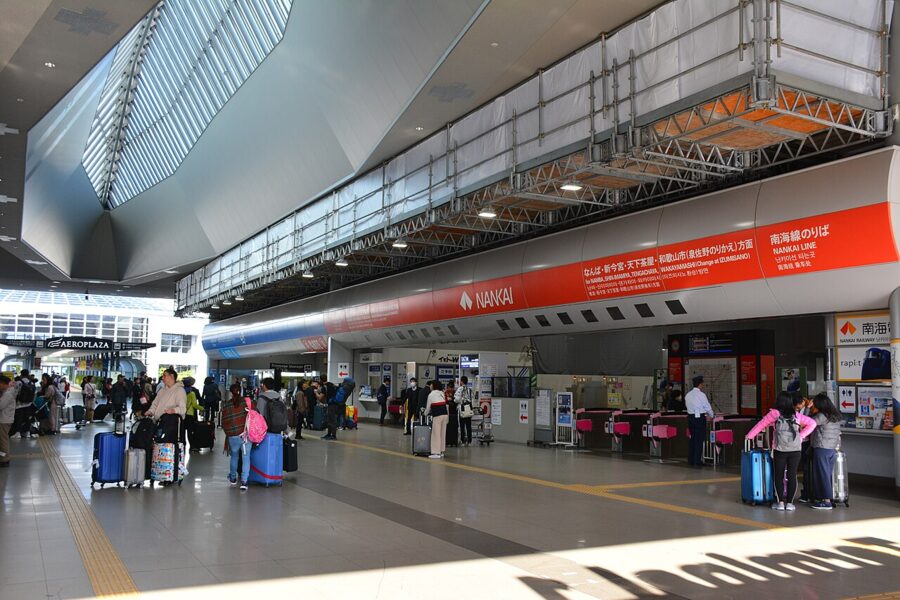
The Japan Rail Pass does not cover the Rapi:t, because Nankai is a private railway; it does cover the Haruka. Nankai’s own all-line pass for visitors has stopped selling, and even while it was on sale the reserved-seat charge was extra. With a JR pass and a hotel in Namba, I would still pay ¥1,410 for the Digital Ticket and skip the change of train.
Rapi:t, Haruka or the cheaper trains: pick by hotel
Kansai Airport has two railways sharing one station and one bridge. Nankai runs to Namba, on the south side of central Osaka. JR runs the Haruka limited express to Tennoji, Osaka Station, Shin-Osaka and Kyoto, plus the Kansai Airport Rapid, an ordinary commuter train with no seat charge.
| Rapi:t | Nankai airport express | JR Haruka | |
|---|---|---|---|
| Goes to | Namba, via Shin-Imamiya and Tengachaya | Namba, with more stops | Tennoji, Osaka, Shin-Osaka, Kyoto |
| Time from the airport | About 40 minutes to Namba | About 45 minutes to Namba | About 30 minutes to Tennoji, 50 to Shin-Osaka, 75 to Kyoto |
| Adult one way | ¥1,410 to ¥1,880 | ¥970 | ¥1,820 (about $12) unreserved to Tennoji; visitor ticket ¥1,600 (about $10) |
| Seats | All reserved | Commuter seating, no reservations | Reserved and unreserved cars |
| Rail passes | Not covered | Not covered | Japan Rail Pass, Kansai Wide Area Pass |
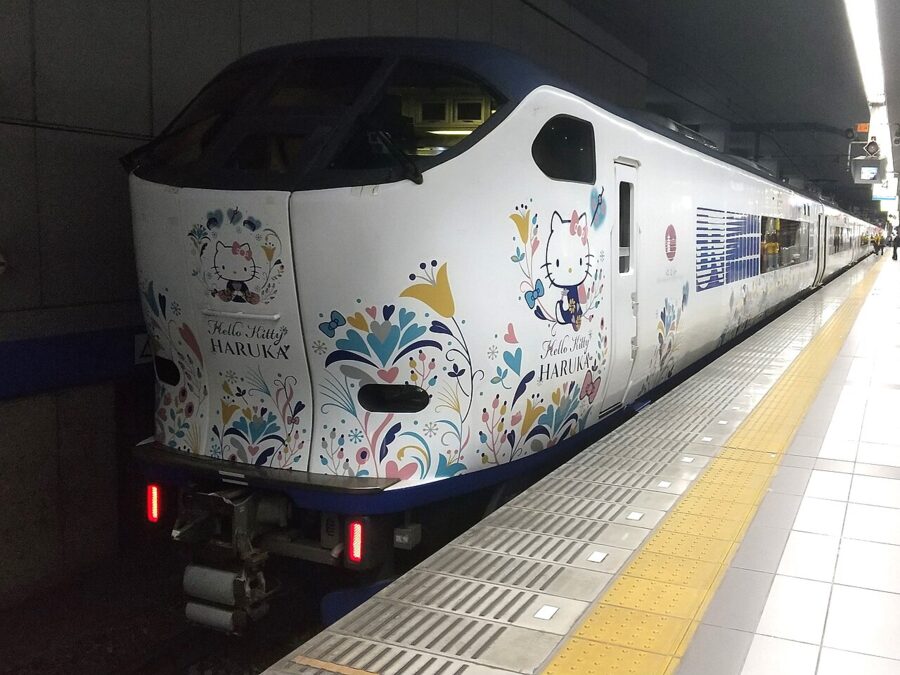

The Haruka has its own discount for foreign visitors, the HARUKA One-way Ticket. It is sold only outside Japan or through JR West’s online reservation site, needs a foreign passport and temporary visitor status, and from purchases made on November 1, 2026 it costs ¥1,600 to Tennoji, ¥1,900 (about $12) to Osaka or Shin-Osaka and ¥2,700 (about $17) to Kyoto. Full-price Haruka tickets are bought at JR ticket machines and offices like any other limited express.
Namba, Shinsaibashi and Dotonbori
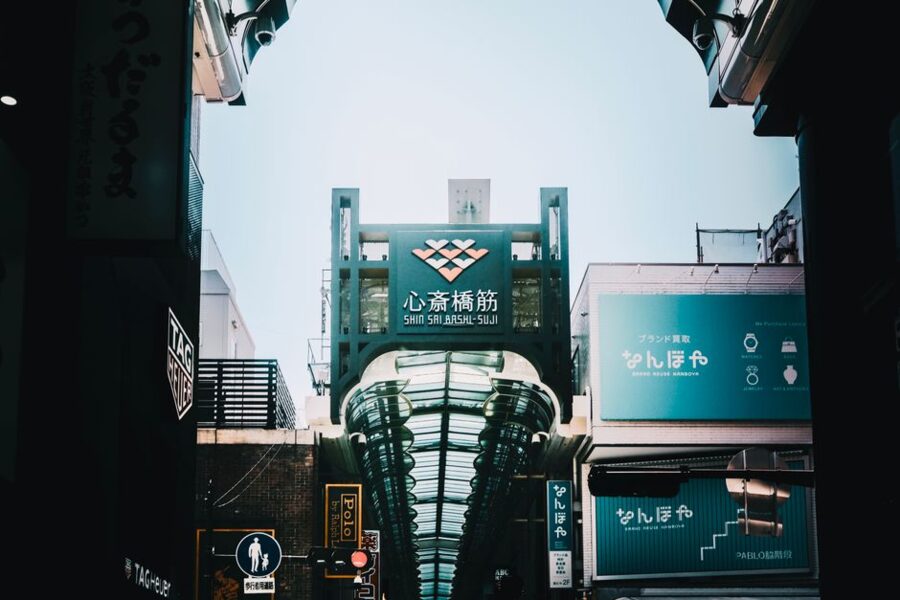
Take the Rapi:t, no contest. You step off inside Namba, and the Dotonbori canal is a short walk north through the covered arcades. For Shinsaibashi, keep walking up the arcades or ride the Midosuji Line one stop north.
Shinsekai, Tennoji and the south side
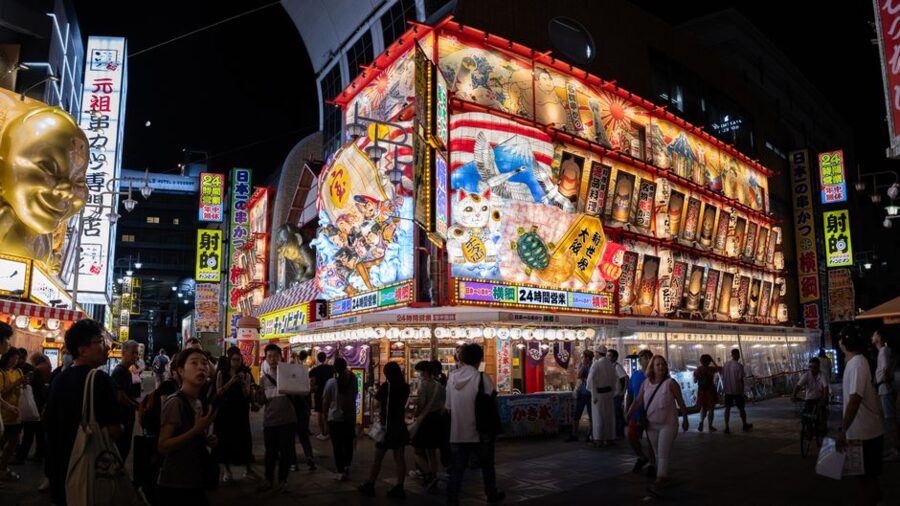
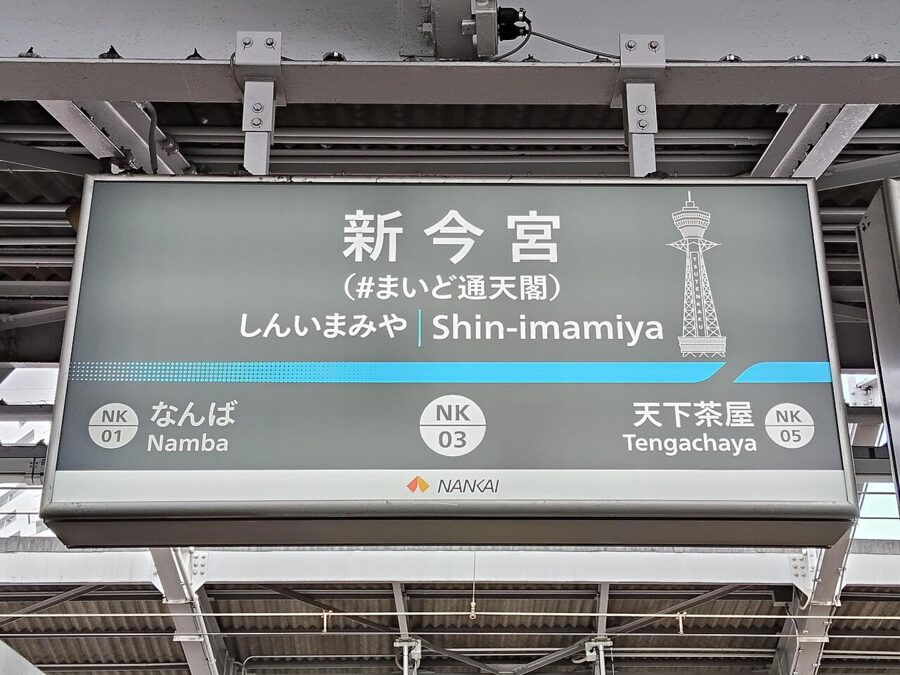
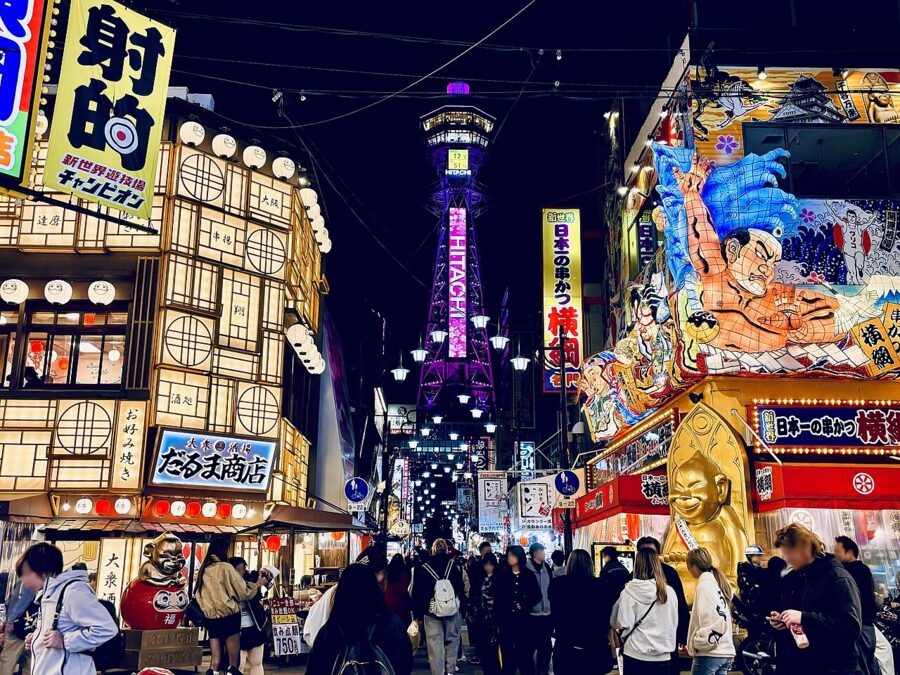
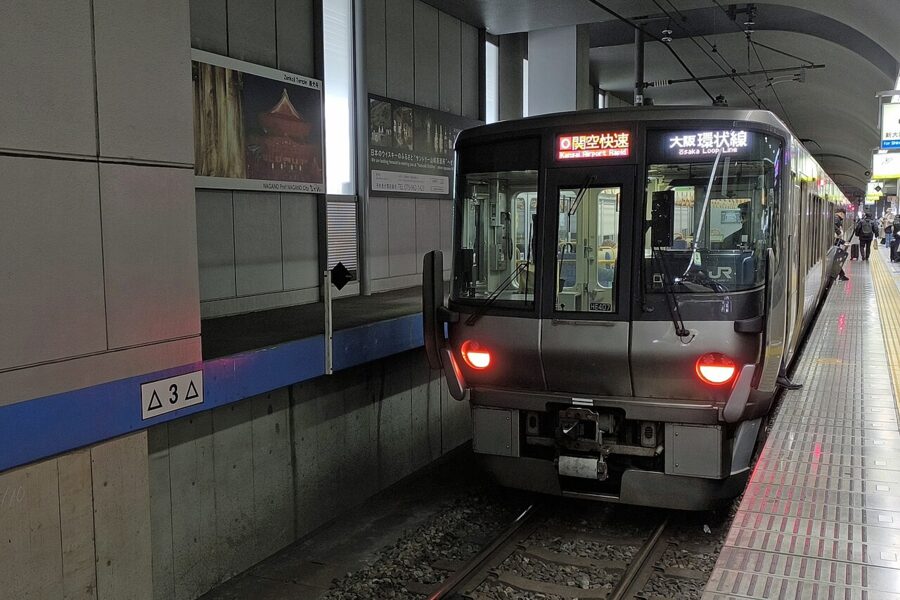
Shin-Imamiya, the Rapi:t’s first stop out of Namba, sits at the foot of Shinsekai and its Tsutenkaku tower, and the JR Osaka Loop Line stops at the same station. For hotels around Tennoji and Abeno, the Haruka’s first stop is Tennoji itself, about 30 minutes from the airport. JR’s Kansai Airport Rapid gets there more slowly for the base fare alone, ¥1,060 (about $7).


Umeda and Osaka Station
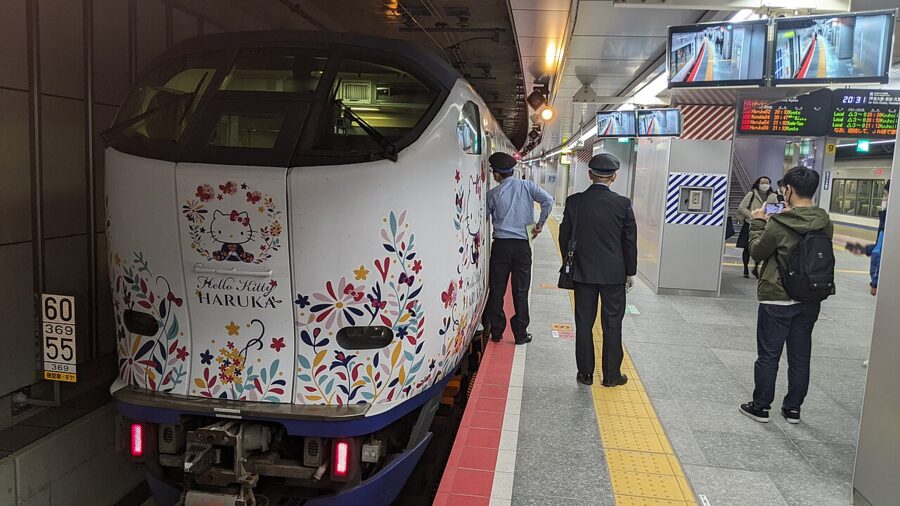
Since March 2023 the Haruka has stopped at Osaka Station, at the underground platforms in the new Umekita district, so a hotel in Umeda is now an easy Haruka run of about 45 minutes. The Rapi:t route works too: change at Namba to the Midosuji Line, which runs straight up to Umeda.

Shin-Osaka and Kyoto
The Haruka, every time. It runs through to Shin-Osaka for the shinkansen in about 50 minutes and to Kyoto in about 75, with no change; the Rapi:t would leave you with a subway ride and at least one more change. At full price the unreserved Haruka to Kyoto is ¥3,060 (about $20), and a reserved seat in the regular season is ¥3,590 (about $23), as of April 2026.
Universal Studios, Nara and Kobe
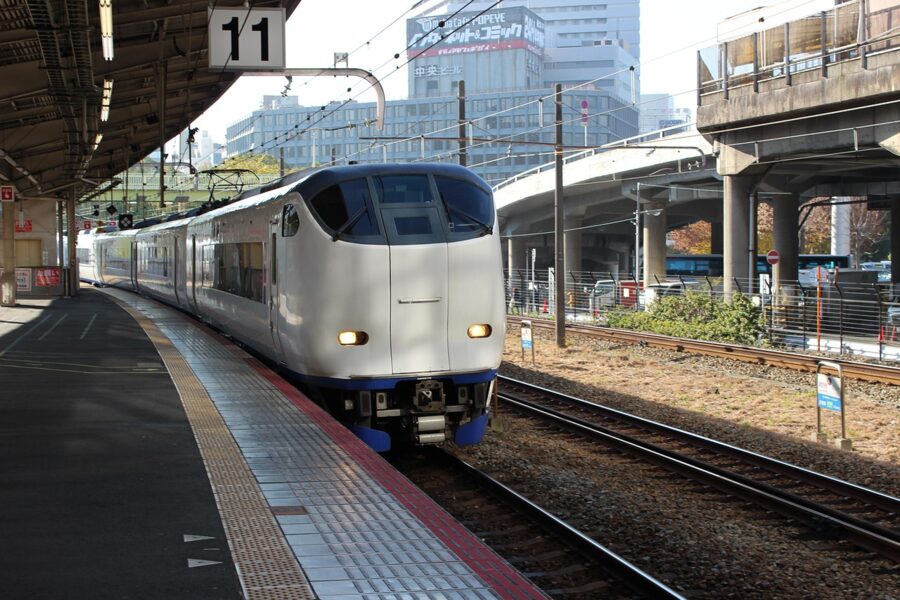
For Universal Studios Japan, JR is the simpler line: the Kansai Airport Rapid runs round the west side of the Loop Line through Nishikujo, where you change for the Yumesaki Line. For Nara, take the Rapi:t to Namba and a Kintetsu train from Osaka-Namba, and for Kobe the Hanshin line from the same Osaka-Namba station runs through to Kobe-Sannomiya. JR’s HARUKA One-way Ticket also covers onward JR travel to Nara for ¥2,200 (about $14) and to Kobe for ¥2,300 (about $15).
When the ordinary train is the better buy
Nankai’s airport express (空港急行) runs the same route to Namba in about 45 minutes for the ¥970 fare alone. That makes the Rapi:t only five to ten minutes faster, and what the extra ¥440 to ¥700 really buys is a guaranteed seat and a shelf for your suitcase. Nankai lengthened many airport express trains from six cars to eight in December 2024 because they were packed.
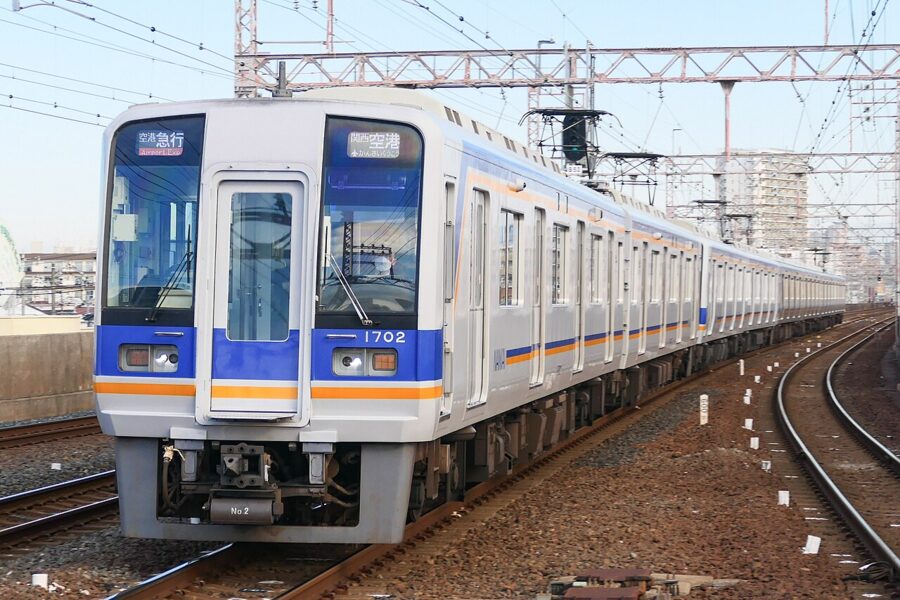
I would ride the airport express into town at midday with a backpack, and the Rapi:t with two suitcases at six in the evening.
At Kansai Airport
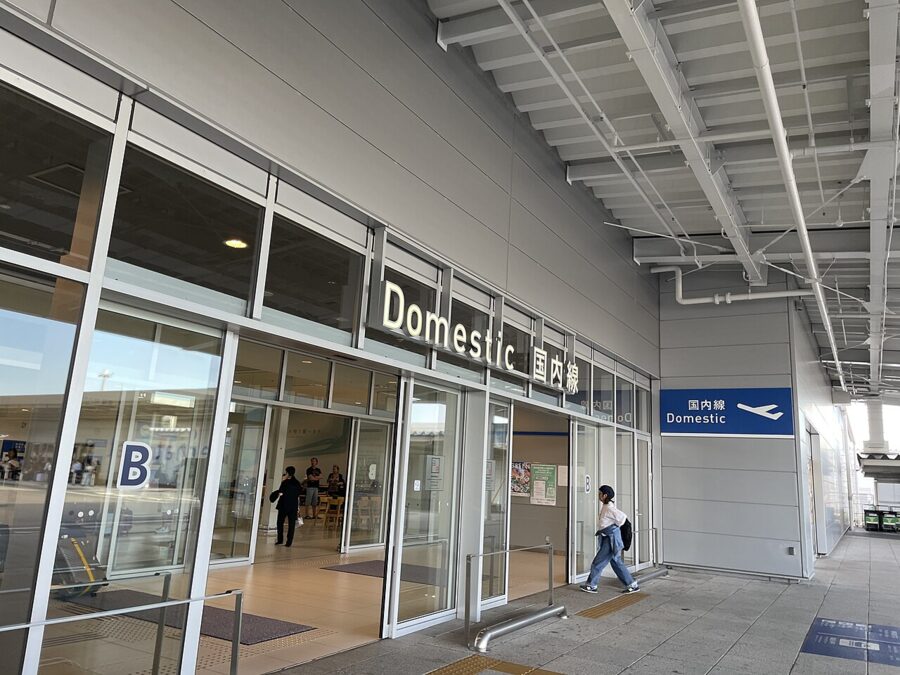
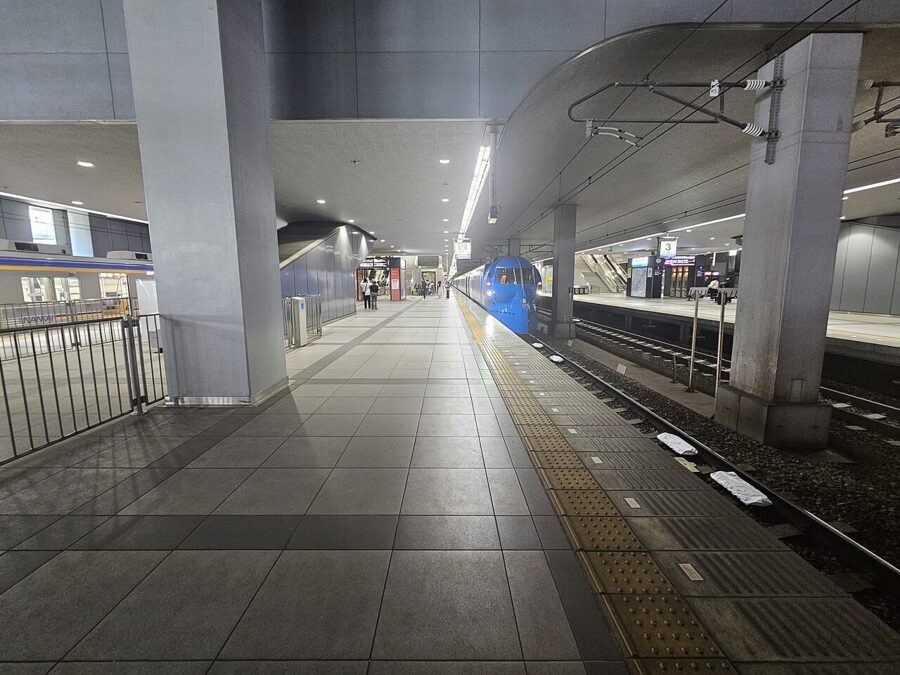
The airport station sits beside Terminal 1, joined to it by walkways on the second floor, with Nankai and JR side by side under one roof. Nankai trains use platforms 1 and 2. Terminal 2, the low-cost-airline terminal, has no station: a free shuttle bus runs to the Terminal 1 side, so allow an extra quarter of an hour.



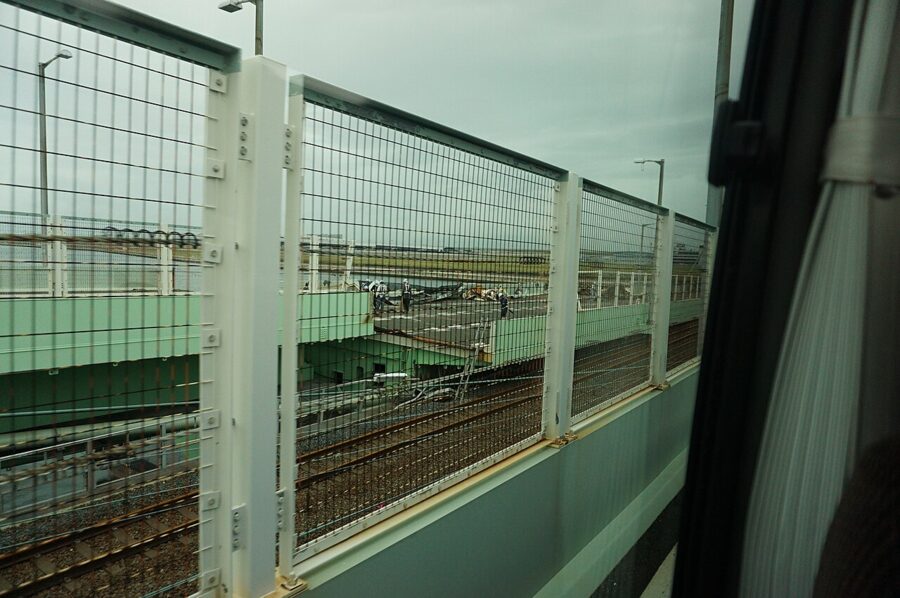
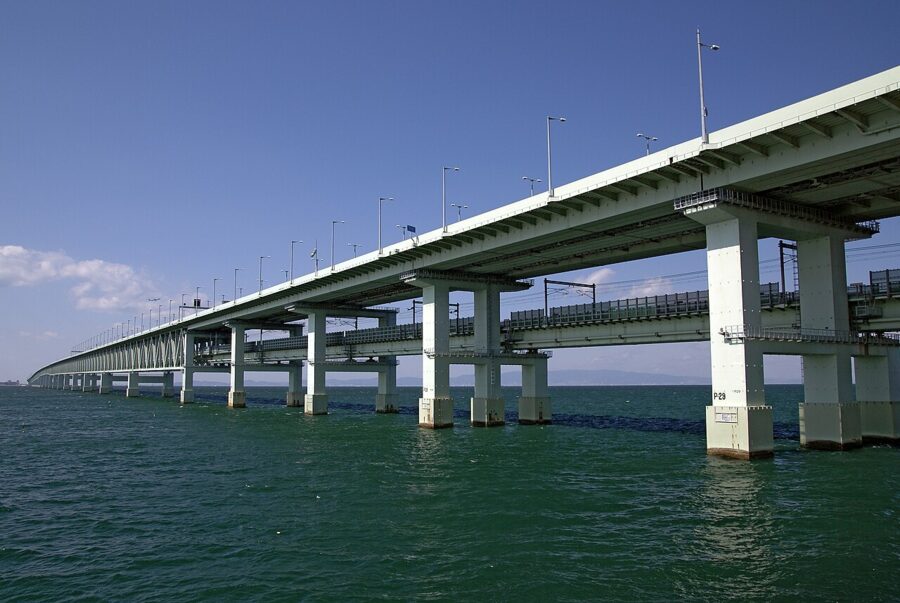
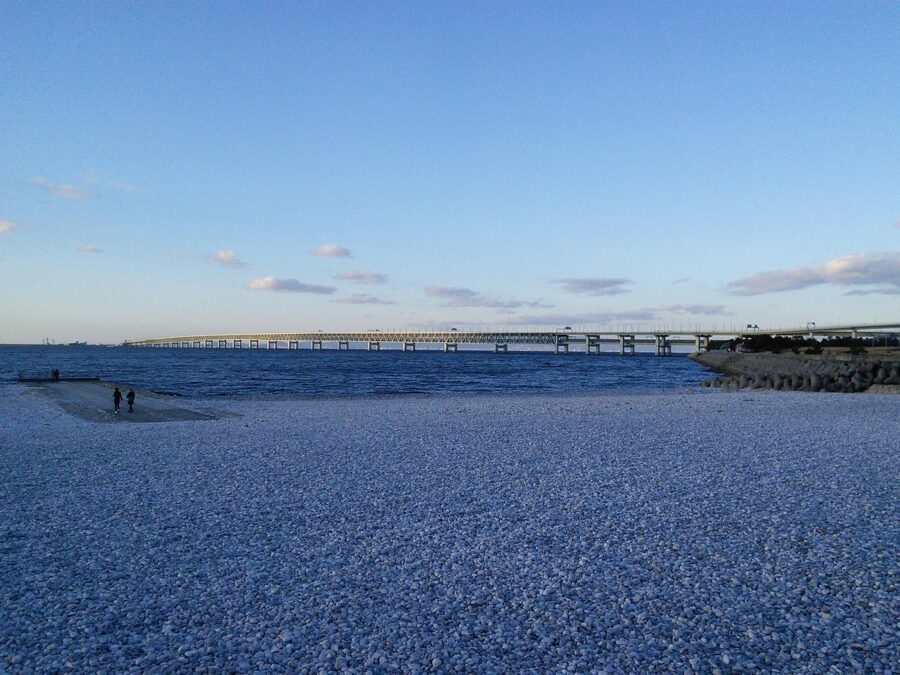
Between the island and the mainland the trains cross Sky Gate Bridge R, about 3.75 kilometers long, with the railway on the lower deck and the expressway on top. JR and Nankai share the same pair of tracks across it as far as Rinku Town. On September 4, 2018, a tanker blown loose by Typhoon Jebi hit the bridge, and trains to the airport stopped for about two weeks.
High winds still stop trains on the bridge now and then, usually in typhoon season. If a storm is forecast for your travel day, check Nankai’s and JR West’s service pages before you leave the hotel.


Arriving at Nankai Namba
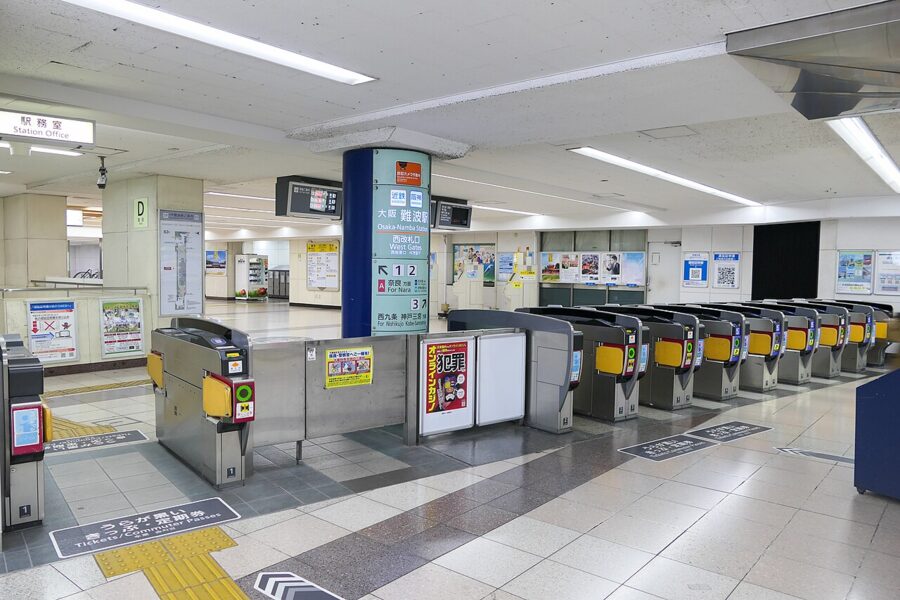
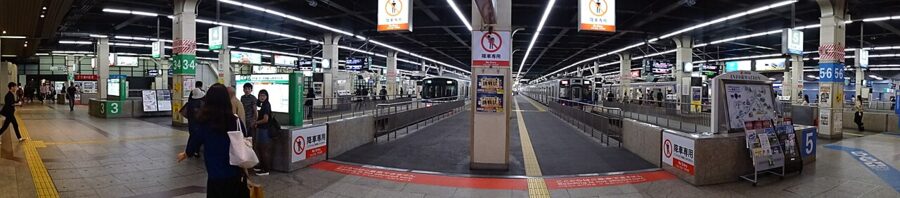
Nankai Namba is a terminus, so you cannot miss your stop. Trains arrive on the third floor, and the Rapi:t usually uses platform 9, on the west side where the Main Line platforms are. From there you go down to the second-floor central gate, rebuilt in September 2025 with white curved columns, clearer signs and benches for people waiting with luggage.

Namba is several stations wearing one name. Osaka Metro’s Namba (Midosuji, Yotsubashi and Sennichimae lines) is connected underground; Kintetsu and Hanshin trains use Osaka-Namba, a few minutes’ walk away underground; JR Namba, on the Yamatoji Line, is further west and the one people get lost looking for. Allow ten minutes with luggage, and follow the station signs.

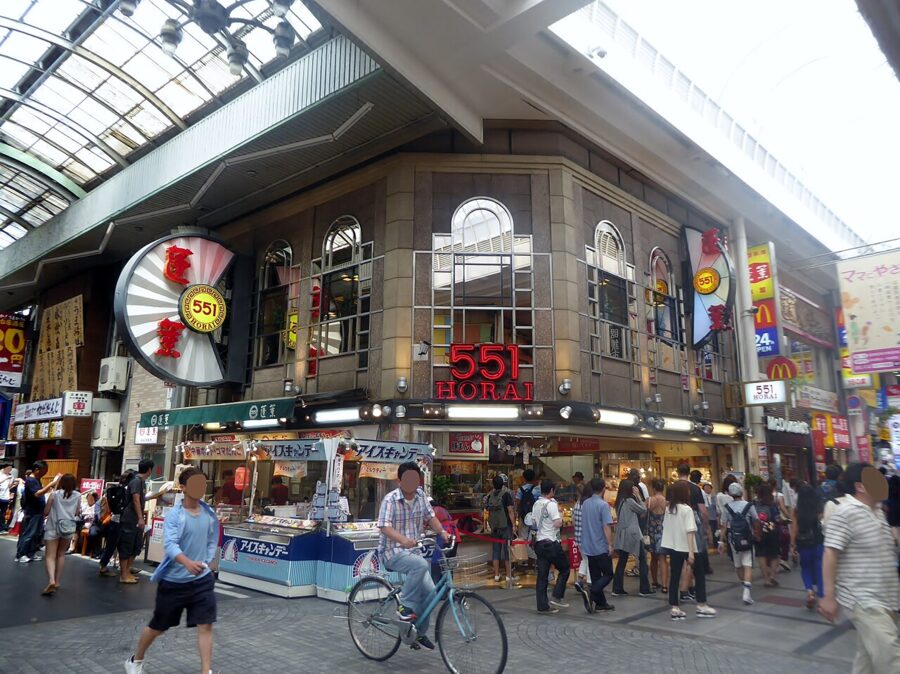
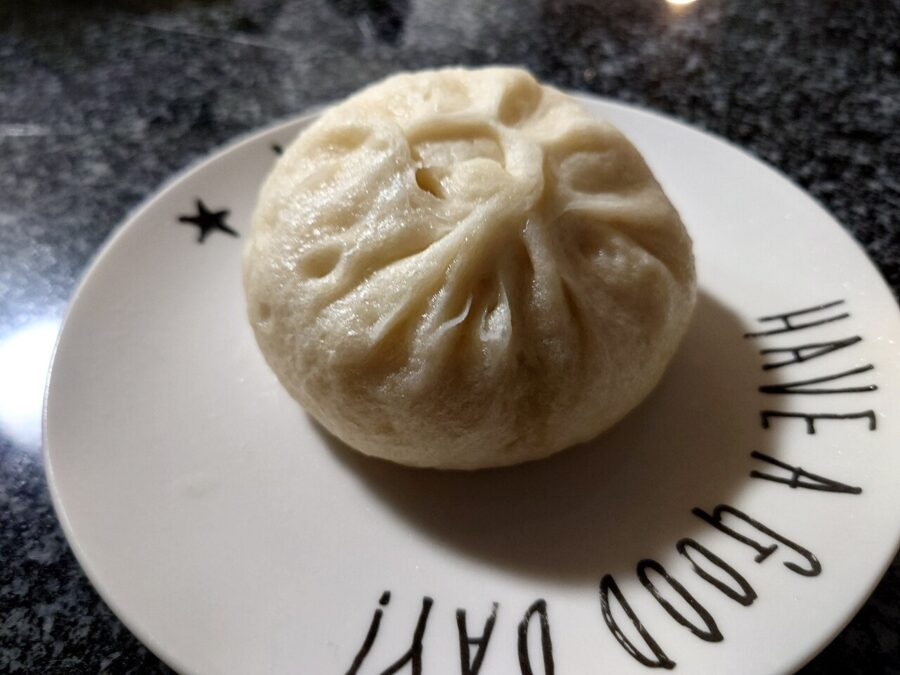
One food stop, before the train or after it. 551 Horai’s main shop is on the Ebisubashi-suji arcade a few minutes north of Nankai Namba, and its pork buns, butaman (豚まん), are the snack Osaka sends home with its visitors; a box of ten has cost ¥2,500 (about $16) since a price change in late summer 2026. The shop closes on the first and third Tuesdays of the month. The buns smell wonderful for ten minutes and very strongly for the rest of the journey, so eat them on the platform.


Refunds and the small print
Refund rules differ by ticket. The Digital Ticket refunds free until five minutes before departure, but only to the buyer and only for the whole booking; the station Kanku Toku-wari ticket costs ¥520 to refund; and nothing is refunded once you have gone through the gate. If Nankai cancels your train, digital and ticketless express charges are refunded to your card automatically.
Two airport questions come up often. Kansai International and Itami are different airports: Itami, the Osaka International Airport, handles domestic flights and has no Rapi:t. And to go the other way, from JR Namba to the airport, there is no direct train; walk across to Nankai Namba or ride JR to Tennoji for the Haruka.
Book the ¥550 upgrade the night before, take a single seat in car 5 or 6, and watch Osaka Bay go past through a porthole.