
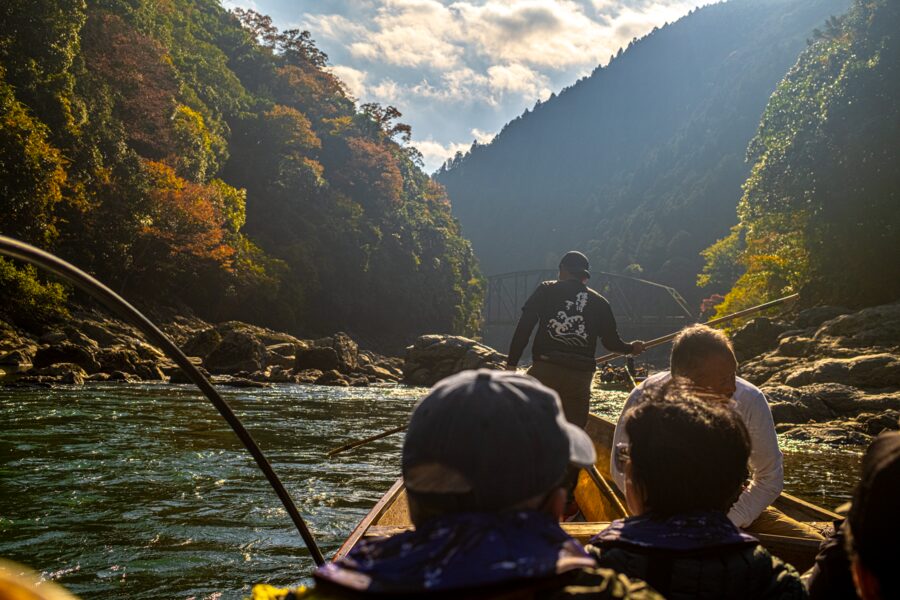
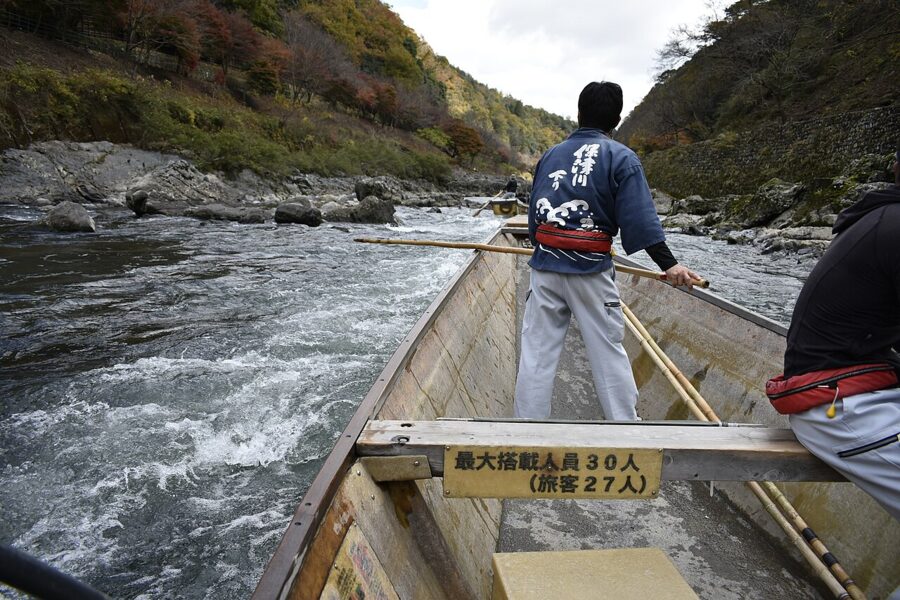
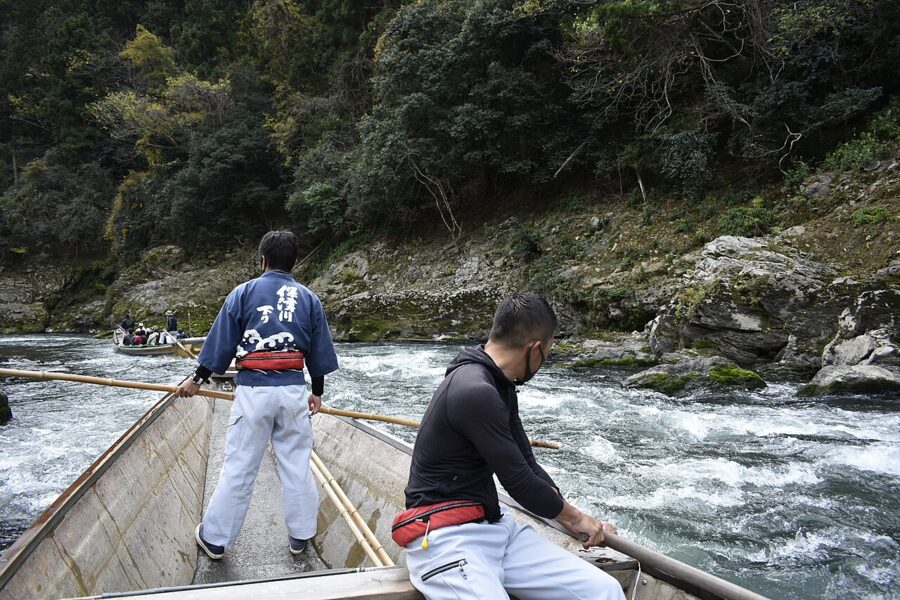
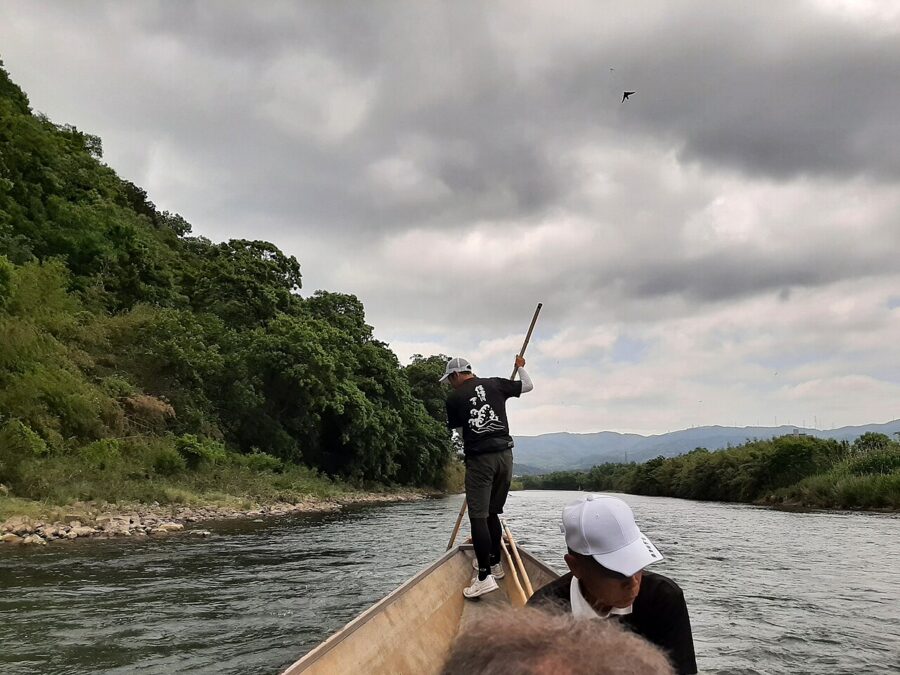
Every Hozugawa boat leaves Kameoka with at least three boatmen: one at the bow with a bamboo pole, one pulling an oar, one at the stern on the big hand-held rudder. For the next 16 kilometers, until the river widens under the hills of Arashiyama, those three are the engine. In wind or high water the co-op that runs the boats sends four or five.
Kameoka (亀岡) is the town at the top of that ride, in a farming basin over the mountains west of Kyoto. Most visitors meet it for fifteen minutes, between stepping off the Sagano Romantic Train and climbing into a boat. It deserves longer: the walls of a castle built by Akechi Mitsuhide, a hot spring village in the hills, and a stadium at the station, where a JR train drops you twenty minutes from Kyoto Station.

Contents7 sections
Where Kameoka is, and how it joins up with Arashiyama
Kameoka sits in a bowl of rice fields and low hills in central Kyoto Prefecture, 224.8 square kilometers with about 82,000 people (an official estimate for October 2026). Until 1869 the town was called Kameyama, and it was renamed so that no one would confuse it with Kameyama in Ise, today’s Mie Prefecture.
The basin is famous in Japan for fog. From late autumn to early spring, thick fog fills it on many mornings, and on some days the town is still white past noon. Kameoka calls itself kiri no miyako, the city of fog. An early train in November can come out of the tunnels into cloud.
Three lines run between Kameoka and Arashiyama, and the classic day out uses two of them. The Hozu River (保津川) cuts east through a gorge called Hozukyō; the old railway line follows the gorge wall; the modern JR Sagano Line runs straight through it in tunnels. The boat only goes downstream, so the usual loop is up by train and down by water.
| Route | Kameoka end | Arashiyama end | Time | Fare (as of November 2026) |
|---|---|---|---|---|
| JR Sagano Line (San-in Main Line) | JR Kameoka or JR Umahori | JR Saga-Arashiyama | About 8 minutes by rapid | Covered by the JR Pass |
| Sagano Romantic Train | Torokko Kameoka | Torokko Saga and Torokko Arashiyama | 23 to 26 minutes | ¥880 (about $6), any distance |
| Hozugawa river boat | Boarding place, Hozu-chō | Landing below Togetsukyō | About 2 hours, downstream only | ¥6,000 (about $39) |
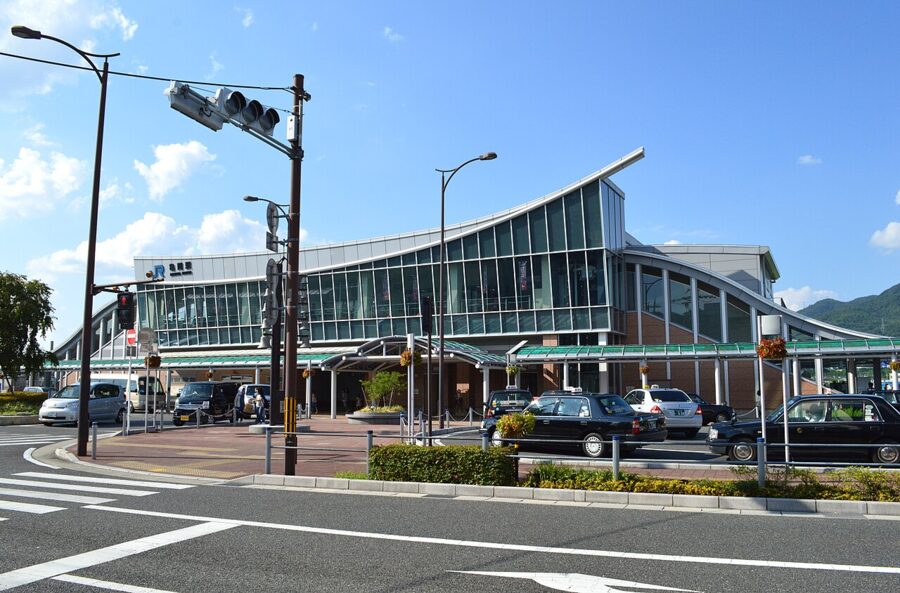
From Kyoto Station, the JR Sagano Line reaches Kameoka in about 20 minutes on a rapid train, and the fare is ¥410 (about $3) by ticket or IC card. Saga-Arashiyama is about 12 minutes out on the same line for ¥240 (about $2). Two Kameoka stations matter: JR Kameoka, for the town and the boat boarding place, and JR Umahori, one stop toward Kyoto, which is a ten-minute walk from Torokko Kameoka.
The Sagano Romantic Train
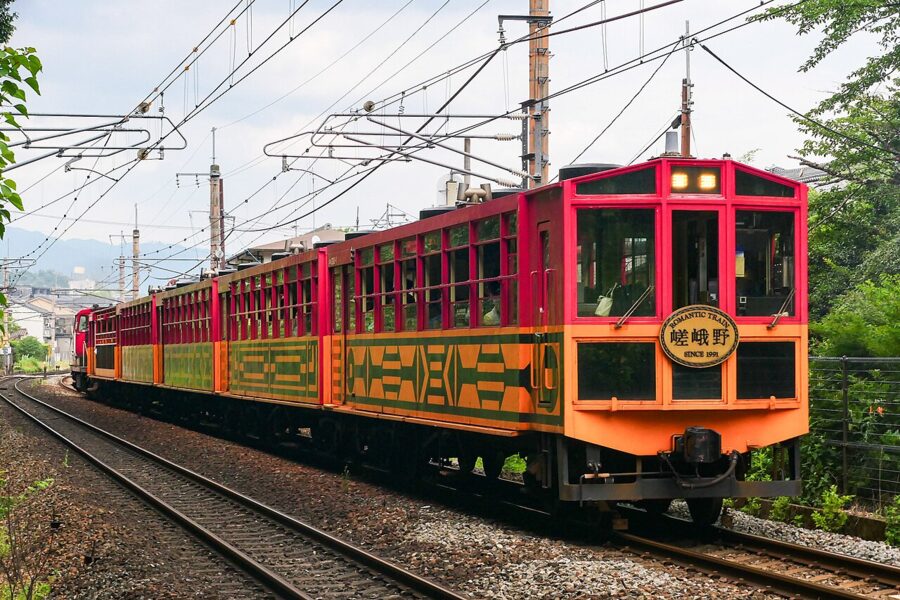
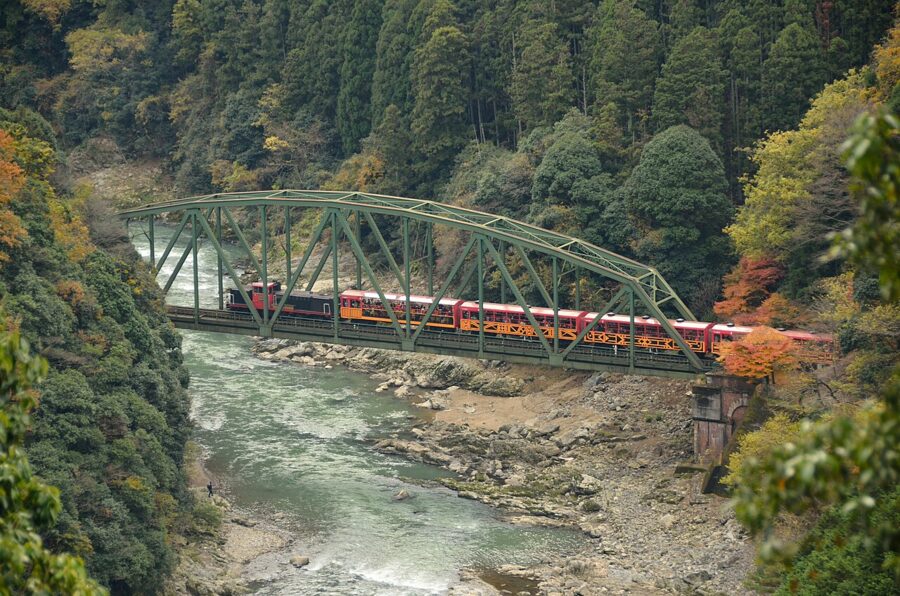
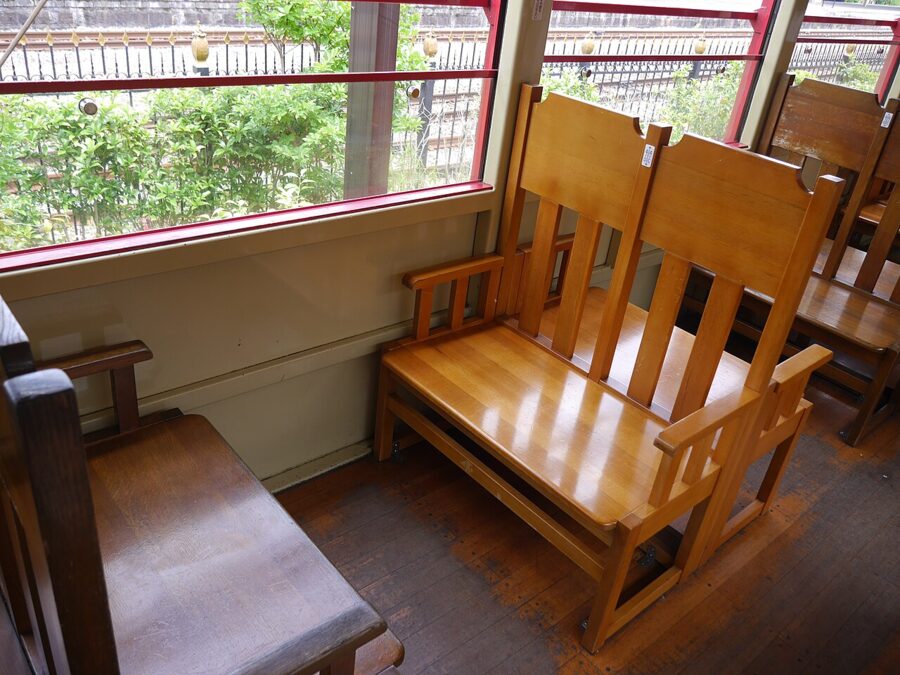
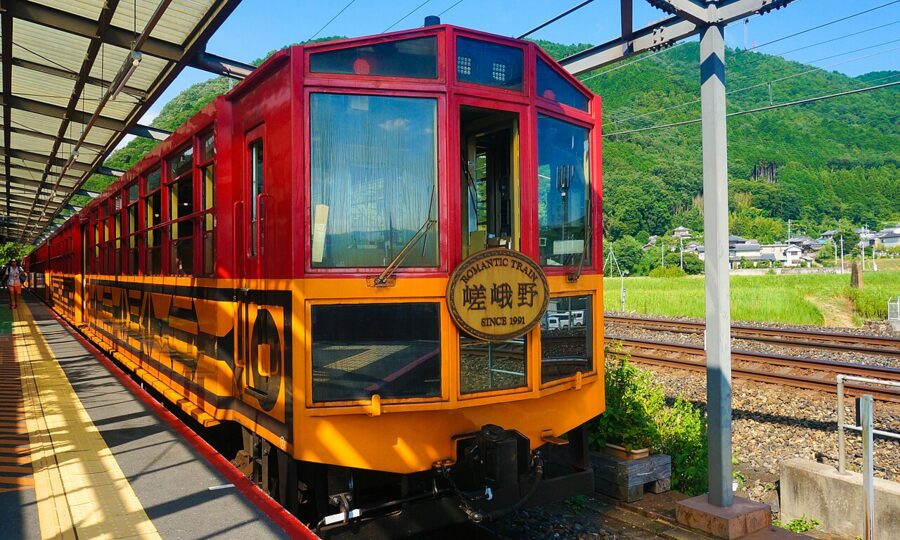
The trolley train (嵯峨野トロッコ列車, Sagano torokko ressha) runs 7.3 kilometers along the old San-in Main Line, the track the Kyoto Railway Company pushed through the gorge to Kameoka in 1899. When JR moved the main line into new tunnels in 1989, the gorge track was left empty, and the Sagano Scenic Railway reopened it as a sightseeing line in 1991. The cars are converted freight wagons with wooden seats and bare bulbs, hauled by a diesel engine, and they rattle.
This is the last season for the current trains
The cars you can ride today retire after their final run on December 29, 2026. New trains start on March 1, 2027, with glass running down to the floor and glass ceilings in every car. Car 4 will carry a private room for up to six, the Premium Cabin Rankyō (嵐峡), with tatami seating and a curtain of Nishijin weaving.
From March 1, 2027, a reserved seat also costs ¥620 (about $4) on top of the ¥880 fare, and children pay ¥310 on top of ¥440. The covered deck at each car door needs only the fare. The cabin costs ¥9,000 (about $58) per room plus fares, boarding at Torokko Saga or Torokko Kameoka only, so six adults pay ¥14,280 (about $92) in all.

Season and timetable
The line runs from March 1 to December 29. It normally closes on Wednesdays, except in spring break, Golden Week, the summer holidays and the autumn color season, and a Wednesday that falls on a public holiday is a running day. In 2026 the last Wednesday closure is December 16.
Down trains leave Torokko Saga at two minutes past each hour from 9:02 to 16:02, call at Torokko Arashiyama three minutes later and Torokko Hozukyō at 13 past, and reach Torokko Kameoka 23 minutes after leaving. Up trains leave Torokko Kameoka on the half hour from 9:30 to 16:30 and take about 26 minutes. The 2027 timetable published by the railway keeps the same pattern.
From October 24 to December 29, 2026, the gorge is lit from 16:30 until the last train, and extra evening trains run on many of those days. The 16:30 from Torokko Kameoka is the first up train that sees the lights. On December 19 and 20, 2026, a pre-booked Christmas train runs out to Torokko Hozukyō and back under illuminations, the last event for the old cars.

Tickets
Every seat is reserved. Tickets go on sale on the railway’s own website at midnight one month before the day you ride, and you board with a QR code on your phone. Each booking holds up to eight people, and you pick the car and seat on a seat map. Tickets for the new trains’ first day, March 1, 2027, go on sale on February 1 at about 10:00.
The stations at Saga, Arashiyama and Kameoka sell that day’s leftover seats at the window, opening at about 8:35, 8:50 and 9:10 respectively, and all three open from 8:35 in busy periods. Once every seat is gone, they sell a limited number of standing tickets. Torokko Hozukyō sells nothing.
JR ticket offices no longer sell trolley tickets, and the JR Pass is not valid on the train. The stations take cash, the major credit cards and IC cards such as ICOCA and Suica. A ticket from Saga also works from Arashiyama, and you can get off early on an up train, but you cannot get back on.
Which side to sit on, and car 5
Seats come in four-person boxes lettered A to D, and the windows are A and D. Going down to Kameoka, C and D face forward; coming back, A and B do. The track crosses the Hozu on a steel truss bridge, so the river shows on both sides of the train in turn, and any window seat gets its share.
Car 5, at the locomotive end, is called The Rich. It has no glass at all in the sides, a glass roof and an open floor, so the wind and the noise of the river come straight in. When it rains you get wet, umbrellas are banned inside, and the railway gives no refunds or changes for weather. I would book car 5 on a dry day in May or November and a window seat in cars 1 to 4 otherwise.
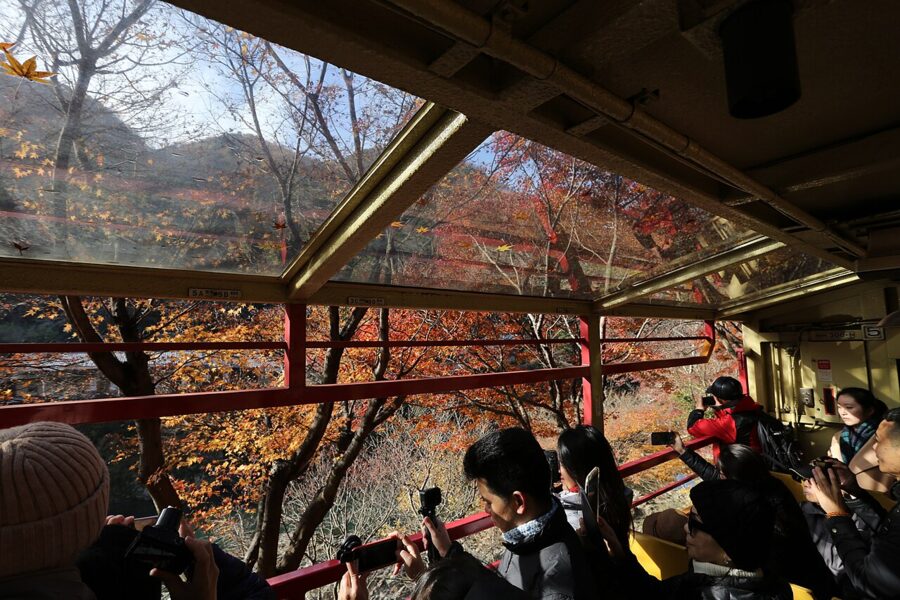

Sakura usually peak along the line from late March to early April, and the leaves turn from mid-November to early December, though both move with the weather. Those weeks sell out first, so set an alarm for midnight a month ahead. Suitcases up to about 120 centimeters in total dimensions ride free.
The Hozugawa river boat ride
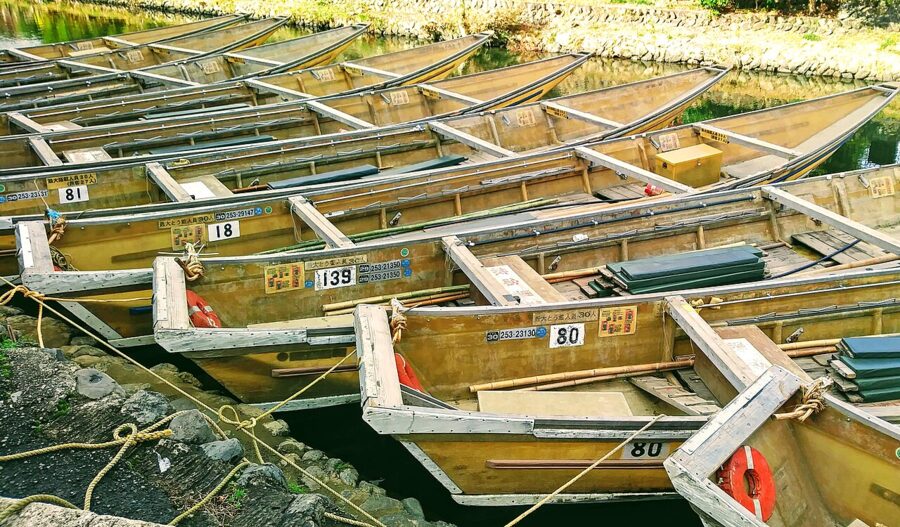
The boats (保津川下り, Hozugawa kudari) are open, flat-bottomed craft about 11 meters long that carry 24 passengers on bench seats. They start at a boarding place in Hozu-chō, eight to ten minutes on foot from the north exit of JR Kameoka, and finish below Togetsukyō Bridge in Arashiyama. The co-op that runs them, the Hozugawa Yusen Kigyō Kumiai, counts about 300,000 passengers a year.
The river has carried traffic for far longer than tourists. Logs for Kyoto’s temples and Osaka Castle came down it as rafts, and in 1606 the Kyoto merchant Suminokura Ryōi cut a navigable channel through the rocks so that boats could bring rice, wheat and charcoal from Tamba to the capital. Cargo boats and rafts kept running until about 1948, when the railway and then trucks took over.
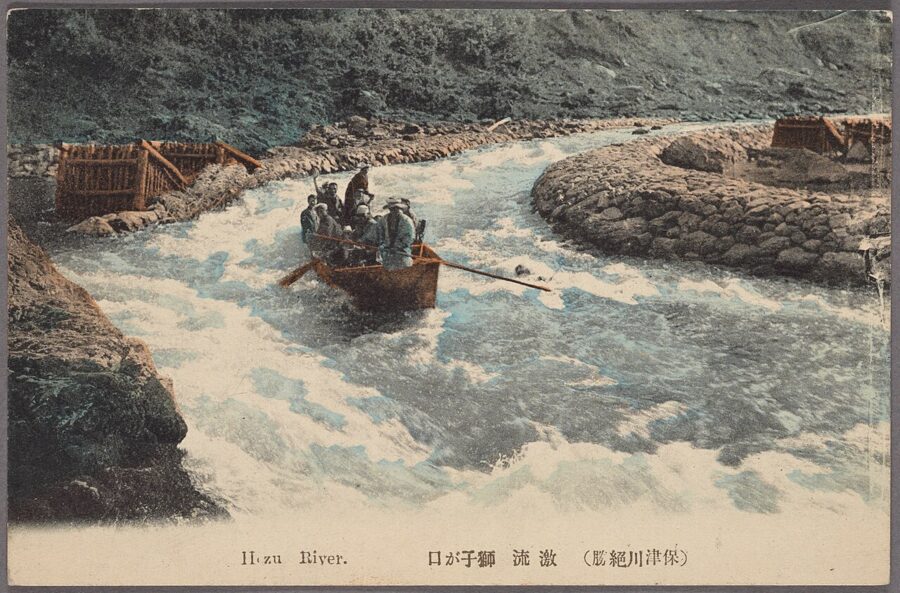
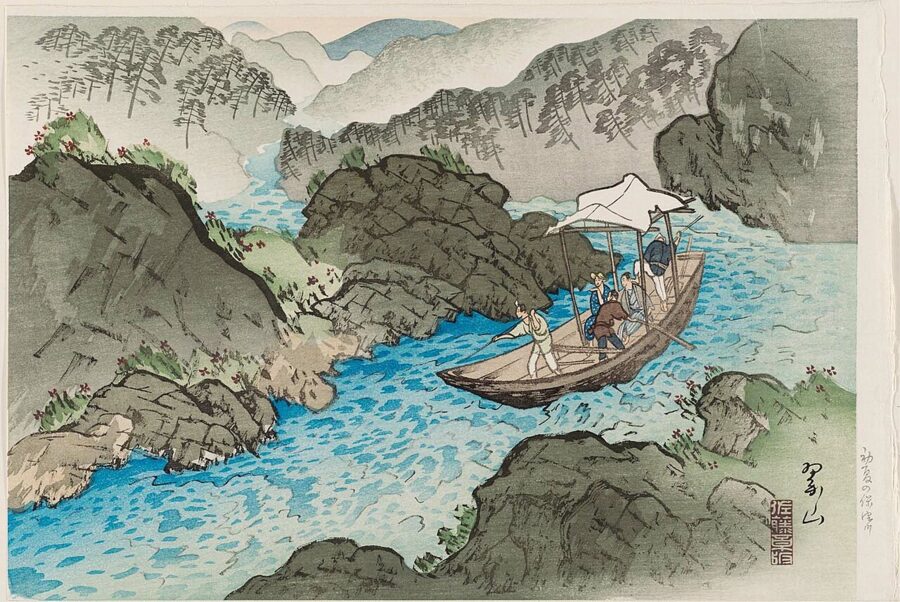
Pleasure trips began in the 1890s. Natsume Sōseki put the ride into his 1907 novel Gubijinsō, and between the 1910s and the early 1930s foreign visitors came out from Kyoto by two-man rickshaw over the Oinosaka pass, so many that the road to the boarding place picked up the nickname Ijin Kaidō, the Foreigners’ Road. Edward, Prince of Wales rode it in 1922.
What you see on the way down
The co-op quotes about two hours, and about 100 minutes in practice: as little as an hour in high water, close to 110 minutes in low. The rapids come in short bursts with long, calm pools between, and for part of the way the trolley line runs along the cliff above you.
The boatmen name the landmarks as you pass. Koayu no Taki, the “little sweetfish falls,” is the only spot on the river called a waterfall, a drop of about two meters. Tono no Ryōba, the lord’s fishing hole, is ten meters deep, and the deepest pool, Magari-buchi, reaches 15. On the rocks you can find hollows worn by 400 years of boat poles striking the same places, and grooves cut by the ropes that hauled empty boats back upstream.

As the boat comes into Arashiyama, look up at the hillside on your right for Daihikaku, the small temple Suminokura moved here in 1614 to pray for the workers who died cutting the channel.
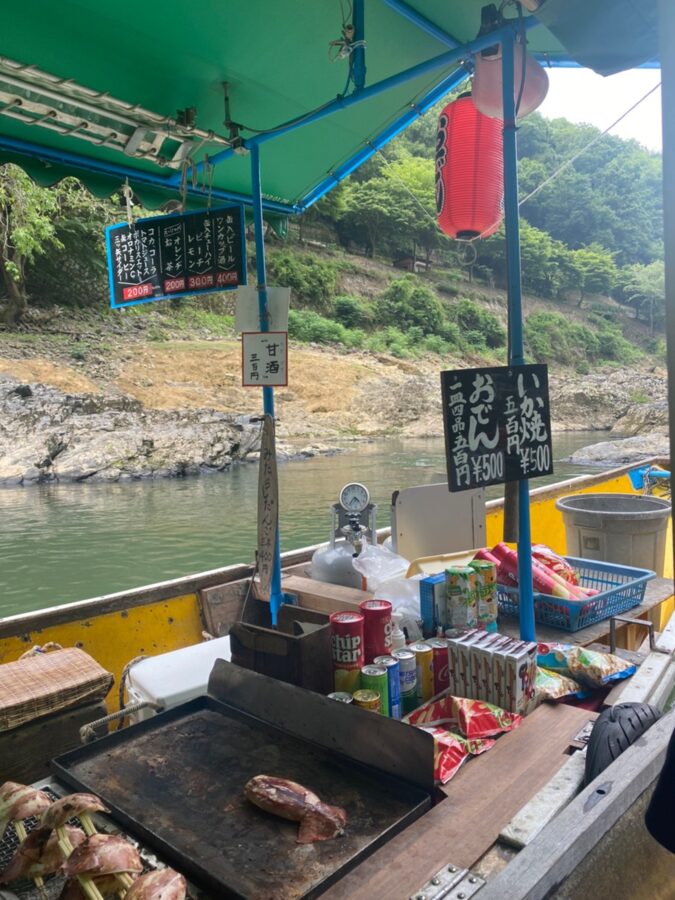
Just before Arashiyama, a boat pulls alongside yours with a grill on deck. This is Kotogase Chaya, a floating stall run by the same family since 1919, selling grilled squid, oden, mitarashi rice dumplings, amazake and beer, with salt-grilled ayu sweetfish in summer. The boatmen call it the river’s convenience store.

Season, times and fares
The boats run all year except December 29 to January 4 and a few safety-check days. Weekday departures are fixed; on weekends and holidays a boat leaves whenever 24 people have gathered. As of November 2026 the schedule is:
| Period | Departures |
|---|---|
| March 10 to December 13, 2026 | Weekdays hourly 9:00 to 15:00; weekends and holidays as boats fill, last at 15:00 |
| Winter, January 5 to March 9, 2027 | 10:00, 11:30, 13:00 and 14:30, with extra boats on busy weekends |
| March 10 to December 12, 2027 | Same as 2026 |
| No boats | December 29 to January 4; safety checks on February 1, February 10 and September 1, 2027 |
Winter boats start on the second Monday of December, December 14 in 2026. Older guides describe heated, enclosed winter boats with kotatsu tables; this winter the co-op is running open boats with the covers off and says there is no heating, so dress for two hours on cold water.

Fares are ¥6,000 (about $39) for adults and ¥4,500 (about $29) for children from infancy through elementary school. Anyone under 80 centimeters tall cannot board, even on a lap, because everyone has to wear a life jacket. A private boat for up to 17 costs ¥144,000 (about $930), or ¥162,000 in busy periods such as all of November.
Rain alone does not stop the boats; the crew rigs an awning. Strong wind, high water or a storm does, and in autumn that happens often: the co-op cancelled every boat on November 19 and 20, 2026 for wind, and lost six days in late October to weather, high water and an approaching typhoon. Check the operating status on the co-op’s website on the morning you go.
Booking, or turning up
Groups of nine or fewer book online through the link on the co-op’s website, and groups of ten or more book by phone. Cancellation is free until midnight the day before, a weather cancellation is refunded automatically, and you show the QR code at the window before your time slot. The window gets a queue in the ten minutes before each departure, so arrive a little earlier.
Same-day tickets are sold first come, first served at the boarding place, about 200 a day on average. You get a numbered ticket and wait within earshot of the announcements; you cannot buy a seat for a later boat in advance. The co-op’s own advice is that outside the leaf season the 9:00 boat usually has no wait, and that the crowds arrive with the trolley trains from about 9:30.
In the leaf season it recommends being at the window by 8:00 to 8:30, and no later than 9:00. Its published log shows same-day tickets selling out by 9:00 on October 16, 2026 and by 11:10 on November 13. If the trolley is full, the JR Sagano Line still gets you to the boat.

The safety record, and what changed after 2023
On March 28, 2023, boat 9 overturned at Ōtakase, an 80-meter rapid about five kilometers below the boarding place, with four boatmen and 25 passengers on board. According to the Japan Transport Safety Board report published in September 2024, the steersman’s rudder caught no water on a hard push and he went overboard. The rudder swung out of reach into the river, and the boat ran onto rocks on the left bank and capsized. Two boatmen drowned and 19 passengers were hurt, mostly bruises and hypothermia.
The report found that a smoother new lashing had let the rudder slide, that one of the dead boatmen wore no life jacket, and that most passengers in manual-inflating vests never inflated them. The alarm took about 30 minutes to reach rescuers, partly because radio and phone coverage in the gorge was poor. The boats stopped for 110 days and resumed on July 17, 2023.
Today every passenger must wear a life jacket or is refused boarding: a fixed foam vest most of the year, an automatic-inflating shoulder vest in summer. Every boat carries GPS digital radio that reaches almost the whole gorge. The co-op holds to a 65-centimeter limit on the national river gauge at Hozu, inspects the route twice a year and trains its crews in river rescue. Listen to the boatman’s briefing, and keep your hands off the gunwale.
What to wear and bring
A splash sheet pulls up along the sides, but in high water it will not keep everyone dry, so bring a light raincoat. Umbrellas and parasols are not allowed. The only toilets are in the waiting room before you board.
You can bring food and drink; a bento from the shop at the boarding place suits the slow early stretches. Small pets can ride on your lap in a carrier. Wheelchair users need a companion and move to the backless bench; a folding chair rides in the stern. Mind your phone over the side: the co-op says dropped cameras and phones are common and cannot be recovered.
From the train to the boat
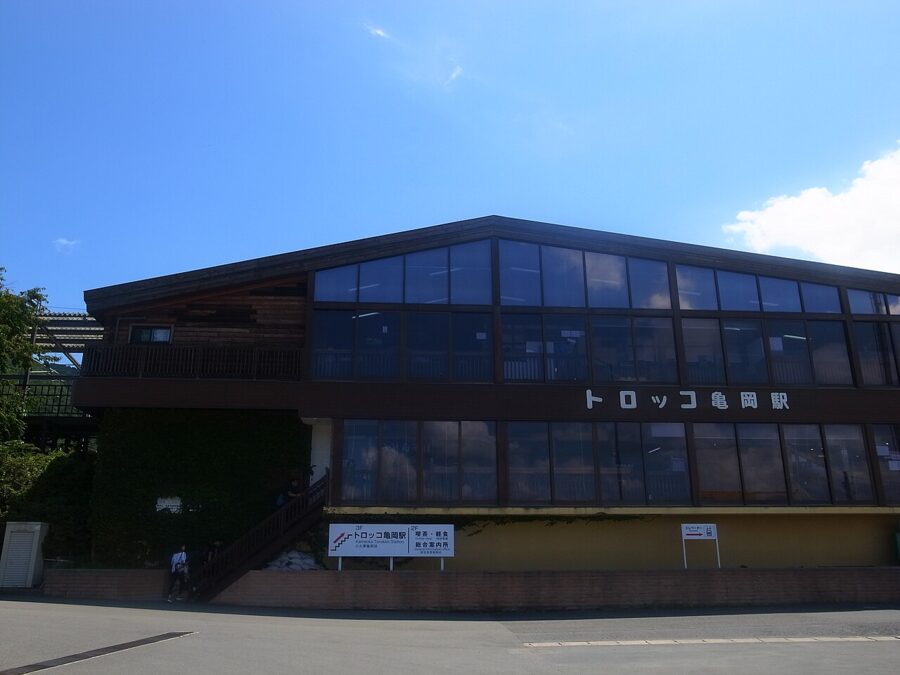
Torokko Kameoka stands in the fields well away from the boat, and the transfer is the part people get wrong. A route bus runs from the station to the boarding place, normally once an hour at 35 minutes past, and takes about 15 minutes. Taxis wait at the station, and a horse-drawn carriage covers the same route in about 25 minutes.
The trolley reaches Torokko Kameoka at 25 past and the bus leaves at 35 past, so walk straight to the stop. If you have booked a boat, I would leave at least an hour between your train’s arrival and the departure, and be on the 13:25 arrival for the last boat at 15:00: miss your boat and you cannot board.
The Torokko Saga station in Arashiyama has a Hozugawa counter that sells that day’s boat tickets and books the bus, taxi or carriage at the far end.

Kameoka town
The town center is a short, flat walk south of JR Kameoka, and its old streets still follow the castle town that Mitsuhide began. You can see most of it in two hours.
The ruins of Tamba Kameyama Castle
Akechi Mitsuhide built Tamba Kameyama Castle around 1577 on Oda Nobunaga’s orders, as the base for conquering the Tamba region. It was from here, in 1582, that Mitsuhide’s army set out on the march that ended at Honnō-ji in Kyoto with Nobunaga dead. In 1610, under Okabe Nagamori, the shogunate had western lords rebuild it as a full Edo-period fortress with a keep and a planned castle town.
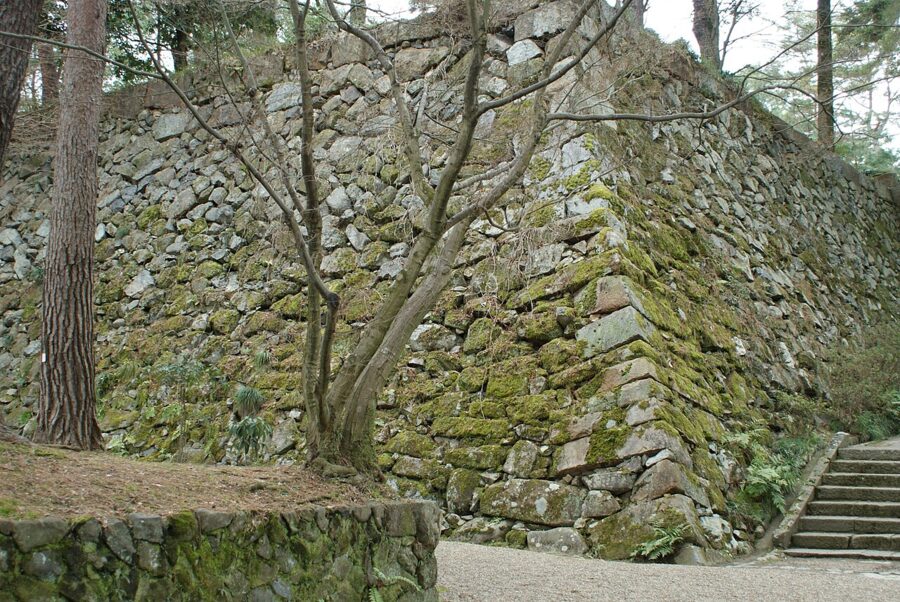

After the Meiji Restoration the castle was dismantled and sold off, down to the stones. In 1919 Deguchi Onisaburō, a Kameoka man and co-founder of the Oomoto (大本) religion, bought the ruins and had his followers dig the old wall stones out of the ground and rebuild them. In 1935 the police destroyed the Oomoto buildings there in a crackdown on the group.
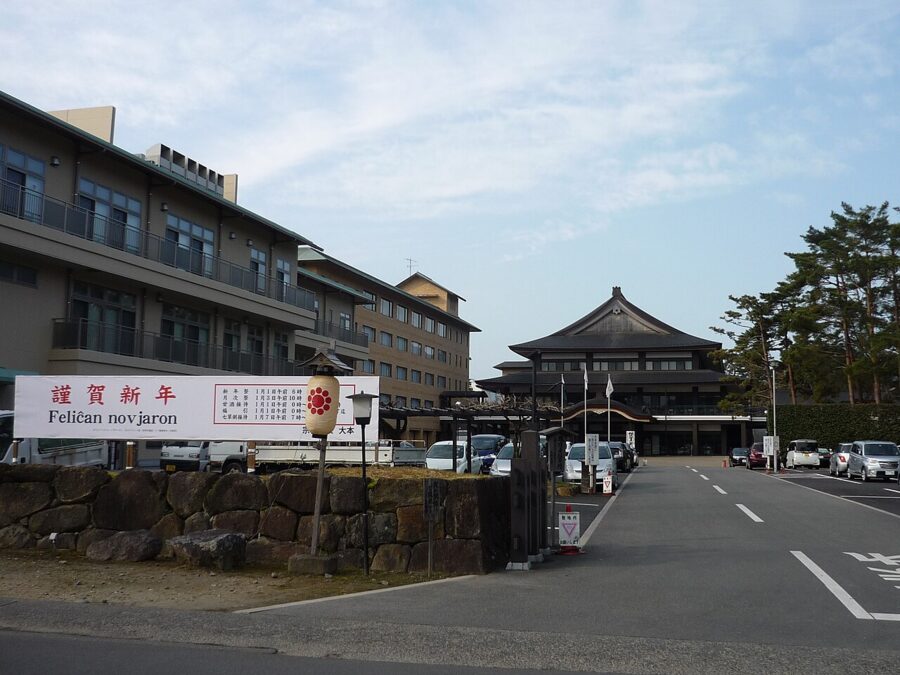
The site is now Ten’onkyō, Oomoto’s headquarters and a working religious ground, ten minutes on foot from JR Kameoka. To see the walls, sign in at the main reception and buy a viewing ticket, ¥300 (about $2) for high school students and older; calling ahead is wise. The moss-covered walls are the reason to go. Keep to the paths and treat it as a place of worship, which it is.

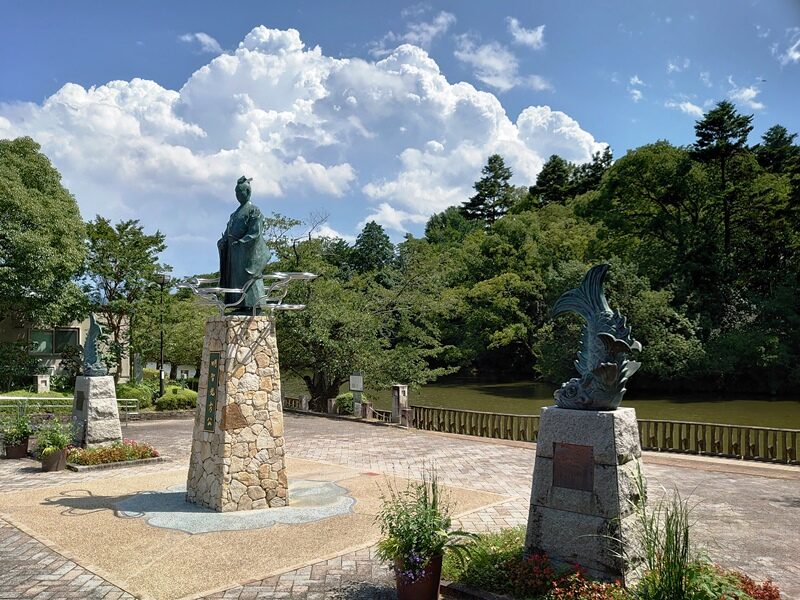
The pond on the town side of the walls is a surviving piece of the castle’s moat, and Nangō Park runs along it. A bronze Akechi Mitsuhide stands there between replicas of the castle’s roof fish, and the city’s Mitsuhide festival in May sends a samurai procession through the old castle town and past the park.

Rakurakusō
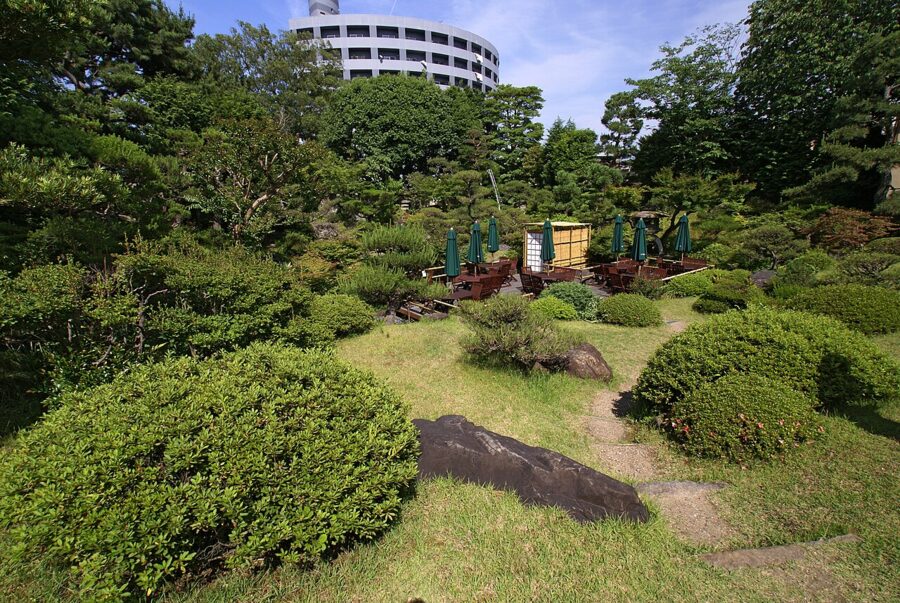
Rakurakusō (楽々荘) is the Meiji-era house of Tanaka Gentarō, the Kameoka businessman who founded the Kyoto Railway Company, the one that built the line the trolley runs on. Its garden is by Ogawa Jihei VII, the designer of the great Meiji gardens of Kyoto. The house is now Ganko Kyoto Kameoka Rakurakusō, a restaurant serving Japanese set meals and kaiseki.
As of mid-2026 it opened daily, 11:00 to 15:00 and 17:00 to 21:00 on weekdays and 11:00 to 21:00 at weekends, with only the café serving from 14:30 to 17:00 on those days. It is a short walk from JR Kameoka, and lunch looking at that garden is the best meal in town.

Yunohana Onsen
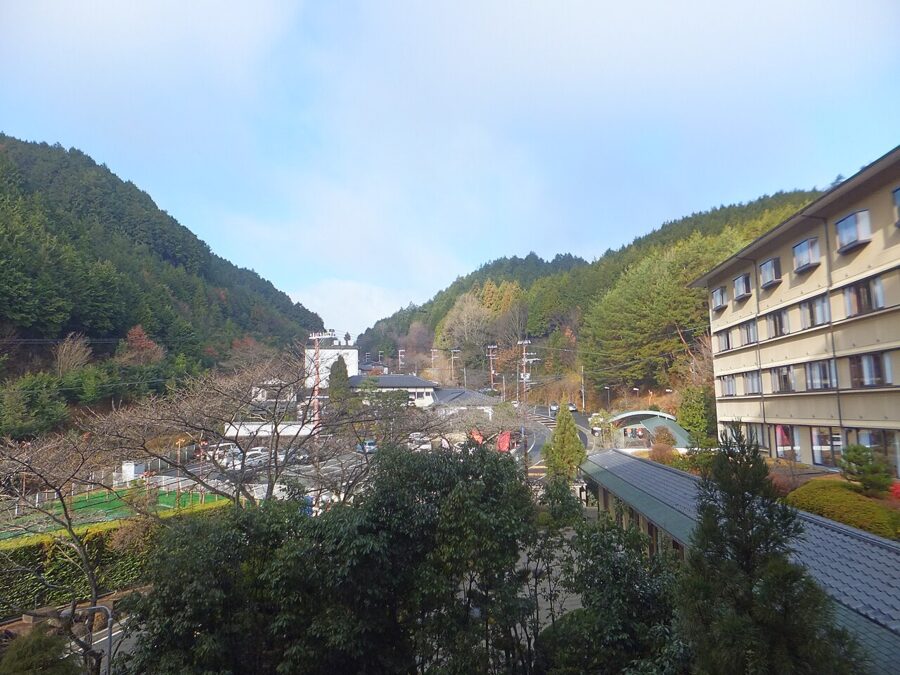
Yunohana Onsen (湯の花温泉) is a small hot spring village in the hills about 7 kilometers west of the town center, about 20 minutes by Keihan Kyoto Kōtsū bus from JR Kameoka plus a short walk; some inns run their own shuttles. Local legend says wounded warriors of the Warring States period healed their sword cuts in the water. The water is a weakly radioactive, low-temperature spring.
Three inns sell day baths (prices as of November 2026):
- Keizankaku (渓山閣): 11:00 to 20:00, ¥1,200 (about $8) for adults, ¥500 for children. Towels are extra.
- Kyoto Keburikawa (京都・烟河): weekdays 12:00 to 21:00 for ¥800 (about $5); weekends and holidays in two sessions, 12:00 to 15:00 and 17:30 to 21:00, for ¥1,000.
- Shōensō Hozugawa-tei (松園荘保津川亭): 11:00 to 22:00, last entry 21:00, ¥1,000 (about $6) with towels. Day bathing can be refused when large groups are staying.
Times shrink on busy weekends, so check the inn’s own page on the day. A hot spring stand in the village fills 200 liters for a ¥100 token, if you bring a container.

Izumo Daijingū
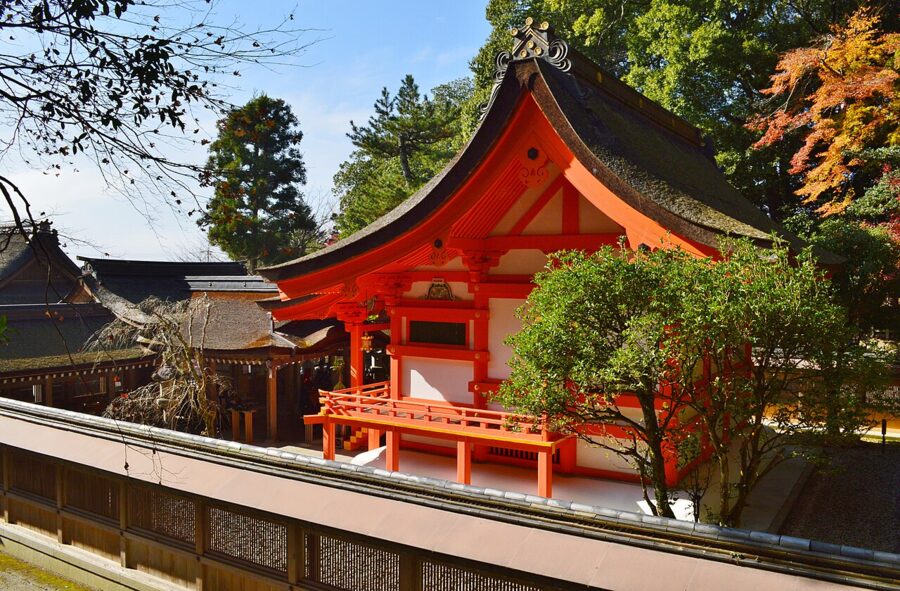
Izumo Daijingū (出雲大神宮), in Chitose-chō on the far side of the basin, is the old first-rank shrine of Tamba Province and a favorite for enmusubi, prayers for a good match. Its main hall is a nationally designated Important Cultural Property, and behind it the sacred mountain Mikageyama feeds a spring called Manai no Mizu, where people line up with bottles. Buses stop at Izumo Daijingū-mae, right outside.
The Nanatani River, 15 minutes by city bus from JR Kameoka, has about 1,500 Somei-yoshino cherry trees along a kilometer of bank. In spring it holds a cherry festival with lights, and the shrine is a 25-minute walk away.
And the English village in the hills
Older guides send you to Dreamton Village (ドゥリムトン村), an English-style hamlet in the hills of Nishi-Betsuin. Since renamed Eikoku-mura, it still runs as a tearoom and rental cottages, 30 minutes by car from the station, on irregular days, so check before you drive up.
Sanga Stadium, and a few local facts
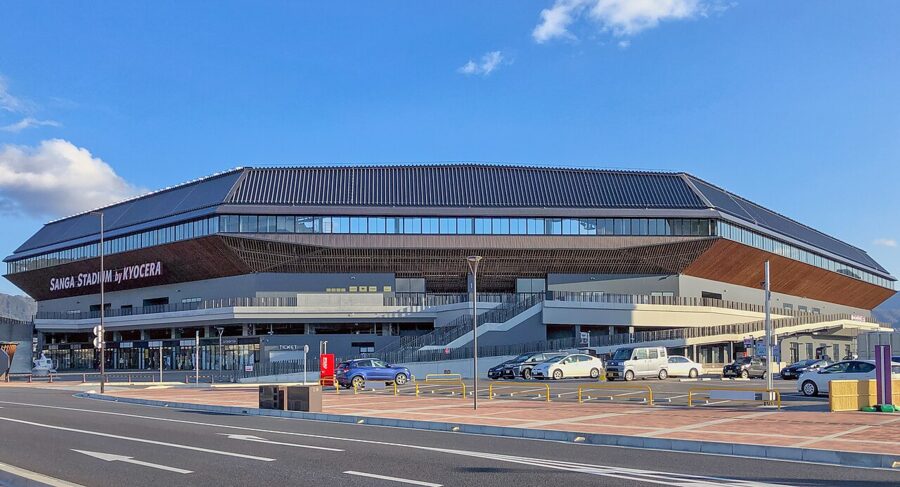
The big building beside JR Kameoka’s north exit is Sanga Stadium by Kyocera, opened in 2020 as the home ground of the J.League club Kyoto Sanga.
Kameoka was the first city in Japan to ban plastic shopping bags outright, from January 1, 2021, so carry your own bag. The painter Maruyama Ōkyo, founder of the Maruyama school, was born here in 1733.

What to eat in Kameoka
Kameoka eats like the farm basin it is. Kameoka beef (亀岡牛) is a Japanese Black brand from cattle raised at least 14 months in the city. Tamba black soybeans (丹波黒豆) are the big local crop, sold as sweet simmered beans, in rice crackers and as roasted bean tea, and Umaji Dainagon azuki from Umaji-chō is a prized sweet-bean variety. In autumn the stalls add Tamba chestnuts and, in a good year, matsutake.
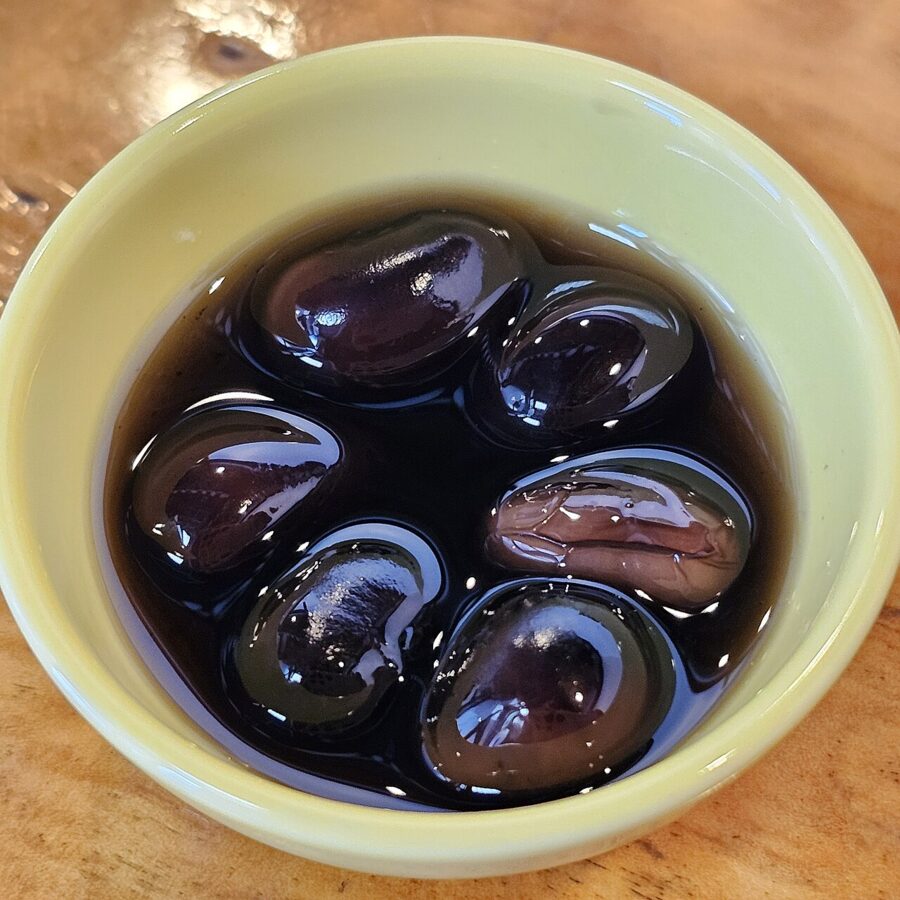

Ask what to take home and the answer is usually one of those beans in a box. The boat co-op’s shop at the boarding place sells rice balls, Tamba black beans, local sake and Tamba wine. Torokko Kameoka has a souvenir shop, Kame no Io (亀の庵), with trolley magnets and ice cream for the train, and Maison Macha Café on the ground floor.
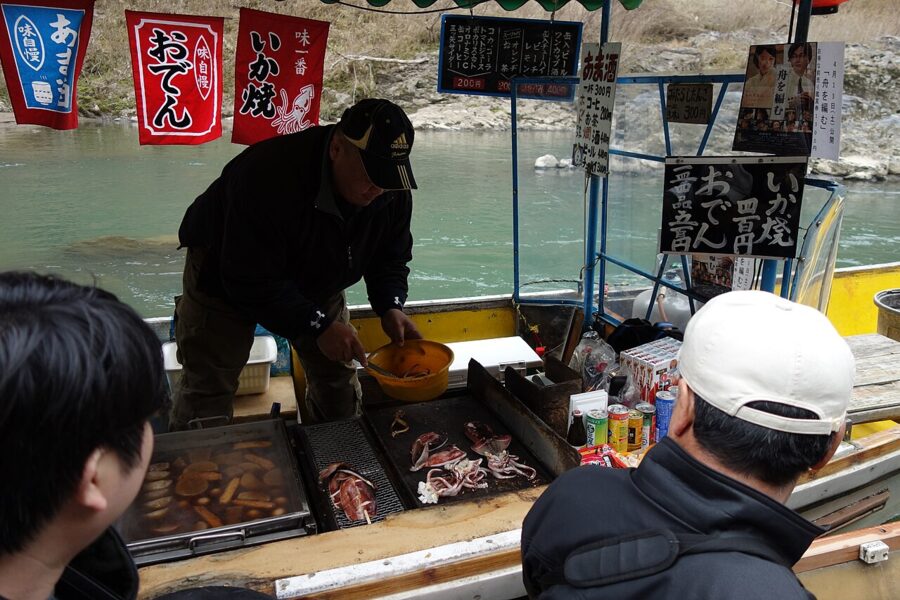

For a sit-down meal in town, Rakurakusō is the obvious choice. On the river, the Kotogase boat is lunch in its own right: a stick of grilled squid and a can of beer in the last calm reach before Arashiyama.
A day from Kyoto Station
The standard order is trolley up, boat down. It works, but everyone does it, and in the leaf season the boat queue fills with trolley passengers from 9:30. I would turn it around: boat first, train second, town last.
| Time | Move |
|---|---|
| About 8:15 | JR Sagano Line from Kyoto Station to JR Kameoka, about 20 minutes by rapid, ¥410 |
| 8:40 | Walk 10 minutes from the north exit to the boarding place; buy a same-day ticket, or check in for a booked 9:00 boat |
| 9:00 | Boat to Arashiyama, about 2 hours |
| About 11:00 | Land below Togetsukyō; lunch in Arashiyama, then walk to Torokko Saga (JR Saga-Arashiyama is 15 to 20 minutes on foot) |
| 13:02 or 14:02 | Sagano Romantic Train up the gorge to Torokko Kameoka, 23 minutes |
| Afternoon | Walk or taxi into town for the castle walls and Nangō Park, or a bus to Yunohana for a bath |
| Evening | JR Sagano Line from JR Kameoka back to Kyoto Station, about 20 minutes |
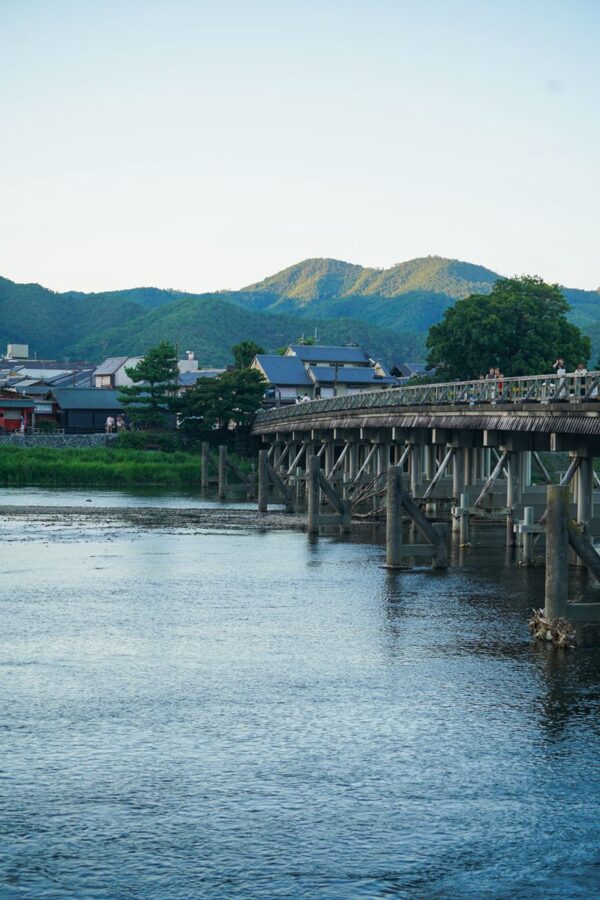
The point of this order is that the 9:00 boat leaves before the trolley crowds reach the boarding place. In the leaf season, take an earlier train and be at the window by 8:30. In winter, swap the 9:00 boat for the 10:00, the first winter departure. On a Wednesday outside the holiday periods the trolley does not run, so take the JR train both ways and let the boat be the scenery.
If you would rather do it the usual way, take the 9:02 trolley from Torokko Saga, the 9:35 bus at Torokko Kameoka, and a booked 10:00 or 11:00 boat. Book the train the moment the month-ahead window opens, and book the boat as soon as your train is fixed.
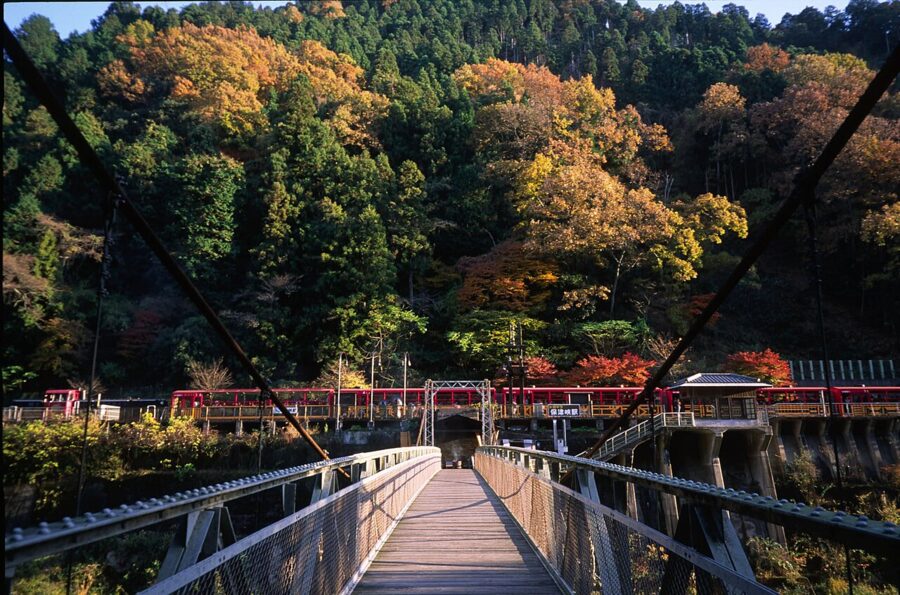

Whichever order you choose, sit where you can watch the stern on the way down. The boatman on the rudder is the one steering you through the rocks.