
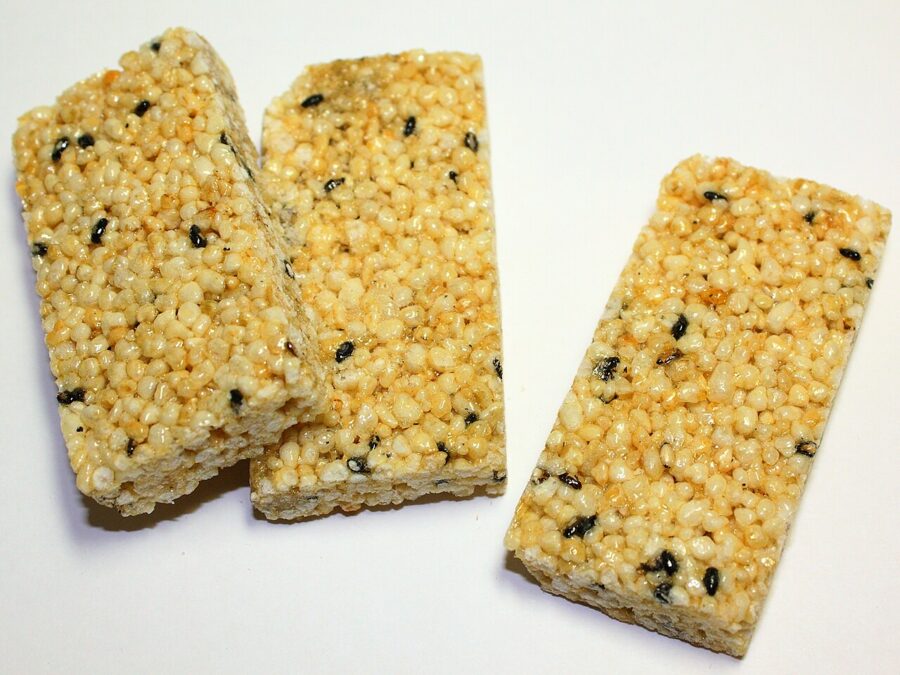

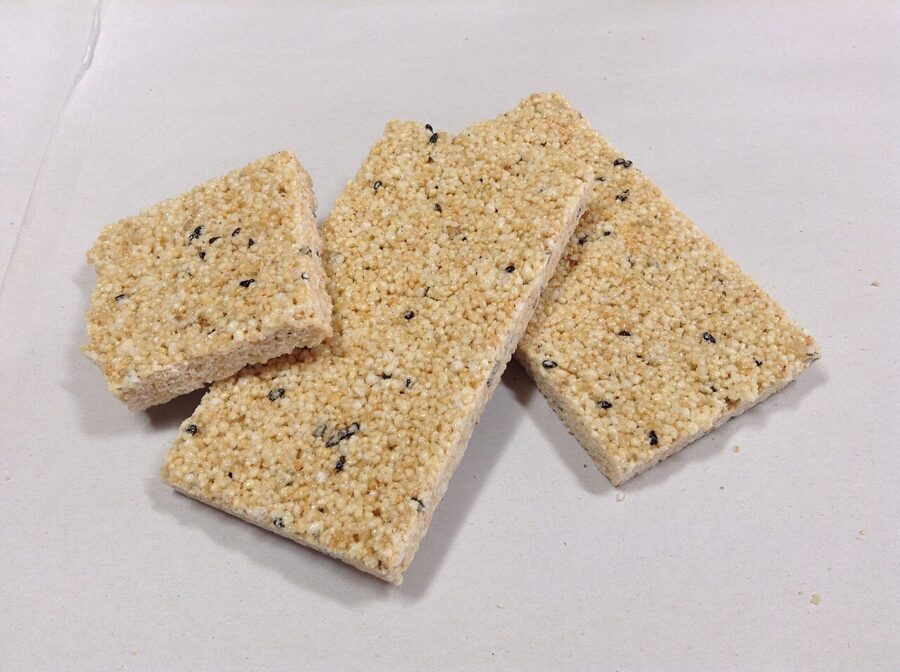
A bar of awa-okoshi is rice that has been steamed, dried, crushed until the grains look like millet, bound in syrup and pressed flat. Osaka has been sending it home in travelers’ bags since the 1750s, and a box still costs well under ¥1,000 (about $6).
It is also easy to walk past. The station counters lead with pork buns, cheesecake and cream rolls, and those are worth buying too, as long as you know which ones survive a flight and which are finished by bedtime. Start with the old sweet, then the classics that now outsell it, then where to buy each one, what it costs as of November 2026, how long it keeps, and the things Osaka makes that you cannot eat.

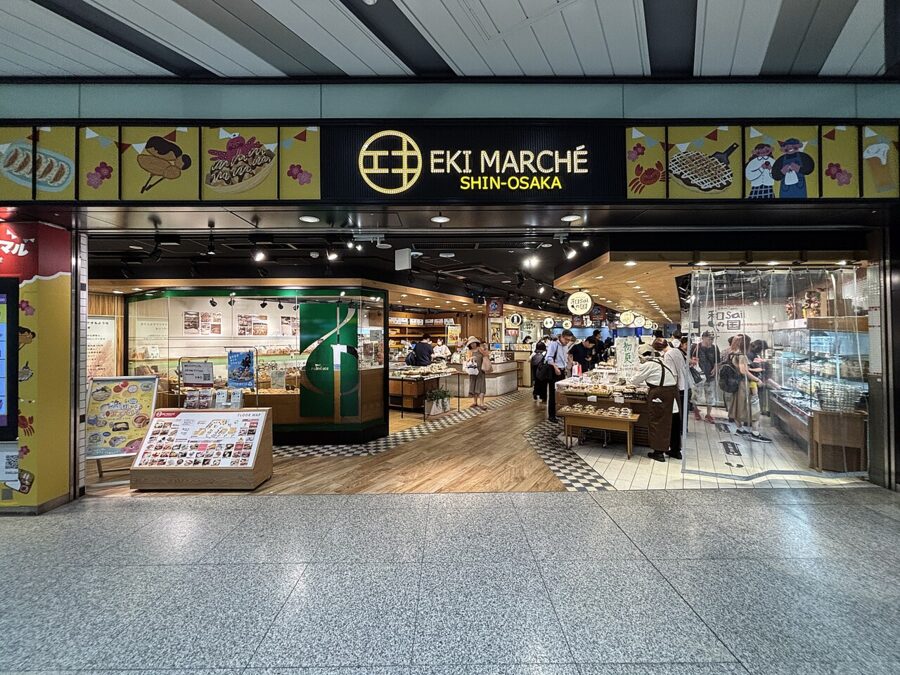
If you only have ten minutes, spend them at Shin-Osaka Station before your train. The okoshi, the chilled pork buns, the cheesecake, the cream roll, the milk buns and the mitarashi mochi below are all sold somewhere inside it.

Contents5 sections
Awa-okoshi: rice dressed up as millet
Okoshi (おこし) is one of the oldest sweets in Japan. Grain is steamed and dried, puffed in a hot pan, mixed with hot sugar and starch syrup, then pressed into a mold and left to set. Versions of it appear in Heian-period records as a sweet that came from China, and Edo-period cookbooks give the method.
Osaka made two kinds of its own. Awa-okoshi (粟おこし) is the lighter one, with sesame and a crisp bite. Iwa-okoshi (岩おこし), “rock okoshi”, uses rice crushed finer and pressed harder, flavored with dark sugar and ginger, and it lives up to the name. Bite a corner off; do not try the middle.
Two old houses and 270 years
Two old houses still make Osaka okoshi. Tsunose (つのせ), also known by its old name Futatsu-ido Tsunose (二ツ井戸津の清), dates itself to 1752, when its founder Tsunokuniya Seibei rolled okoshi out into flat boards instead of the hand-pressed lumps and tube shapes sold before. His shop stood beside the Futatsu-ido, a famous double well near Dotonbori, and the late Edo writer Kitagawa Morisada recorded that the okoshi made there had become an Osaka specialty.
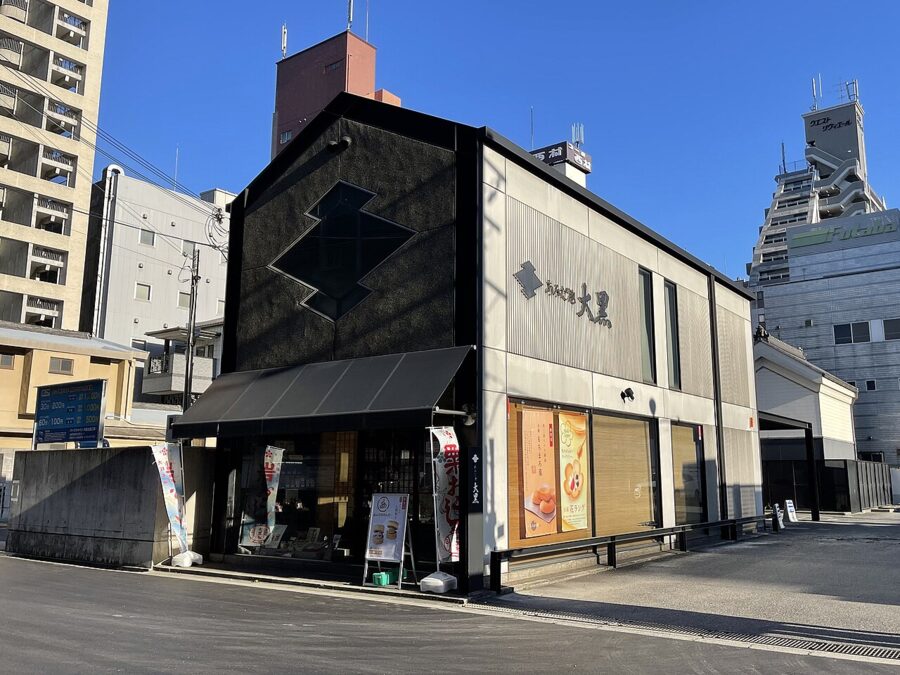
Amidaike Daikoku (あみだ池大黒) came half a century later, in 1805. Its founder, Kobayashi Rinnosuke, opened beside a pond called Amida-ike on the Nagahori canal, where rice came in by boat to the domain warehouses. He bought the surplus rice that collected in the boats’ holds and turned it into okoshi, and the name of the sweet did his marketing for him: okosu means “to raise”, and the shop sold it as a sweet that raises you, your household and your country.
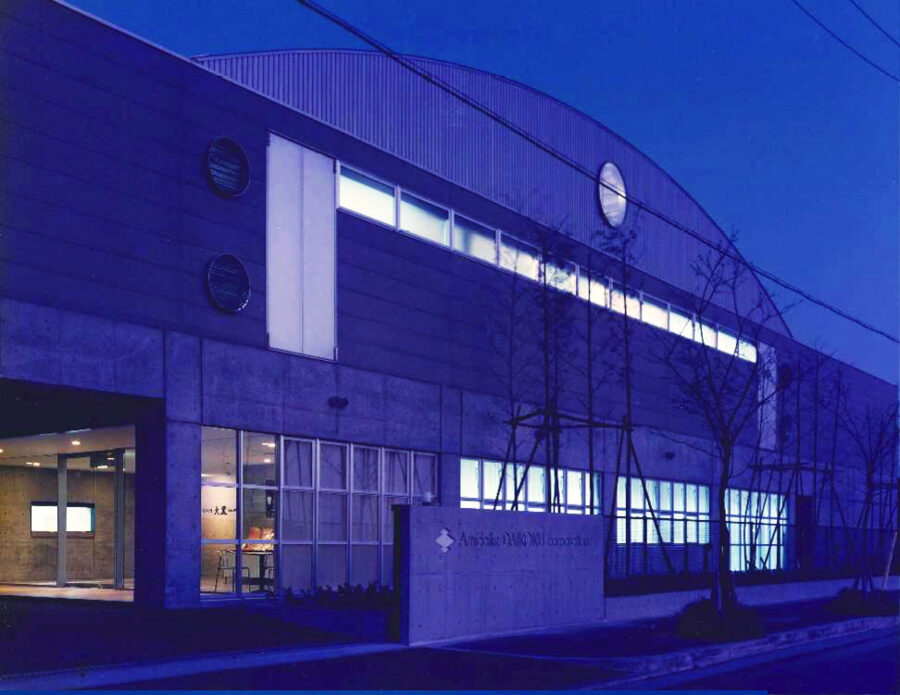
The national fame came from a war. In 1904, during the Russo-Japanese War, Amidaike Daikoku was ordered to make 350,000 boxes of okoshi stamped with the imperial chrysanthemum for soldiers at the front. Men who came home went looking for it in Osaka, and it became the city’s standard gift.
The 1945 air raids burned the shop and factory down to one storehouse, and the company reopened in 1951. At the 1970 Osaka Expo, Tsunose had a stall below the Tower of the Sun and ran its factory around the clock for six months.
Where to buy it, and what it costs
Amidaike Daikoku is the one you will find. A bundle of ten awa-okoshi bars costs ¥756 (about $5), the same for ten iwa-okoshi, and a bag of mini iwa-okoshi ¥518 (about $3), all with tax, as of November 2026. The bars keep 90 days from the day they are made, at room temperature, which makes them one of the safest edible souvenirs here for a long trip.
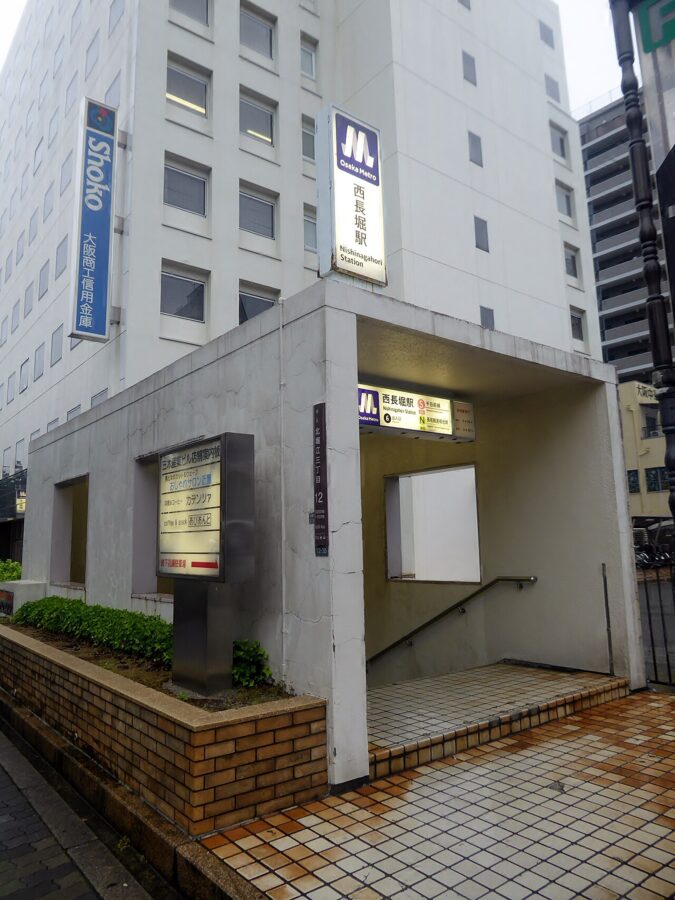
The head store is at Kitahorie 3-11-26 in Nishi-ku, one minute on foot from Nishi-Nagahori Station on the Sennichimae and Nagahori Tsurumi-ryokuchi subway lines. It opens 9:00 to 18:30 and closes over the New Year holidays. It has the widest range, including an iwa-okoshi tenugui hand towel for ¥1,430 (about $9) that makes a good flat gift on its own.

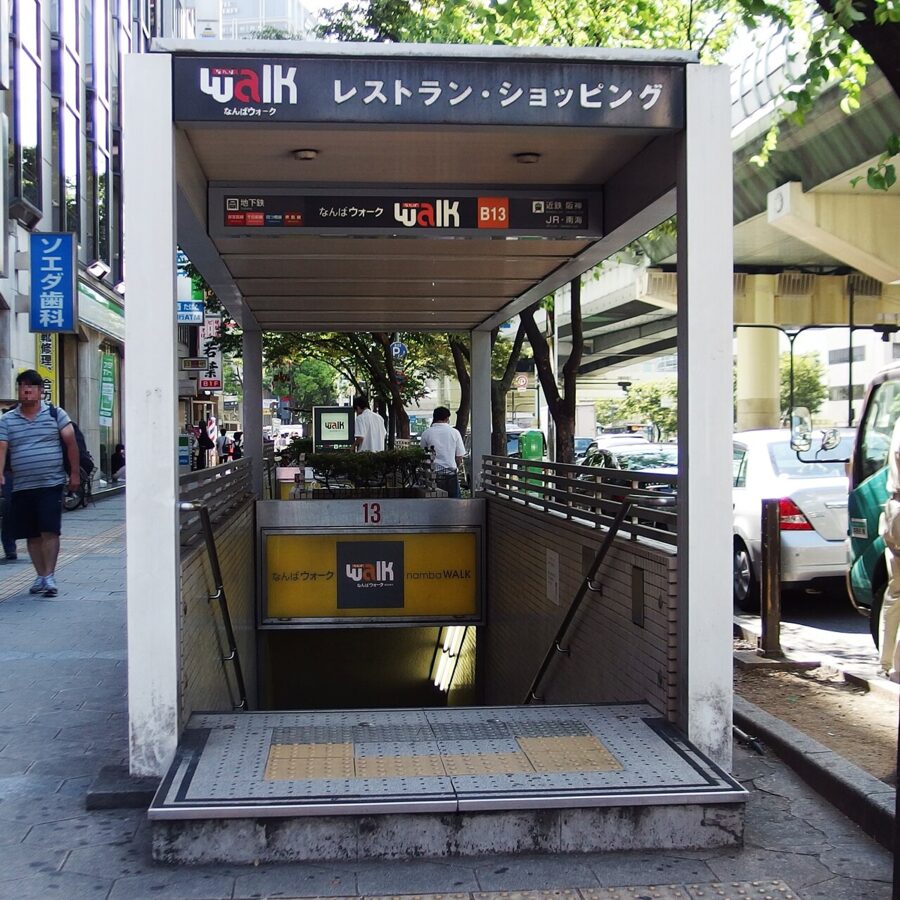
The easier branch for most visitors is in the Namba Walk underground mall near exit B9, open 10:00 to 21:00 and closed on the third Wednesday of odd-numbered months. Beyond that, the company lists its okoshi at shops inside JR Osaka, Shin-Osaka and Tennoji stations, at Itami airport, at some shops at Kansai Airport, and at the Hankyu, Hanshin, Kintetsu and Takashimaya department stores. Its modern okoshi brand, pon pon Ja pon, has counters in Takashimaya Osaka and in Lucua 1100 at Osaka Station.
Tsunose’s range is gentler on the teeth: awa-okoshi and ginger okoshi in boxes of eight, and a mixed box of awa, iwa and ginger bars, all with a 120-day shelf life on the maker’s own list. The company moved to Nagai-nishi in Sumiyoshi-ku in 2016 and works as a maker and wholesaler rather than a shop.
Is it worth buying? I think so, for anyone over sixty and anyone who likes sesame brittle. For a group of colleagues, buy the mini packs, which are individually wrapped. For a child, buy the cheesecake.
The other Osaka classics
Ask in Osaka for the number-one souvenir and you will often hear 551. Ask people what they would like to be brought, and surveys put two cakes at the top. Both kinds follow, with what each thing is, who makes it, and how it travels.
551 Horai pork buns
The 551 Horai butaman (豚まん) is a large steamed bun filled with diced pork and onion in a slightly sweet dough, sold hot with a sachet of mustard. Kansai says butaman, “pork bun”, rather than nikuman, because in Kansai niku on its own means beef. The company says it sells about 170,000 a day, all wrapped by hand and sold the day they are made.
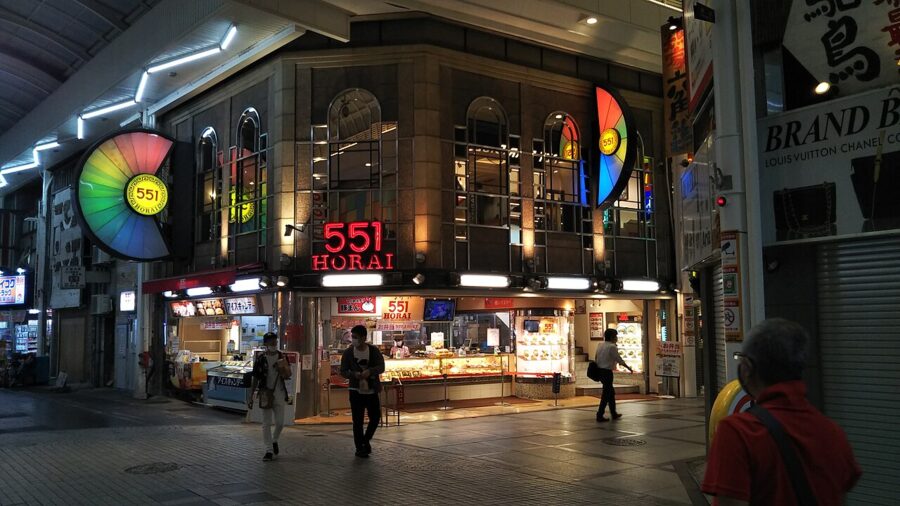

The business began in 1945 as Horai Shokudo, a canteen in Namba opened by a group of men from Taiwan. In the early 1960s it split into separate companies, and two of them still sell pork buns: 551 Horai and Horai Honkan. The 551 came from the shop’s old telephone number and the slogan koko ga ichiban, “this is number one”.
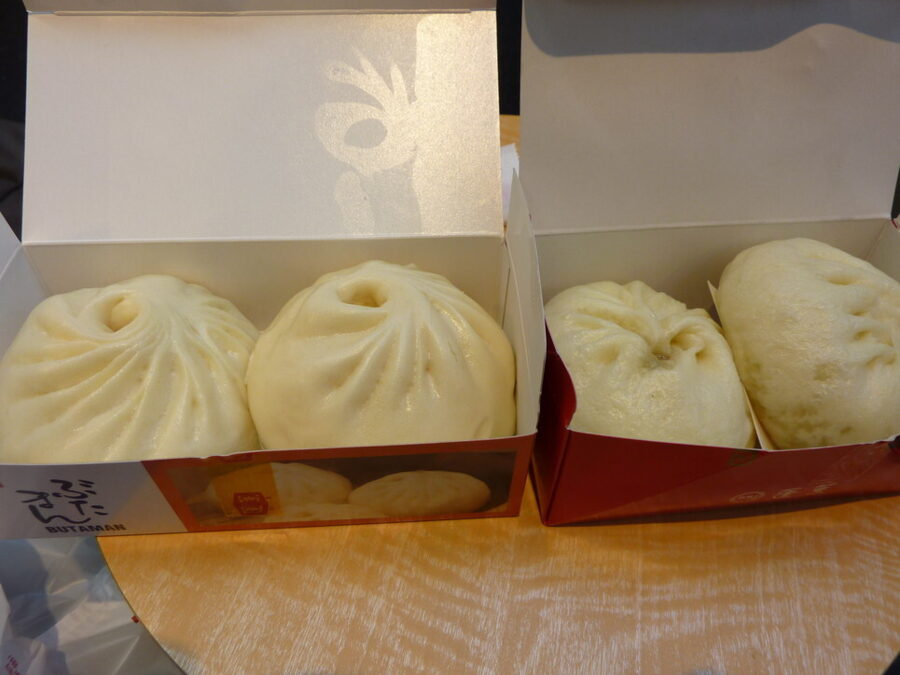

As of November 2026, after a price change in August, hot buns cost ¥500 (about $3) for two, ¥1,000 (about $6) for four, ¥1,500 (about $9) for six and ¥2,500 (about $16) for ten. The chilled box of four is ¥1,080 (about $7) and is the one to buy if you are carrying them anywhere. Chilled boxes are sold at the JR Osaka central exit shop, the shop inside the Shinkansen gates at Shin-Osaka, Arde Shin-Osaka, the EKI Marche Shin-Osaka Sotoe shop, Itami airport arrivals and the Kansai Airport shop. At home, steam them; the maker warns that the dough goes hard if you overheat it in a microwave.
They are for eating in Japan or on a domestic train. A pork bun is a meat product, and US Customs and Border Protection says meat products from many countries are prohibited and that every food item must be declared. Most other countries have similar rules.
Rikuro Ojisan’s cheesecake
Rikuro Ojisan no Mise (りくろーおじさんの店) sells one famous thing: a soft, wobbling, souffle-style cheesecake with raisins on the bottom, made with Danish cream cheese and baked twelve at a time, many times a day, in the kitchen attached to each shop.
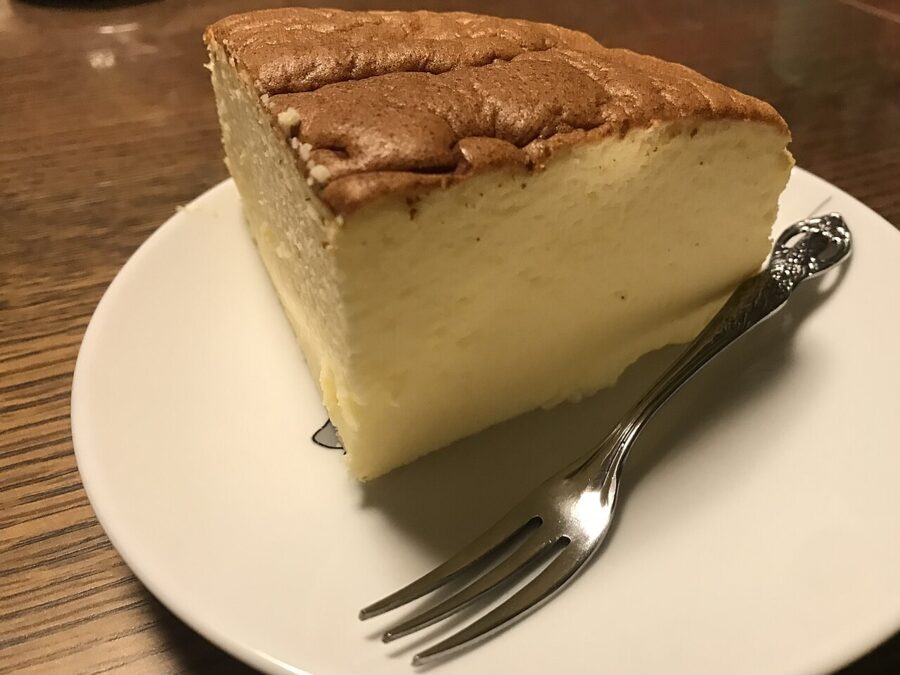

The founder, Nishimura Rikuro, opened a sweets shop in Nishinari in 1956 and started selling the cheesecake in 1984. A whole cake costs ¥1,095 (about $7), and at busy times the shops limit how many each customer can buy. It is not a long-haul souvenir. The maker says to eat it the same day at room temperature or within three days from the fridge, and to carry it no more than ten hours after buying.
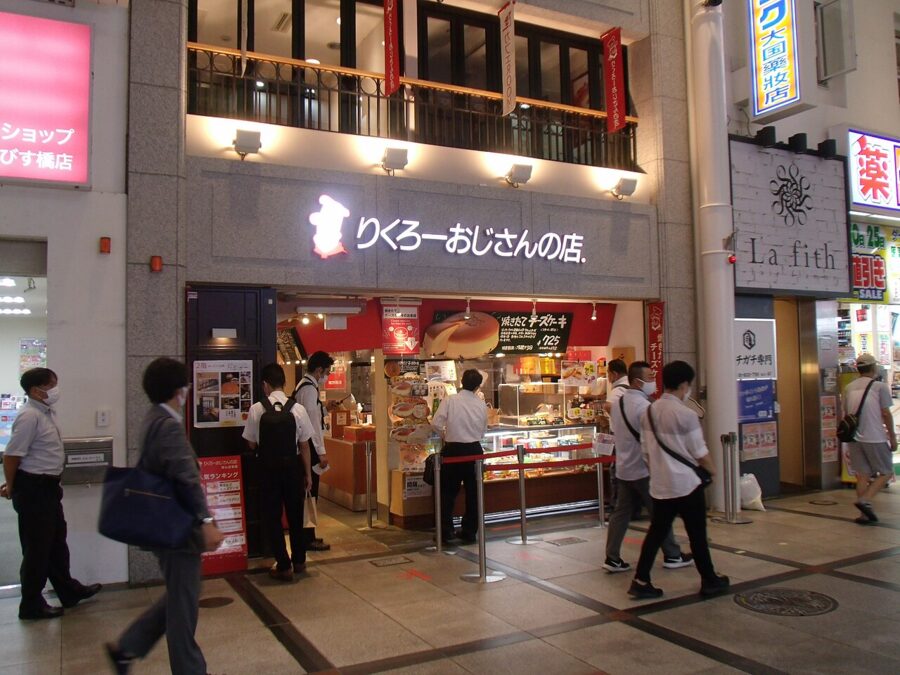

Shops, as of November 2026: the Namba main store, Namba Marui, Daimaru Umeda, Daimaru Shinsaibashi, Grand Front Osaka, the JR Shin-Osaka central exit, inside the Shinkansen gates at Shin-Osaka, and Osaka Itami Airport. The EKI Marche Shin-Osaka branch closed in 2026, so ignore older maps that show it.
Dojima Roll
The Dojima Roll (堂島ロール) is a single turn of light sponge wrapped round a thick log of fresh cream, made by Patisserie Mon cher, which started out in the Dojima business district in 2003. A whole roll is ¥1,782 (about $11) and a half ¥961 (about $6), with tax. It needs a fridge, so buy it for a hotel room or a short train ride, not a long flight.
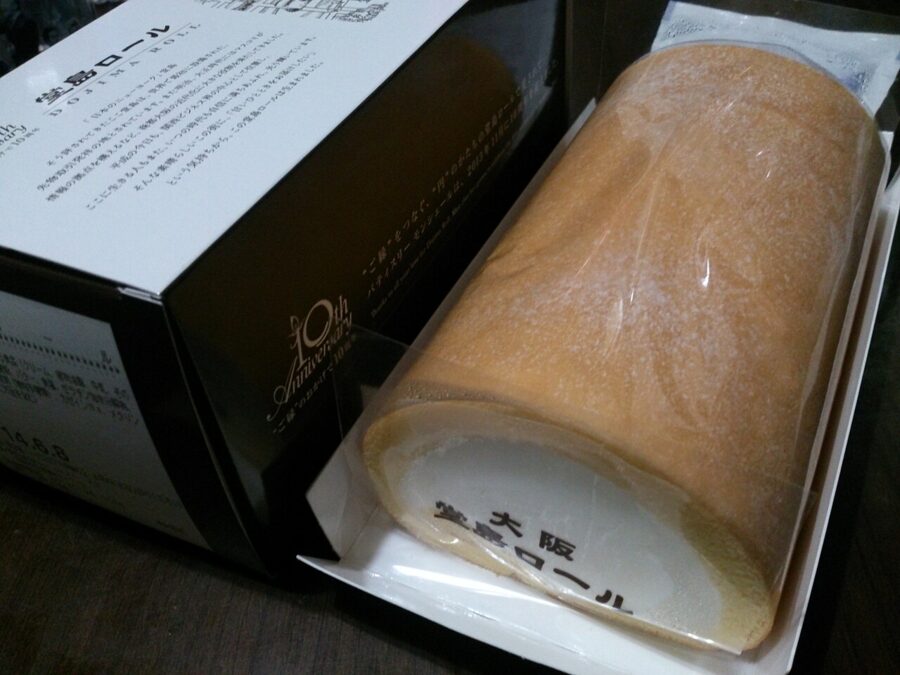

The head store is in Dojimahama, and Mon cher has counters in the Hankyu Umeda and Abeno Harukas Kintetsu basements and at Itami airport. Shin-Osaka stocks it at Sweets Patio and at PLUSTA Gift inside the south Shinkansen gates, and Kansai Airport stocks it in the domestic gate area of Terminal 2.
Tsukigesho milk manju
If you want one boxed sweet that pleases most people and lasts, this is it. Tsukigesho (月化粧) is a small baked bun filled with white bean paste cooked with butter and condensed milk, made by Aoki Shofuan, a sweets maker from Misaki in southern Osaka that launched it in 2010.
Six cost ¥1,050 (about $7) and ten ¥1,700 (about $11), they keep 70 days at room temperature, and the maker sells them through station shops in Osaka, Shin-Osaka and Namba and at highway service areas. Its Tsukigesho shop by Namba Station also sells them warm from the oven for ¥200 (about $1) each, and those keep only three days. Eat one warm, then buy a sealed box.
Mitarashi komochi
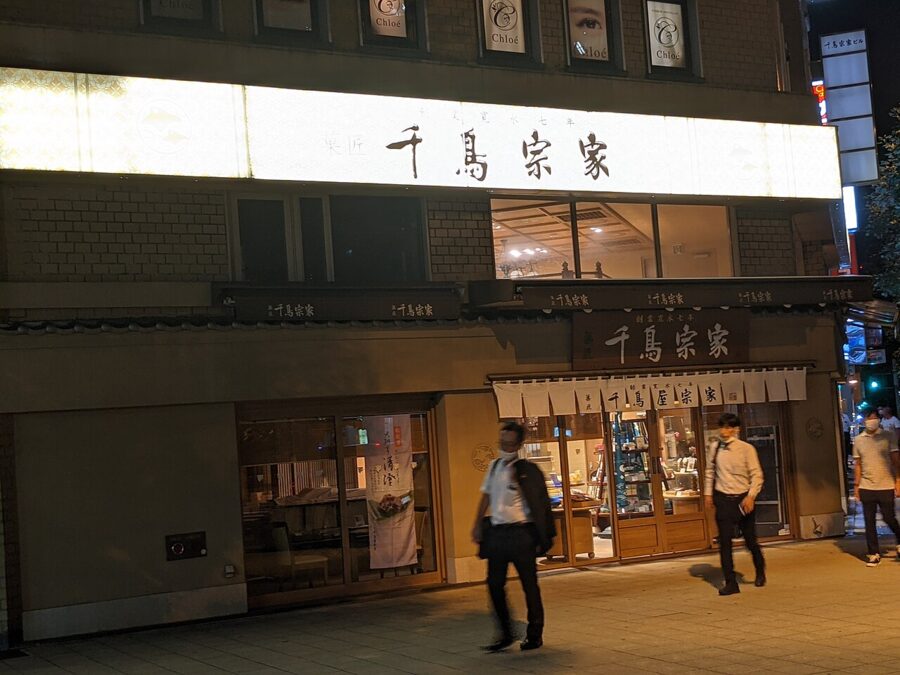
Chidoriya Soke’s Osaka mitarashi komochi (大阪みたらし小餅), launched in 1989, puts the sweet soy glaze of a mitarashi dango inside small rice cakes instead of on the outside, so your fingers stay clean. A box of twelve is ¥710 (about $4). The mochi is fresh and keeps only a day or two, so it is a gift for someone you will see tomorrow.
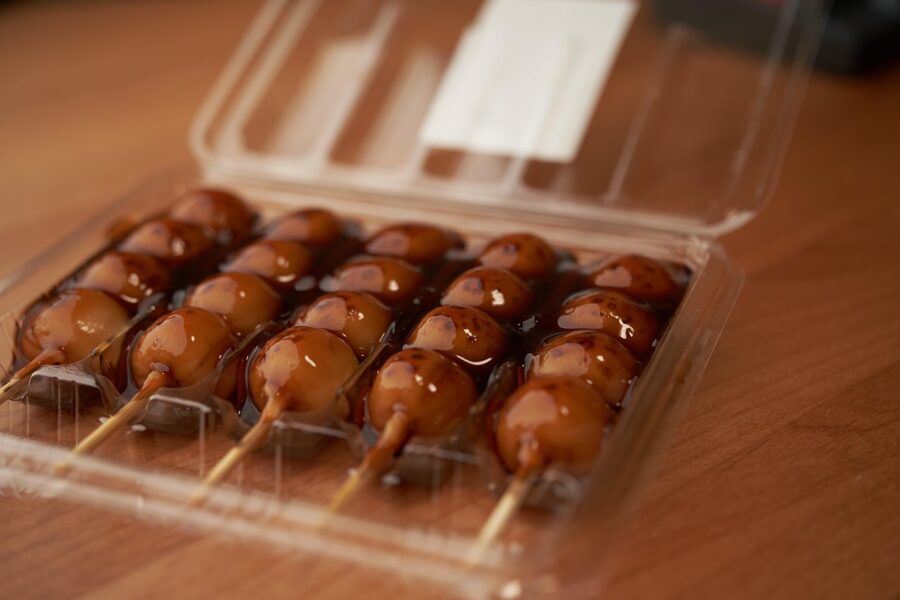
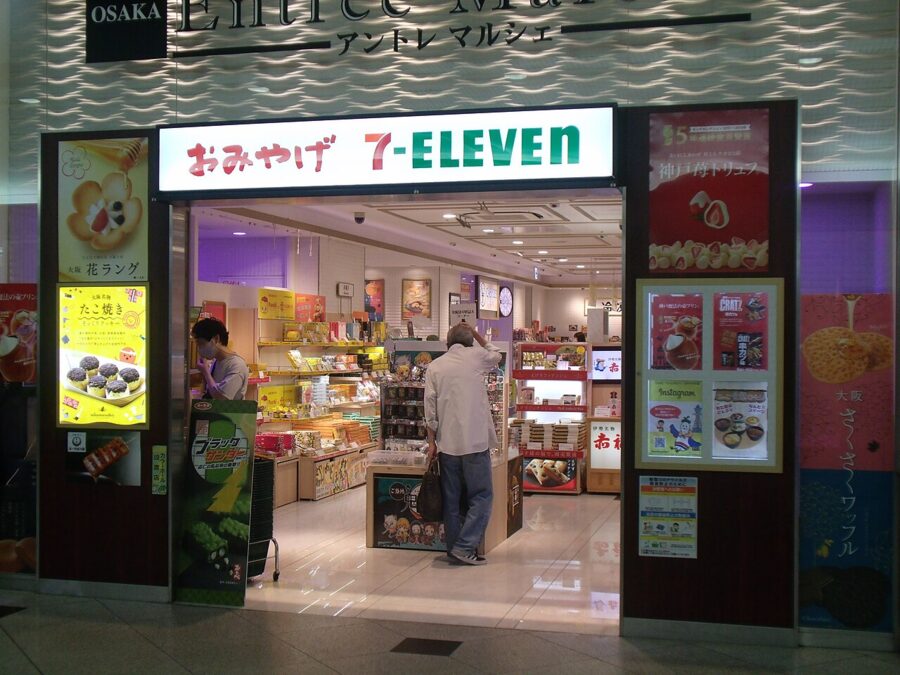
The station counters are the easy way: EKI Marche, Entrée Marché, the omiyage arcade in Arde Shin-Osaka and PLUSTA Gift at Shin-Osaka, Entrée Marché at Osaka Station, and the Kansai Tabi Nikki shop at Itami. The company’s own shops include Namba Walk and the Hanshin Umeda basement.

Takoyaki in a box
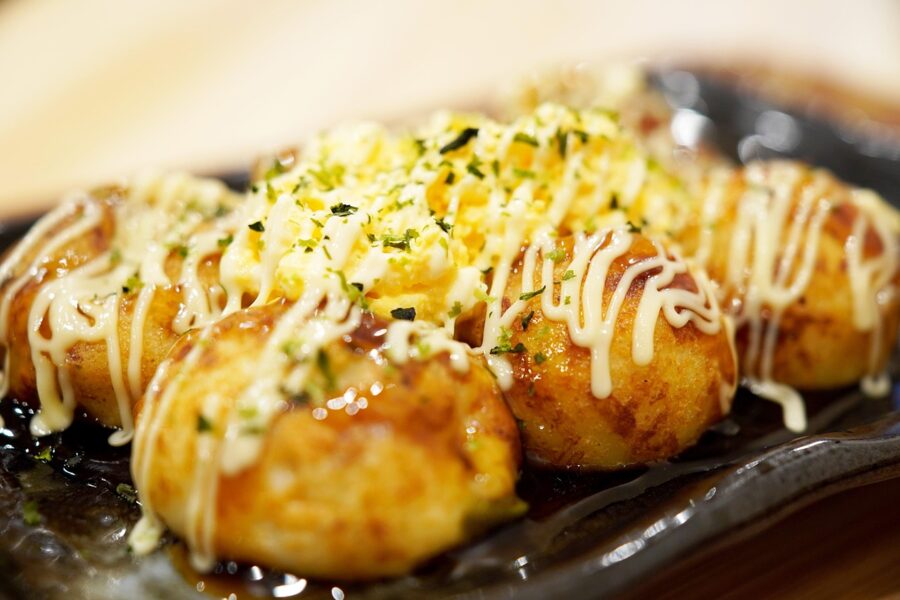
Osaka’s best-known dish is takoyaki, octopus dumplings with sauce, mayonnaise, seaweed and bonito flakes, and the snack makers have put it into every format. Calbee’s Jagariko potato sticks come in a takoyaki flavor sold only in the Kinki region, mainly at airport, station and expressway shops, and they keep six months. Hyogetsudo’s Takopatie (たこパティエ) is a stranger idea: a pastry topped with octopus powder, sauce, mayonnaise, green laver and bonito, then walnuts and coarse sugar. It starts as takoyaki and finishes as a cookie, and twelve cost ¥778 (about $5).
Kombu, ponzu and maple leaves
For a cook, the better Osaka souvenirs are savory. Kansou (神宗) began in 1781 as a seafood wholesaler in Utsubo and is known for shio-kombu, kelp simmered in soy until dark and chewy, eaten with rice. Its head store at Yodoyabashi opens 10:00 to 18:00 on weekdays and 10:00 to 16:00 on Saturdays, closed Sundays and holidays, and department stores across Japan carry it.
Asahi Ponzu (旭ポンズ) is a citrus and soy dressing made in Yao since 1948 with sudachi, yuko and yuzu juice from Tokushima. Osaka cooks use it for hot pots, vinegared dishes and gyoza. The bottle is glass, so wrap it and pack it in a checked bag.
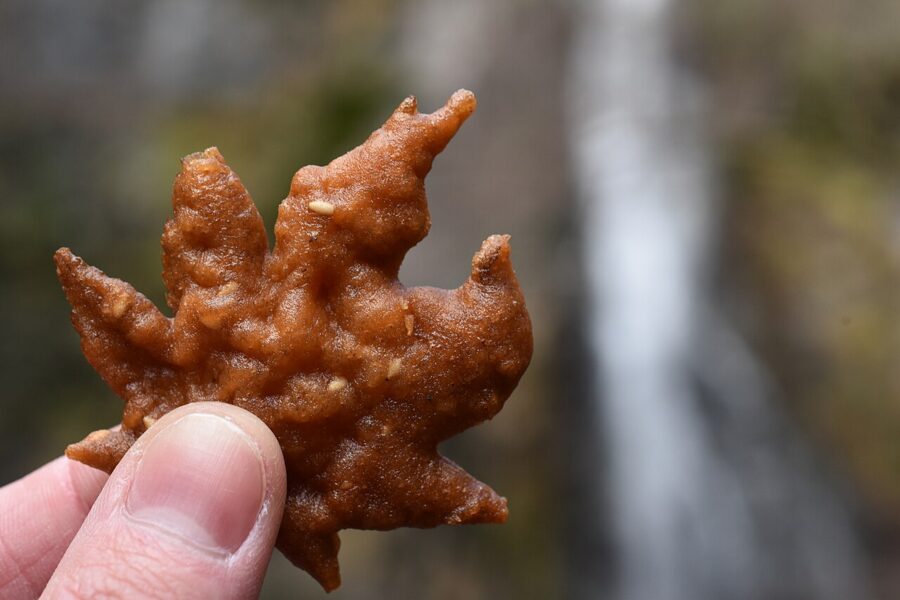

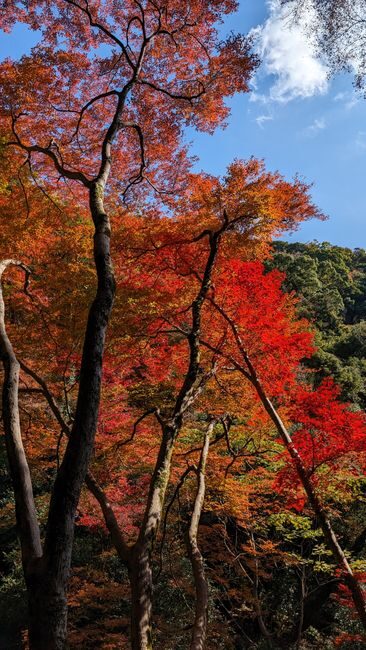
The oddest of all comes from Minoh, north of the city. The shops on the path up to Minoo Falls fry maple leaves in sweet batter and sell them as momiji tempura. Nobody at home will have tried them.
Where to shop: stations, airports and department stores
The makers’ own shops have the full range and the fresh things. For boxed sweets a station is faster, and for the widest choice in one place, a department store basement. Here is where each kind of shop is, and what to buy in it.
Shin-Osaka Station
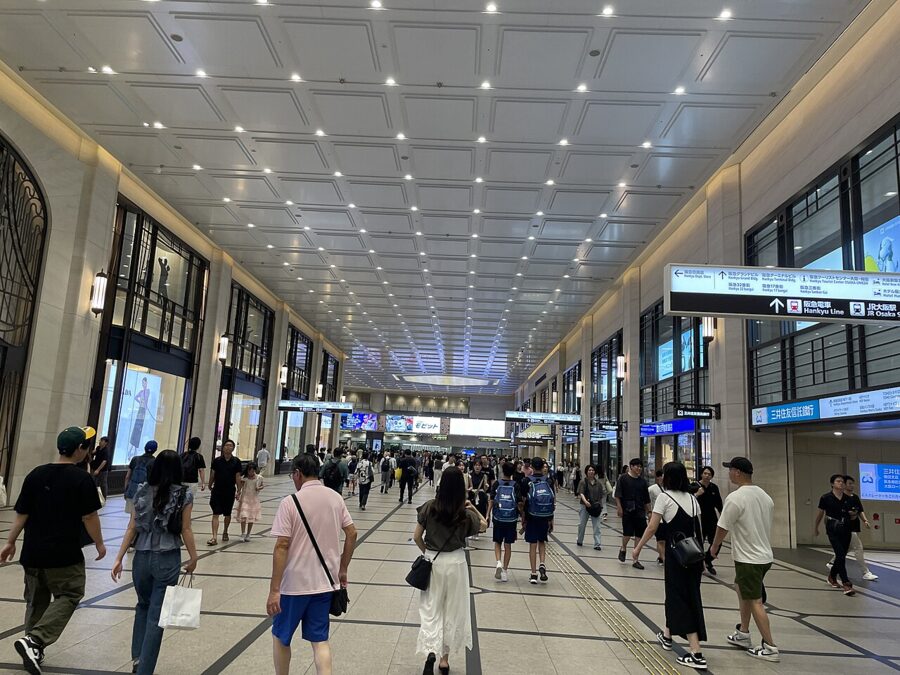
Shin-Osaka has souvenir counters in four places: the second-floor omiyage arcade in Arde Shin-Osaka, the EKI Marche and Entrée Marché arcades, and the PLUSTA Gift shops inside the Shinkansen gates by the central and south exits. 551 has a chilled shop inside the Shinkansen gates too, and Rikuro has counters at the central exit and inside the Shinkansen gates. If your train is close, go through the Shinkansen gates first and shop inside.
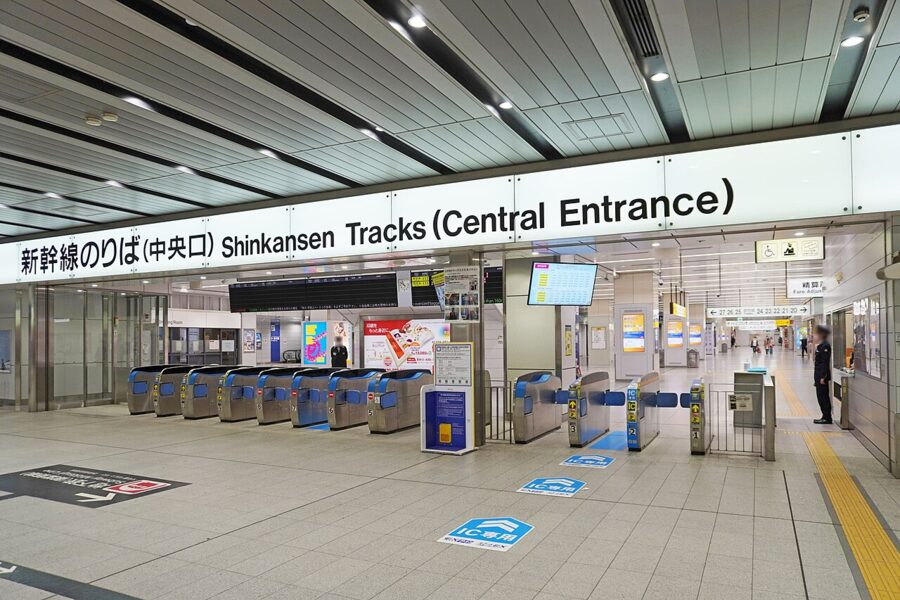

Hours vary by arcade. The earliest counters open at 6:30 and the latest close at 23:00, which covers almost every train you could be catching.
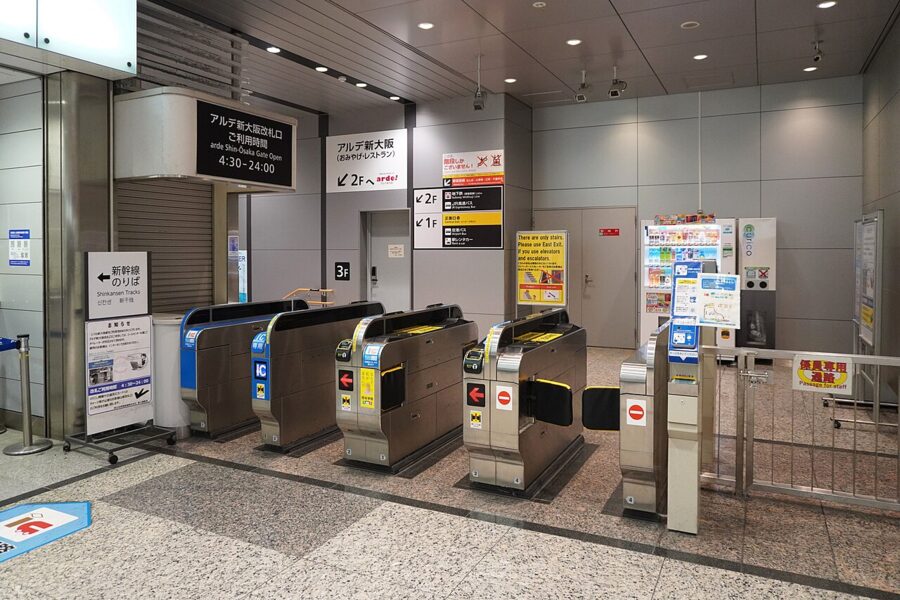

Osaka Station and Umeda
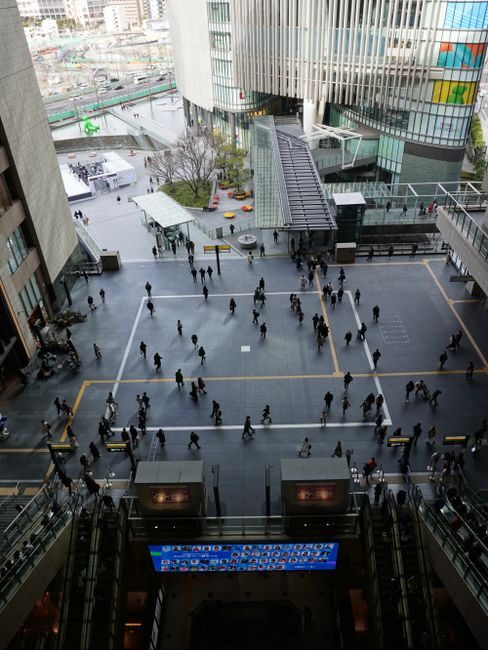
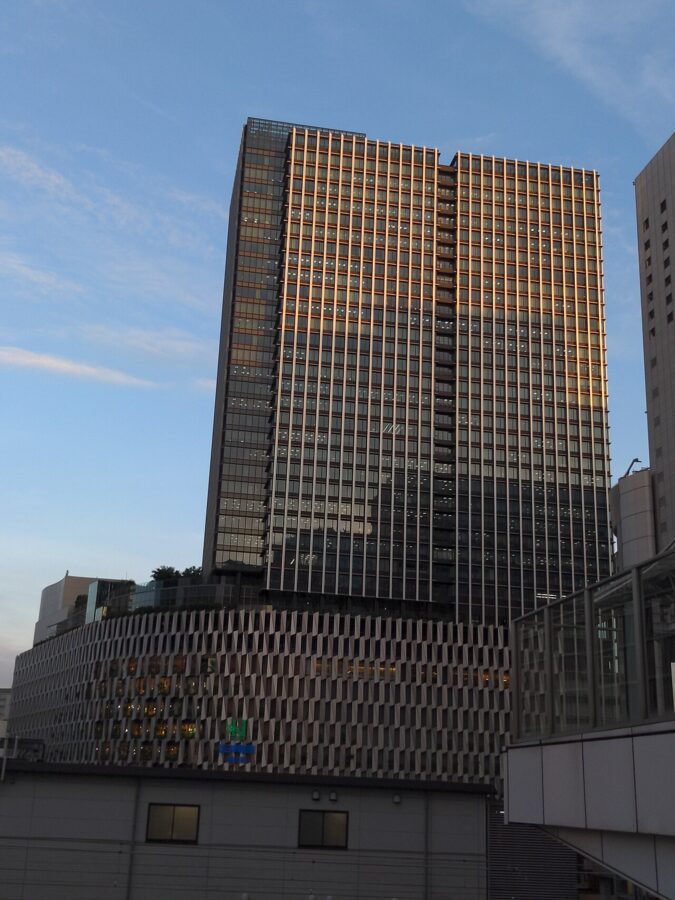
Osaka Station has souvenir shops along its concourses, a 551 chilled shop at the central exit, and the pon pon Ja pon counter in Lucua 1100. Rikuro has a shop in Grand Front Osaka. Across the road, the department store basements are the best one-stop souvenir shopping in the city.

Hankyu Umeda’s basement has Mon cher and &OKOSHI, Amidaike Daikoku’s brand made for that store. Hanshin Umeda has Chidoriya Soke in its basement and stocks Amidaike Daikoku, and Daimaru Umeda has Rikuro.


Namba
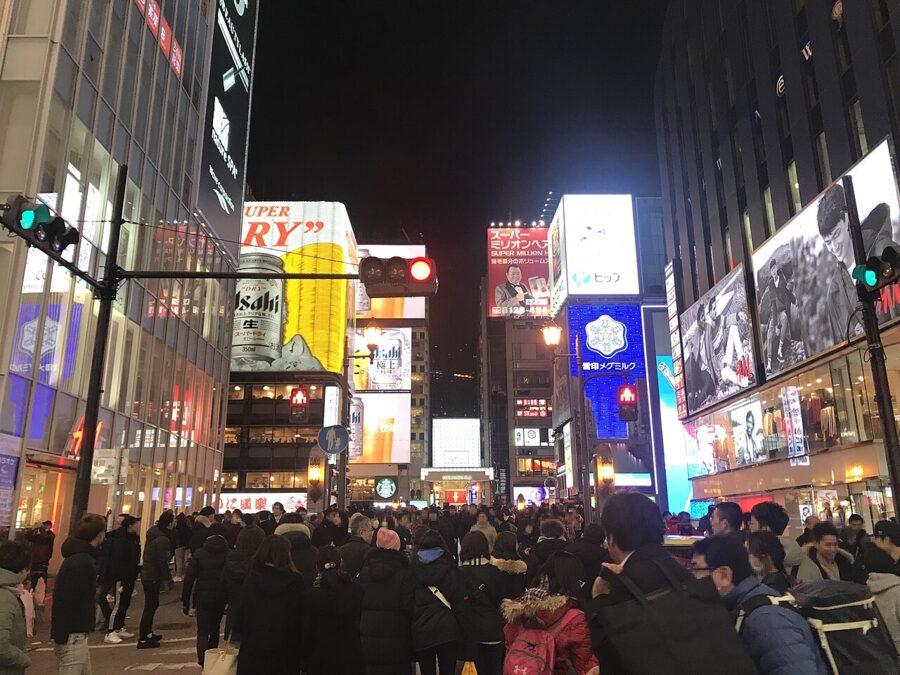
Namba is where the makers began, and three of them stand within a few minutes of each other. The 551 main store and Rikuro’s main store are both on Ebisubashi-suji, the covered street running south from the Glico sign, and the Tsukigesho shop is by Namba Station. Underground, Namba Walk has branches of Amidaike Daikoku and Chidoriya Soke. If you are staying in Minami, this is your last-night shopping street.

If your last day is at Universal Studios Japan, 551 also has a Universal City branch.

Kansai and Itami airports
Kansai Airport’s 551 shop is on the second floor of Terminal 1, the domestic level, and sells takeout from 7:00 to 21:00; before 10:00 it sells only chilled boxes. Some airport shops carry Amidaike Daikoku’s okoshi, and Mon cher’s Dojima Roll is stocked in the domestic gate area of Terminal 2.
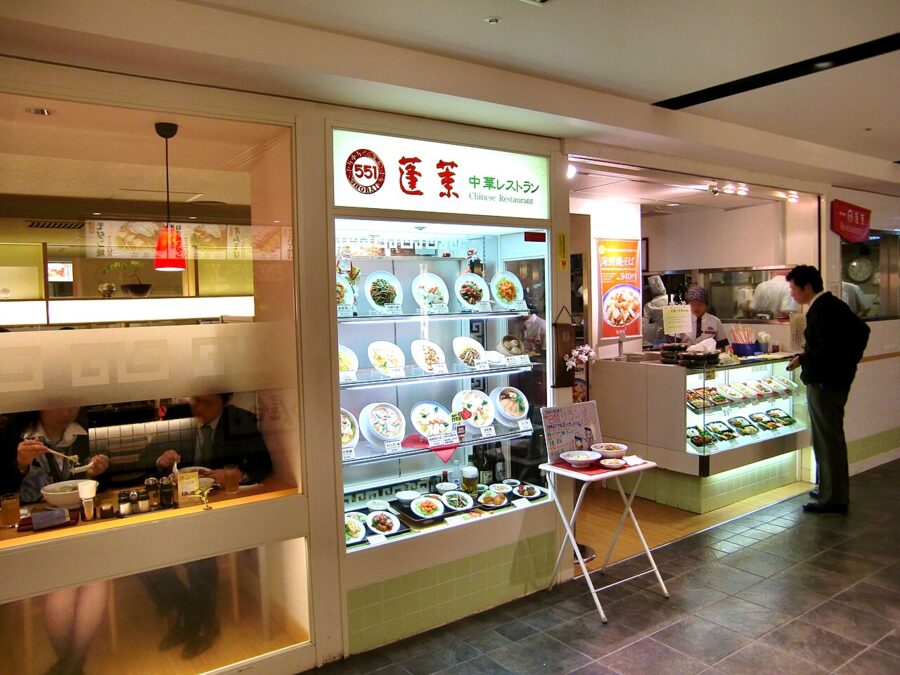

Itami, the city airport for domestic flights, is better stocked. 551 has two shops there, and the terminal also has Rikuro, Mon cher, and Amidaike Daikoku’s pon pon Ja pon shop.
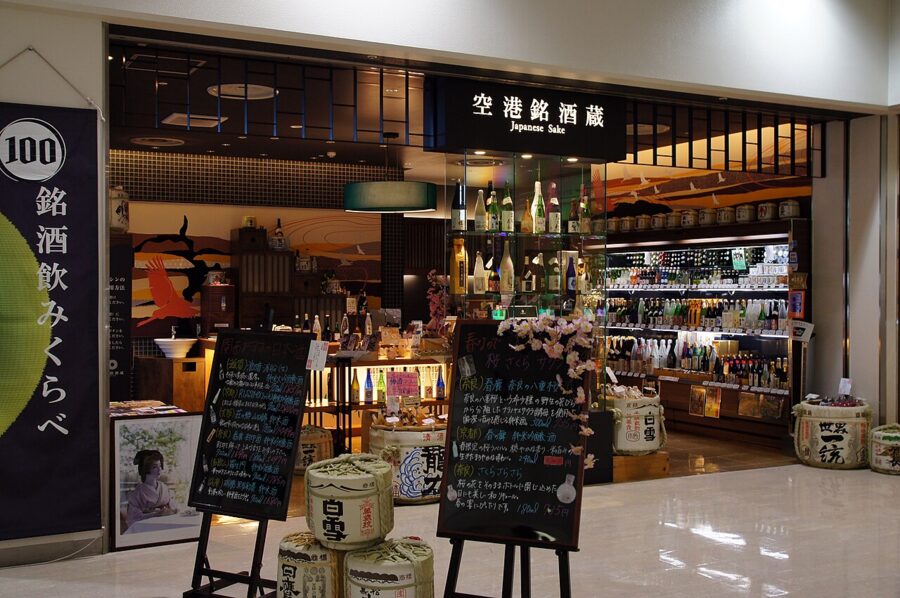

Tax-free under the November 2026 rules
Japan changed its tax-free system for anything bought from November 1, 2026. You now pay the full price with tax at the shop, and get the tax back after customs confirms at departure that the goods are leaving with you. To qualify you must spend ¥5,000 (about $31) or more before tax at the same store on the same day, show your passport, and leave within 90 days.
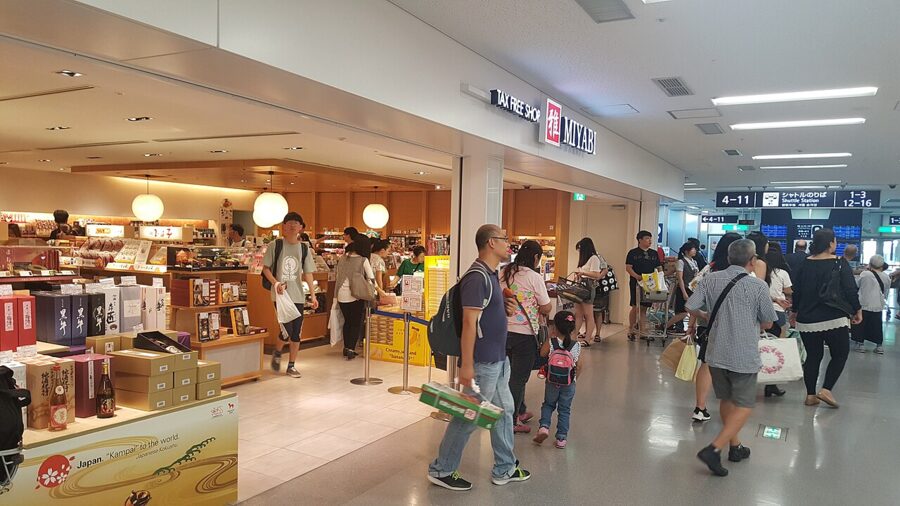

Two details catch people out. The goods must be with you at the customs terminal in the departure lobby before you check in, so tax-free sweets cannot go into your suitcase first. And the Japan Tourism Agency says food you have eaten in Japan does not qualify, so a box you opened on the train is out.
How the refund is paid is up to each shop, so ask at the counter. For a few boxes of sweets, I would not bother.
Prices, shelf life and what survives the trip
This is the table I would check before buying. Prices include tax, as of November 2026, and the shelf lives are the makers’ own figures.
| Souvenir | Price | Keeps | Long flight? |
|---|---|---|---|
| Awa-okoshi or iwa-okoshi, Amidaike Daikoku, 10 bars | ¥756 | 90 days | Yes |
| Awa-okoshi, Tsunose, 8 bars | varies by shop | 120 days | Yes |
| Tsukigesho, 6 | ¥1,050 | 70 days | Yes |
| Jagariko, takoyaki flavor | varies by shop | 6 months | Yes |
| Takopatie, 12 | ¥778 | date on the box | Yes |
| Mitarashi komochi, 12 | ¥710 | a day or two | No |
| Rikuro cheesecake | ¥1,095 | same day, 3 days chilled | No |
| Dojima Roll, whole | ¥1,782 | keep chilled | No |
| 551 butaman, chilled, 4 | ¥1,080 | keep chilled | No, and it is meat |
A few rules hold for all of it. Buy the long-life boxes whenever you see them, and the fresh cakes on your last day. Japanese boxes print either a shōmi kigen (賞味期限, best-before) or a shōhi kigen (消費期限, use-by) date on the side, and the second one is the strict one. Individually wrapped pieces are the custom for sharing at work, which is why so many boxes come in sixes, tens and twelves.
On arrival, declare food. The United States requires every food item to be declared, and the penalty for an undeclared prohibited item can reach $1,000 for a first offense. Sealed sweets and crackers are the easy end of the list; meat fillings are the problem.
Osaka souvenirs you cannot eat
The food runs out in a week. These last longer, and two of them are crafts the national government designates as traditional industries.
Sakai knives
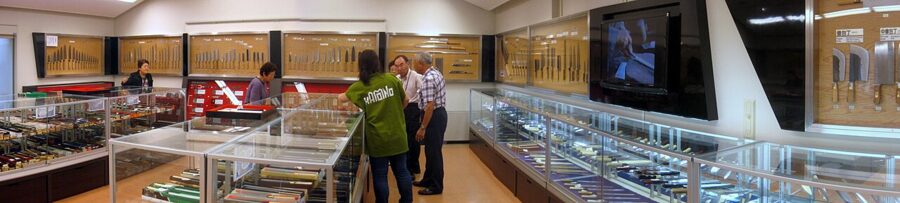
Sakai, the city just south of Osaka, has made blades since the sixteenth century, when its smiths made knives to cut the tobacco that came in on Portuguese ships. In the Edo period the shogunate gave Sakai knives their own quality seal, and today Sakai uchihamono (堺打刃物) is a nationally designated traditional craft. Each knife passes through three specialists: the smith who forges a steel edge onto a softer iron body, the sharpener, and the handle maker.
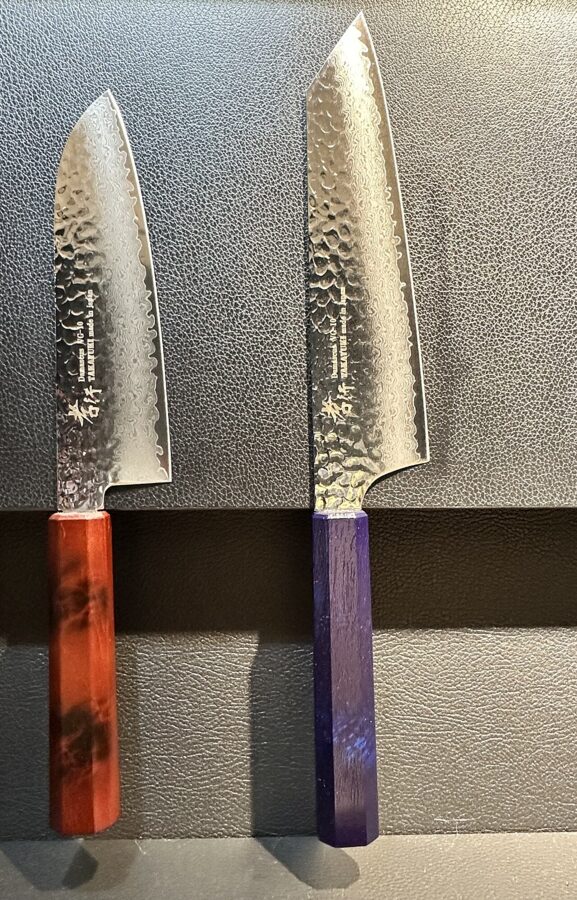

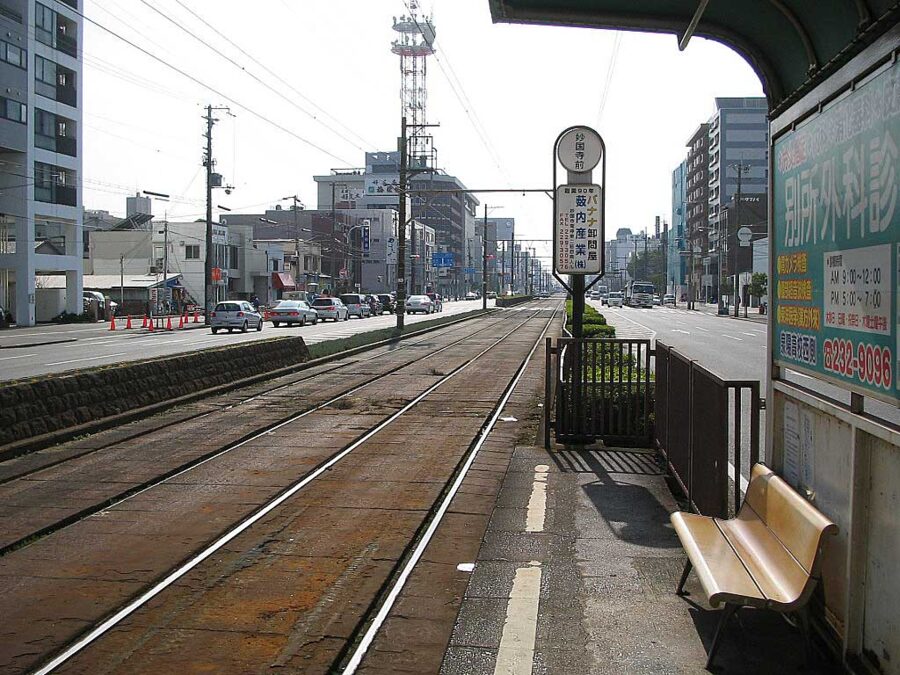
The place to buy is the Sakai Denshokan (堺伝匠館), a crafts hall three minutes on foot from Myokokuji-mae stop on the Hankai tram. Its ground floor sells knives and whetstones arranged by use and by maker, and the building houses the Sakai knife makers’ federation, which also takes knives in for resharpening. It is open 10:00 to 17:00 and closed on the third Tuesday of each month and over New Year. A knife goes in your checked bag; security will take it from your hand luggage.

Pewter and dyed cotton
Osaka Naniwa pewter (大阪浪華錫器) is the city’s other national craft: tin cast in molds and turned on a lathe until it takes a soft white shine, then made into sake cups, tea caddies and vases. Pewter shops grew up around Shinsaibashi in the early Edo period. Today one company makes it, Osaka Suzuki (大阪錫器) in Higashisumiyoshi-ku, so look for that name on the box. A tin sake cup is small, unbreakable and one of the best things to carry home from Osaka.
Chusen tenugui are thin cotton hand towels dyed by chūsen (注染), a method established in Sakai in the early Edo period. Dye is poured through stacked cloth so the pattern goes right through, the same on both sides. The Sakai Denshokan has a room on it. Tenugui weigh almost nothing and fold flat, so buy several.
Billiken, Kuidaore Taro and the Glico runner
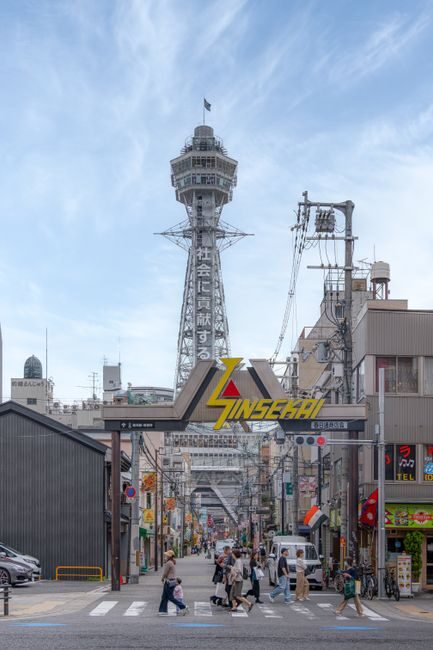
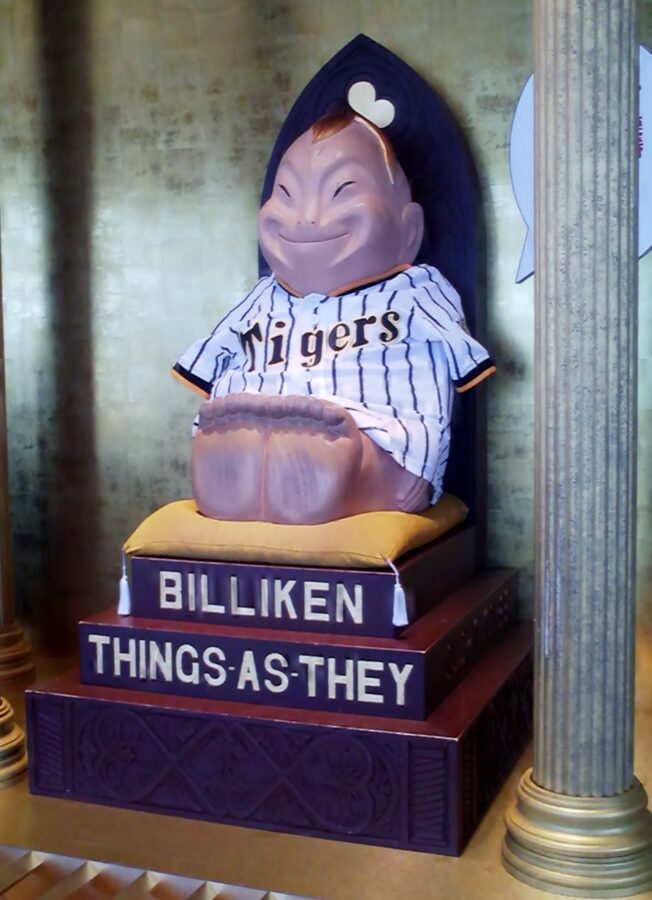
Osaka has three mascots that end up on keyrings, towels and snack boxes. Billiken is a pointy-headed, grinning good-luck figure patented in 1908 by Florence Pretz, an American illustrator, which reached Osaka around 1909 and never left. The statue in Tsutenkaku tower is the famous one; you rub the soles of his feet for luck.
Kuidaore Taro is the drum-beating clown who stood outside the Kuidaore restaurant on Dotonbori from 1950 until it closed in 2008. He now stands at the Nakaza Cuidaore Building three doors east, which reopened in March 2025 and sells Taro goods and Osaka-only sweets inside.
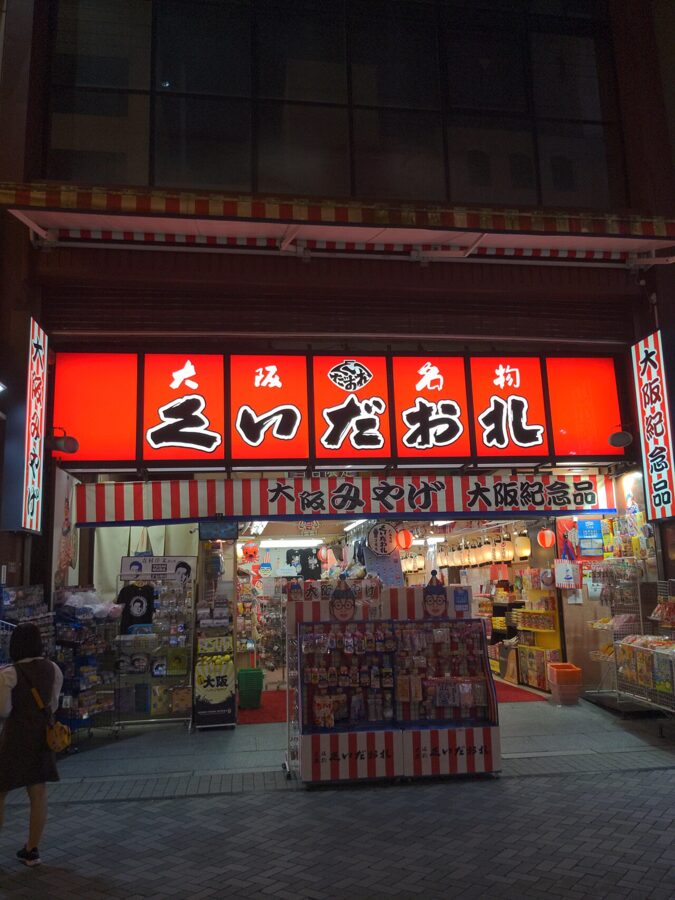

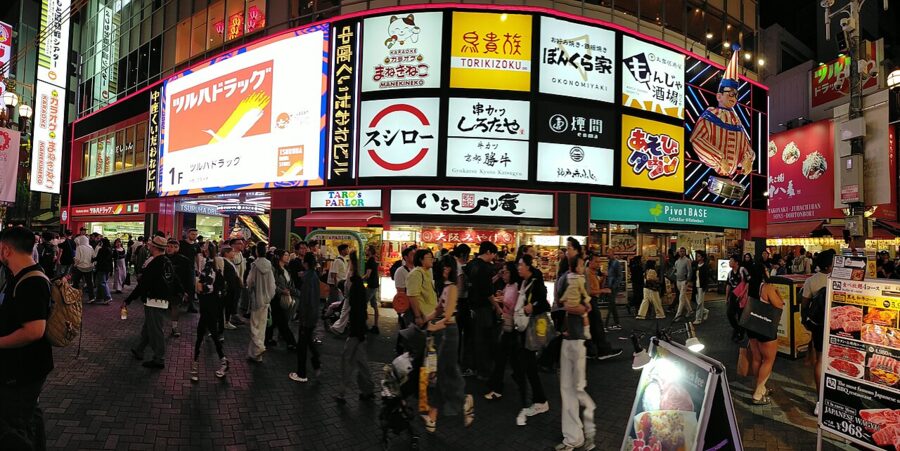

The Glico runner, arms up as he crosses a finish line, is the sign of the Osaka confectioner behind Pocky and Pretz. Everyone takes the same photo of it from Ebisu Bridge.
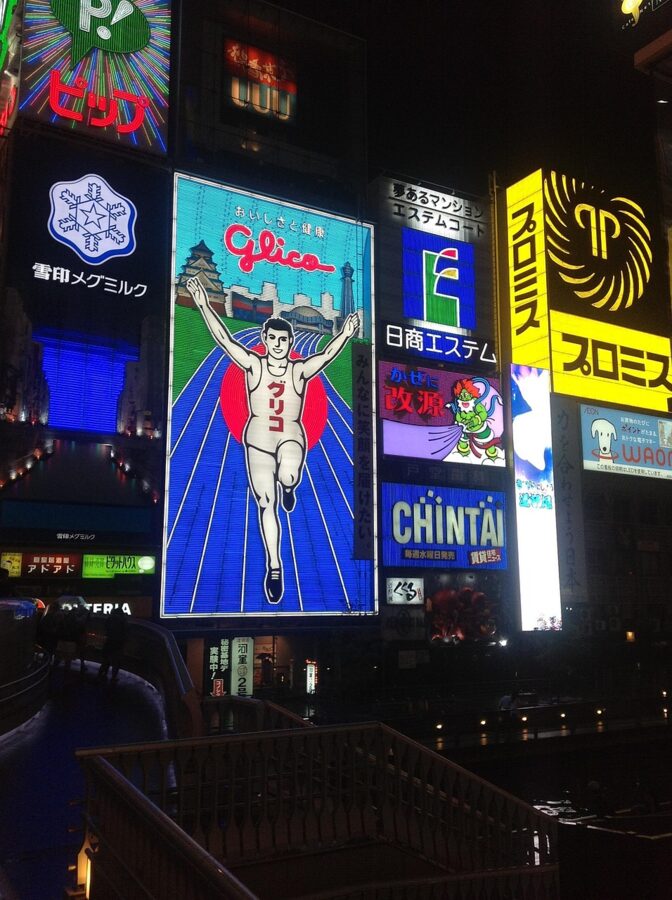
If you are standing on that bridge, walk south down Ebisubashi-suji. The pork buns and the cheesecake are a few minutes away, and Namba Walk, with its ten-bar bundles of awa-okoshi, is just past them, underground.